Some of our most important work disappears under the concrete as soon as it is done. This warehouse in Tulsa is a good example. Drainage problems at the building had caused significant washout under the floor, and after that the building had a repair that involved a lot of excavation. Once the excavation work was finished and the floor was patched back, our team came in to fill the voids that were still underneath.
Void filling means injecting material through small holes in a slab to fill the empty space below it, so the concrete has full support again. On this job we used our structural polyurethane foam, and we picked a slower blend so it could soak into the soil and backfill under the floor before it expanded. Below, our team explains why voids can be left behind after an excavation repair, what a slower blend does differently, and what to watch for on a commercial floor of your own. Floors like this one are part of the commercial foundation repair work we do around Tulsa.
What Happened Under This Warehouse Floor
Water is one of the most common reasons soil goes missing from under a slab. When drainage sends water where it should not go, the water picks up fine soil and carries it away as it moves. That soil does not come back on its own. Over time the concrete is left resting on less and less, and in places on nothing at all. We cover how this plays out around a house in our foundation erosion repair case study.
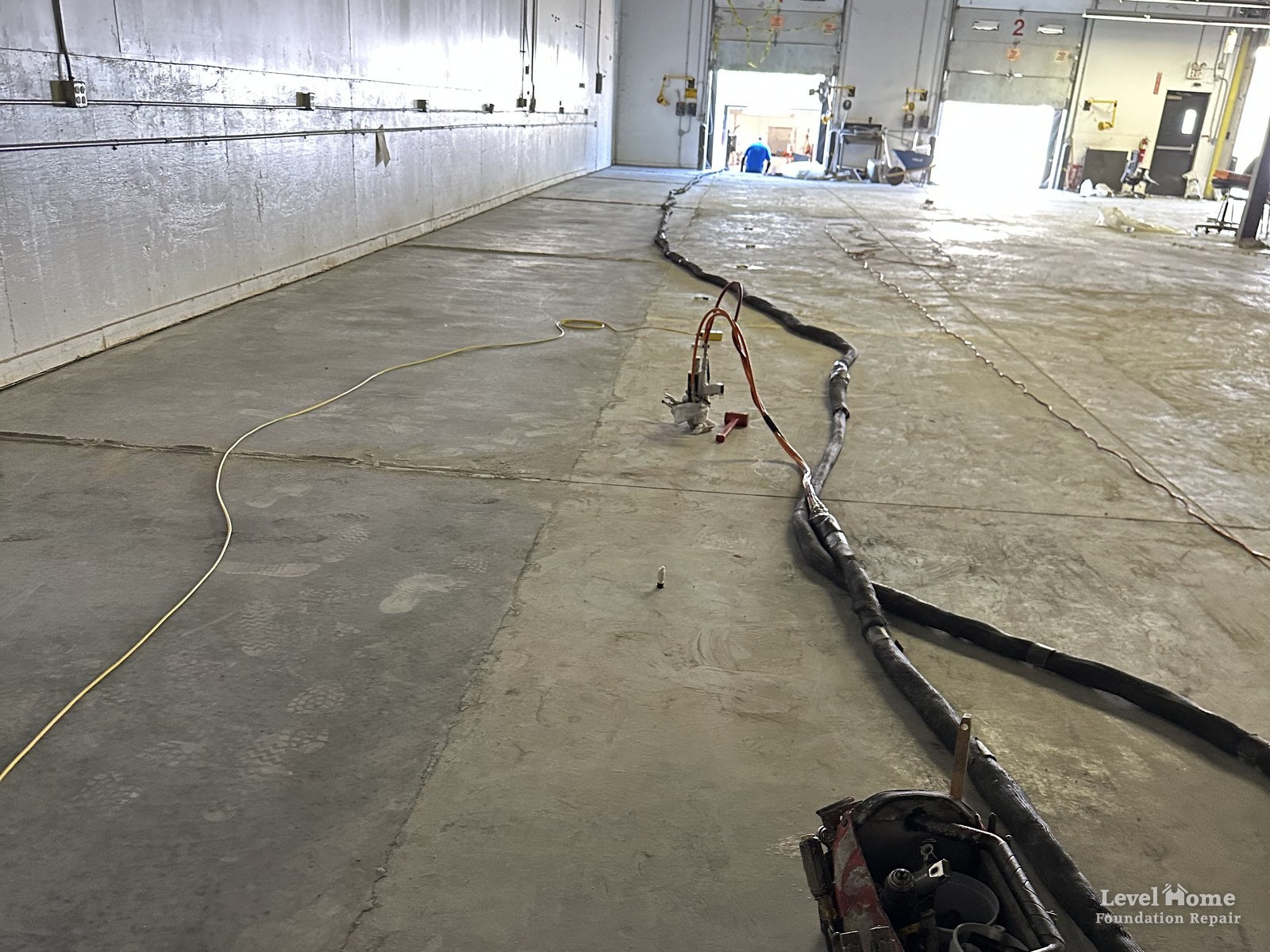
At this warehouse, the washout was bad enough that an excavation repair came first. The photo at the top of this post shows our part of the job afterward. Two black hoses run along the floor from an open dock door at the far end to the injection gun standing on the slab. The small white fitting set into the concrete just in front of the gun is an injection port. Each port sits in a small hole drilled through the slab and gives the foam a way into the space underneath.
Why Voids Can Remain After an Excavation Repair
An excavation repair handles what the crew can reach. Washout does not stop at the edge of a trench, though. Water moving under a slab can take soil from areas outside the part of the floor that gets opened up, and those spaces stay hidden under concrete that was never removed.
Backfill is the second reason. When a trench is filled back in, the material has to be placed and compacted in layers to carry a slab well. That gets harder along the edges of the cut and under the old slab beside it, where compaction equipment cannot reach. Loose fill can also settle later on its own. The foam manufacturer Alchatek lists water migration, leaking utilities, erosion, and poor backfill among the causes of voids beneath concrete.
Then there is the line where new concrete meets old. The patch and the floor next to it can end up sitting on very different ground, one on fresh backfill and the other on soil that has had water running under it. Warehouse floors carry forklifts, pallet jacks, and heavy stacked loads, and a joint between two slabs with uneven support is a likely place for rocking, cracking, or a slab edge that drops.
Why We Used a Slower Foam Blend
Structural polyurethane foam starts as two liquids that are mixed at the injection gun. Once they meet, a chemical reaction makes the mix expand and harden. How long it stays liquid before that happens depends on the formulation, and the temperature of the components affects it too, according to a 2021 research review on polyurethane soil injection.
A fast blend expands close to where it comes out of the port. That works well when the goal is to lift one area of a slab quickly. A slower blend stays liquid longer, which gives it time to travel farther through voids and seep into loose soil before it expands. Foam manufacturer HMI describes slower reacting foams as a way to promote spread, and in one of its case studies a slower reacting product was chosen to stabilize the subgrade because it could penetrate further.
That is what this warehouse called for. Filling the open space under the slab was only part of the goal. We also wanted the foam to reach down into the soil and the backfill from the excavation. Using a slower blend gave it time to permeate the soils below the floor before it expanded and set.
How far foam can move depends on what it is moving through. The same research review explains that in gravel and sand, injected resin spreads through the spaces between the grains, while in clay it mostly fills the voids and cracks already in the soil. So our team picks the blend for the ground it is going into.
How the Foam Locks In Backfill
When foam expands inside loose fill, two things happen. It fills the gaps between soil particles, and it presses outward on the material around it, which helps pack loose soil tighter. Once it cures, it holds that material together as a firmer mass. The research review cited above describes the same effect: under its expanding force, the foam fills voids and compacts the material around it. HMI describes foam injected into the ground as filling voids and binding loose soil particles together.
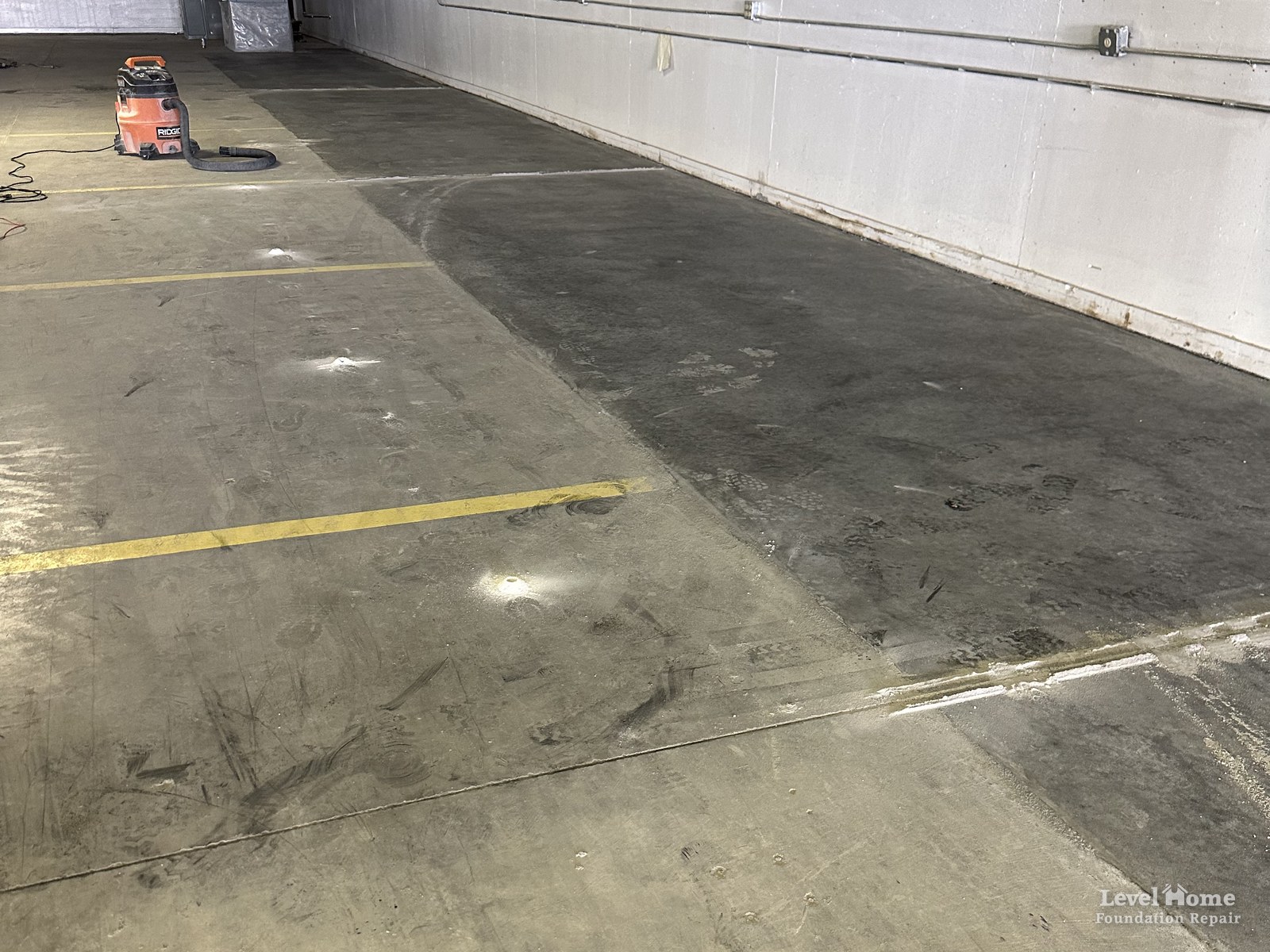
On this job, as the foam traveled through the substrate and expanded, it filled the voids that were left and helped compact the backfill from the excavation repair, locking it in place below the floor.
Foam is also light for the support it gives, so it adds little weight to ground that has already lost soil to washout. For the numbers on strength and density, see our post on the engineering behind polyurethane foam injection. Our post on what thermal imaging shows during foam injection explains how the foam fills space before it ever lifts concrete.
What Void Filling Looks Like on a Commercial Floor
Every void fill starts with finding out where the empty space is and why it formed. From there, our team drills small holes through the slab, sets injection ports, and injects foam in a planned order, working from port to port. When the injection is finished, each port is sealed with a patch.
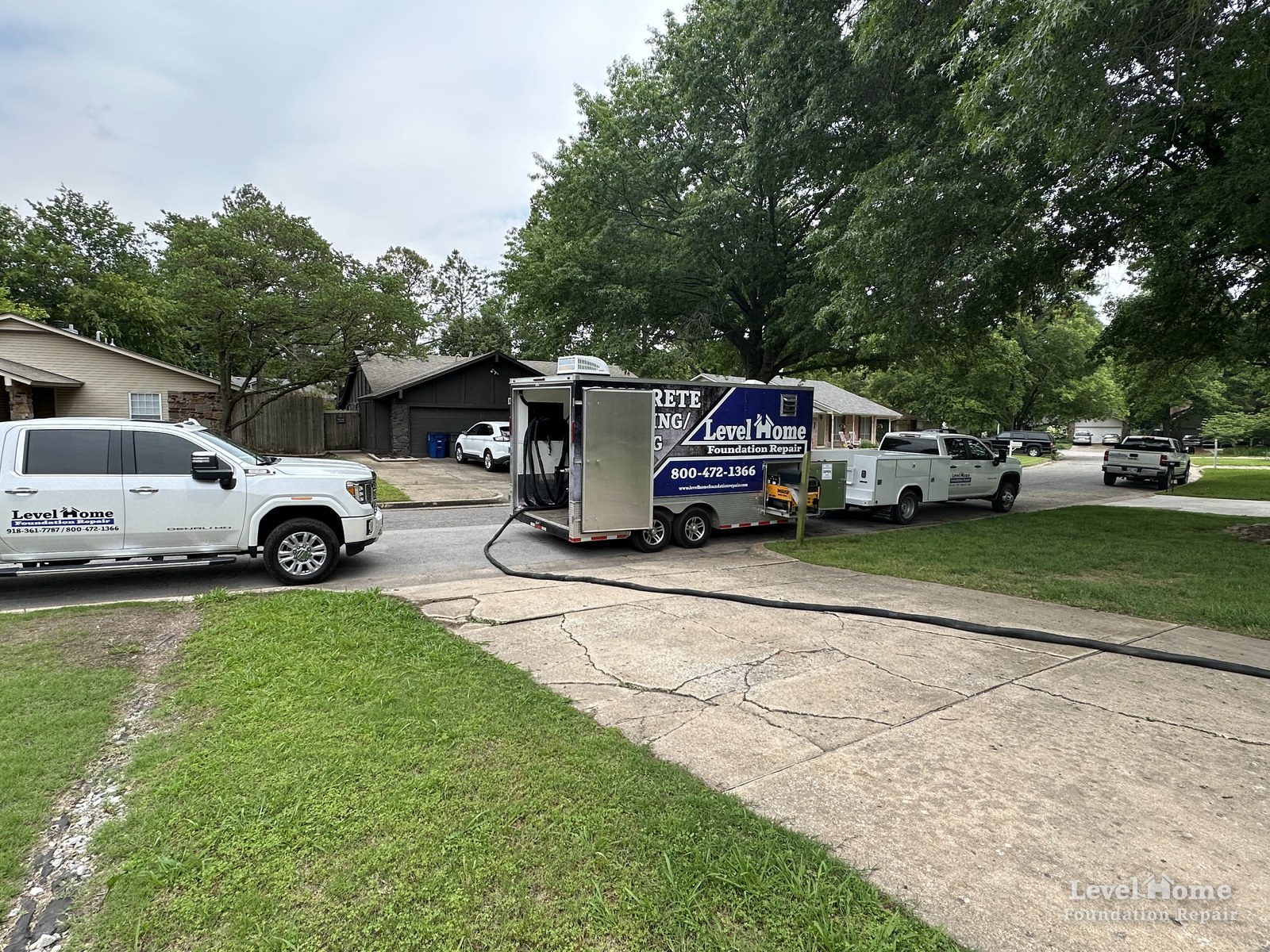
On a large commercial floor, the foam rig usually stays outside and long hoses carry the material in to the work. In the photo at the top, the hoses run back to an open dock door. Below, our foam trailer and utility truck are parked outside on this job.
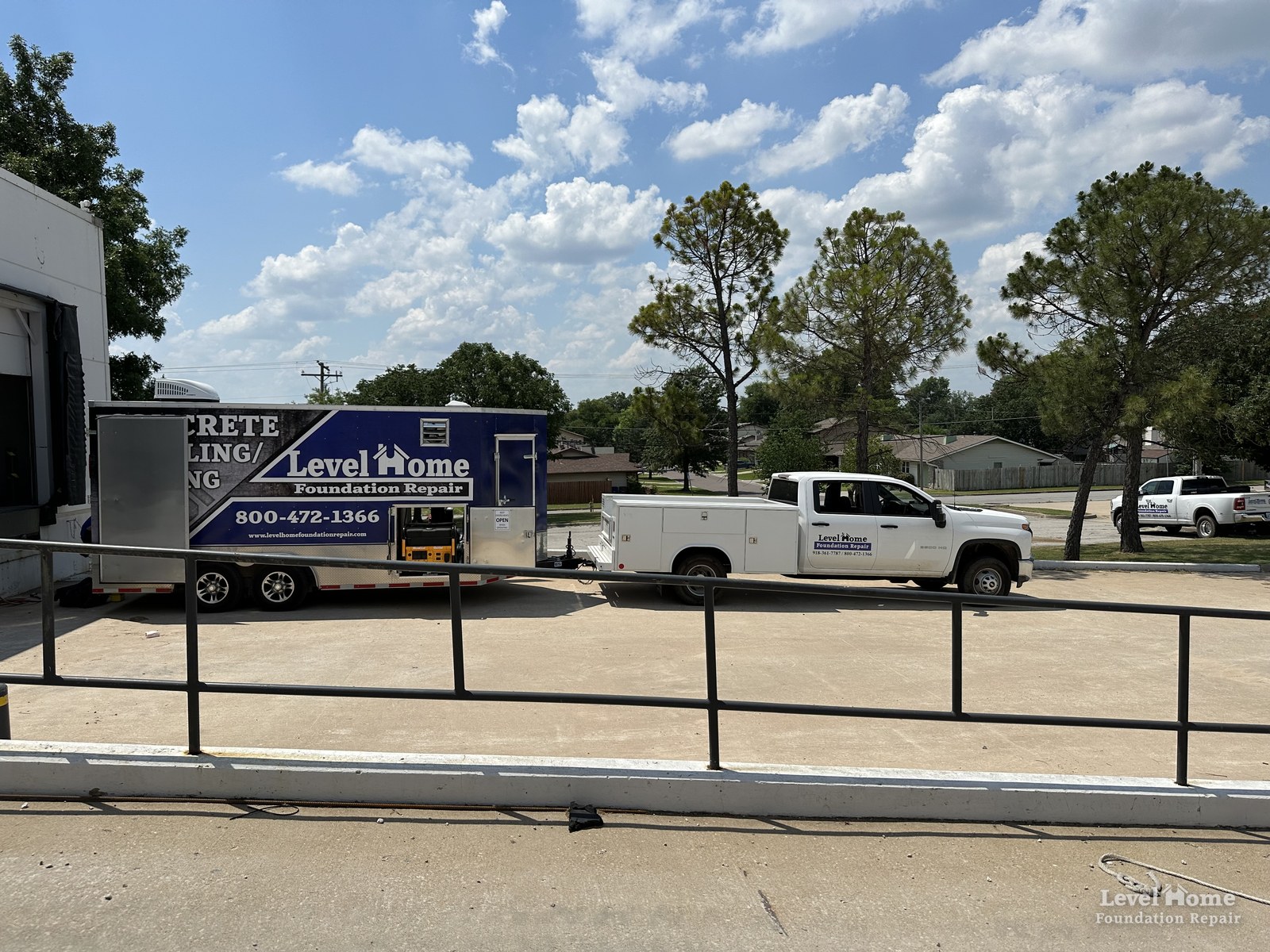
For a business, the small footprint matters. The holes are small, and the work does not call for tearing out large sections of floor. We plan the job around operations, access, and schedules. Larger and more complex sites are handled by Level Structural, our commercial and civil division, which covers warehouse and industrial floor repair along with compaction grouting and soil stabilization.
Signs a Commercial Floor May Have Voids Underneath
Voids under a slab do not always show at the surface right away. These are some of the signs that one may be there:
- A hollow sound in one area when the floor is tapped or when equipment rolls across it
- A slab that rocks or clunks at a joint when a forklift or pallet jack crosses it
- New cracks near joints, floor drains, or an older patch
- Low spots where water collects after rain or floor cleaning
- Gaps along the edge of a slab, at a loading dock, or where the floor meets a wall
- Settling near an area that was cut open for plumbing, drainage, or utility work
None of these proves there is a void, and some have other causes. They are good reasons to have the floor checked, especially in a building that has had water problems or recent digging.
Fix the Water First
Filling voids without dealing with the water that made them is a short term fix. If water keeps moving under the slab, it can keep carrying soil away and open new space next to the foam. Alchatek makes the same point: if the reason a void formed is still active, the repair may need more than void filling alone.
That is why our team asks where the water came from before we recommend void filling. Sometimes the answer is drainage systems that carry water away from the building. Sometimes it is a leaking line, which we cover in our post on plumbing leaks and foundation damage. At this warehouse, our part came after the excavation repair: the voids that remained and the backfill below the floor.
Where Void Filling Fits With Other Commercial Repairs
Void filling is one tool, and some buildings need more than one. It puts support back under a slab that is still where it belongs. When a slab has already dropped, concrete leveling with foam lifts it and fills the space under it in the same process, and our page on poly foam concrete lifting shows where that works. A building whose footings are settling into weak soil may need steel piers or helical piers that reach deeper, more stable ground. Soil that keeps losing support may call for deeper injection, like the polyurethane deep injection our team used to help stop a retention pond leak for the City of Tulsa.
Water is behind a lot of the commercial problems we see. At Greenbriar Apartments, poor drainage around a pool had eroded the soil under the deck, which led to our pool deck void filling project there. On the Saint Francis Health Systems helical piles project, water erosion had compromised the soil before our team installed helical piles for a new footing.
Commercial jobs also come with their own planning, from engineers and schedules to access and keeping a business open. Our look at how commercial work differs from residential covers what that involves. Our processes are approved by engineering firms across Texas and Oklahoma, and we have never failed an engineer reinspection.
Key Takeaways
- Drainage problems can wash soil out from under a warehouse floor and leave voids the surface does not show.
- An excavation repair fixes what it can reach. Voids beyond the trench and loose backfill can remain after the floor is patched.
- Void filling restores support under a slab without lifting it. Concrete leveling lifts a slab that has already dropped.
- A slower foam blend stays liquid longer, so it can travel through voids and into loose soil before it expands.
- As the foam expands and cures, it fills gaps, helps compact loose backfill, and holds it together as a firmer mass.
- Fix the water first. Void filling holds up best when the cause of the washout has been dealt with.
Frequently Asked Questions
What is void filling under a concrete slab?
Void filling is injecting material through small holes in a slab to fill empty spaces underneath it, so the concrete is fully supported again. Our team uses structural polyurethane foam, which expands to fill the space and then hardens. The goal is support, so the slab stays where it is.
Is void filling the same as concrete leveling?
No. Concrete leveling lifts a slab that has already settled. Void filling puts support back under a slab that has empty space beneath it but has not dropped, or has only dropped a little. The equipment is similar, but the goal is different: support instead of height.
Why fill voids after an excavation repair is already finished?
Because excavation only reaches what is dug out. Washout can leave voids beyond the trench, under concrete that was never removed, and backfill that is not fully compacted can settle later. Filling the remaining voids and firming up the backfill helps the patch and the floor around it stay supported.
What does a slower foam blend do?
A slower blend stays liquid longer after the two components are mixed. That gives it time to travel farther through voids and seep into loose soil or backfill before it expands and sets. A faster blend expands closer to the injection point, which suits quick lifting.
Can polyurethane foam fix a drainage problem?
No. Foam fills voids and firms up loose soil, but it does not stop water from reaching the slab. If water is still moving under the floor, the source needs to be fixed too, or new voids can form beside the old ones.
How do I know if my warehouse floor has voids?
Common signs include hollow sounding spots, slabs that rock at joints, new cracks near joints or patches, and low spots where water collects. Voids can also be there before anything shows on the surface. An inspection is the way to find out.
Have Voids Under a Commercial Floor? Talk With Our Team
If your building has had drainage problems, a recent excavation, or a floor that sounds or feels different than it used to, schedule a free inspection. Our team will look at the floor, walk you through what we find, and explain which repairs make sense and why. Call (918) 361-7787 or contact us online.