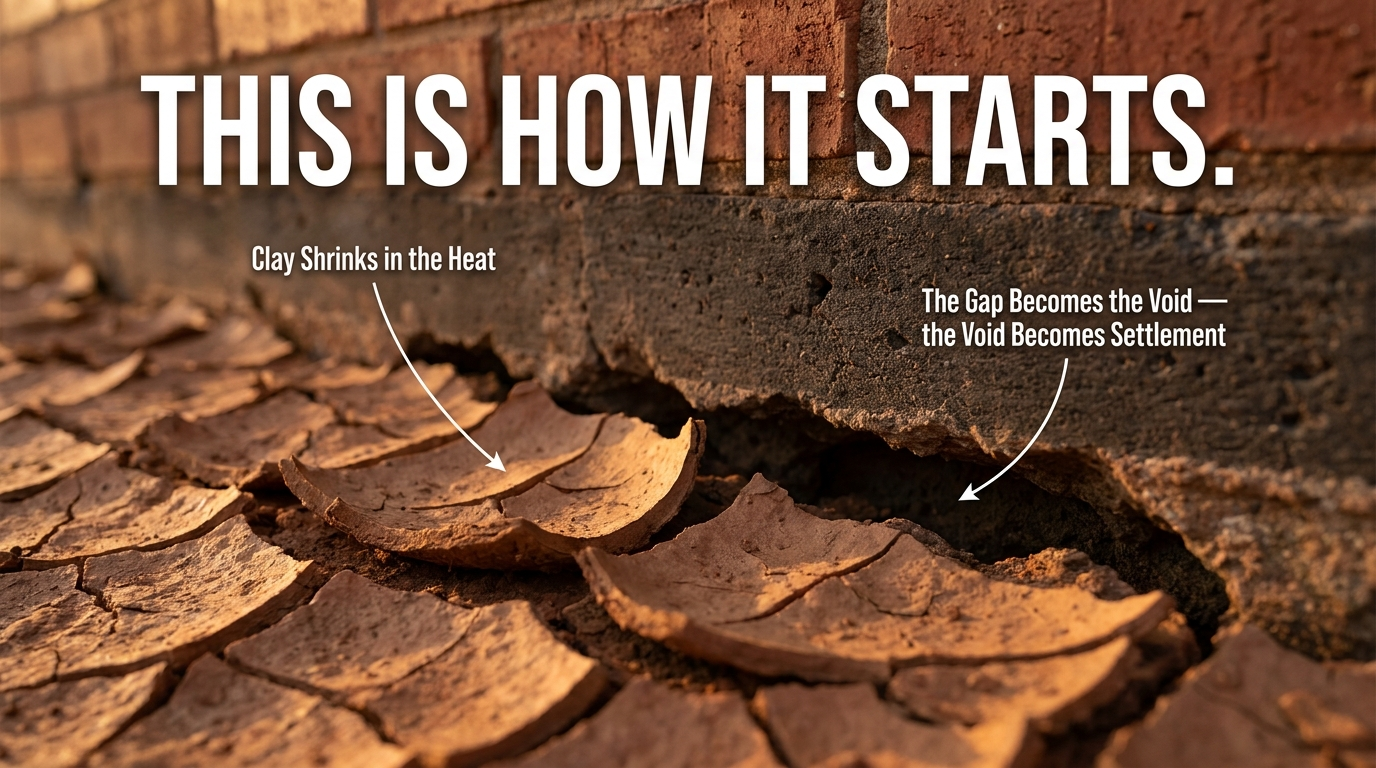
Tulsa sits on some of the most reactive clay soil in the country. When summer heat arrives, that clay shrinks. The gap between soil and slab becomes a void, and the void becomes settlement. Cracks appear in drywall. Doors stop closing. Floors tilt. By the time most homeowners notice, the damage has been building for months.
Steel piers exist to solve this at the source: they bypass every inch of unstable soil and anchor your foundation to load-bearing strata that don’t move with the seasons. Not a patch. Not a workaround. A permanent structural connection to stable ground.
If your home is showing warning signs like sticking doors, wall cracks, or uneven floors, you need a solution that actually fixes the problem instead of masking it.
Steel piers are heavy-duty, galvanized steel shafts driven deep beneath your foundation. They extend past Tulsa’s unstable surface clay and anchor into stable soil layers or bedrock below, preventing further movement and lifting the structure back toward its original position.
The process is straightforward but precise: steel brackets are mounted to the underside of your footing, then segmented steel shafts are hydraulically driven through those brackets until they reach refusal — the point where the pier can’t go deeper because it has hit competent, load-bearing ground. Once every pier has reached depth, hydraulic pressure is applied simultaneously to lift and stabilize the foundation.
The result is a home that sits on bedrock instead of clay. No seasonal movement. No progressive settlement. Just permanent support.
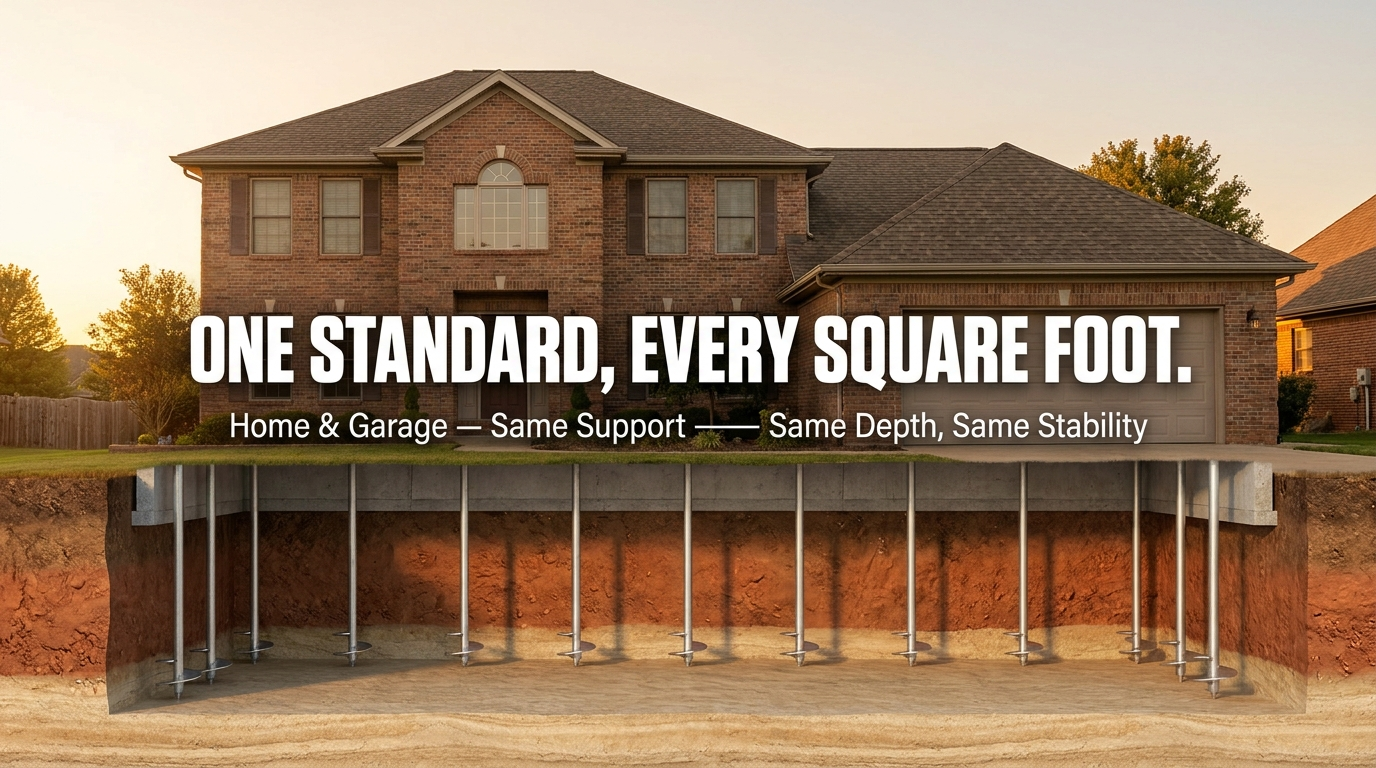
Most foundation repair companies treat the garage as an afterthought. Different pier spacing, shallower depths, cheaper materials. The logic is that it’s “just a garage,” so it doesn’t need the same level of support.
I disagree. If the garage slab settles independently, it pulls on the shared wall, stresses the roof line, and creates a secondary failure point that compromises the entire structure. The home and garage sit on the same soil. They deserve the same engineering.
At Level Home, every pier goes to the same depth, carries the same load rating, and meets the same standard — whether it’s under the master bedroom or the garage. One standard. Every square foot.
Not every home requires the same pier system. The right choice depends on soil conditions, structural load, and access. I use both — and I choose based on engineering data, not on what’s cheapest to install.
Steel shafts hydraulically driven through foundation-mounted brackets until they reach refusal in load-bearing soil or bedrock. Push piers use the weight of the structure as resistance during installation, making them ideal for occupied homes experiencing active settlement. They handle heavy loads and reach depths that other systems cannot.
A complete push pier foundation repair system includes precision-machined brackets, segmented galvanized steel shafts, and synchronized hydraulic lifting equipment that work together to stabilize and restore your home’s elevation.
Piers with engineered helical plates are mechanically rotated into the ground like a screw. They don’t rely on structural weight for installation, making them the right choice for lighter structures, new construction projects, and sites with limited access. Torque readings during installation confirm load capacity in real time.
For a deeper look at helical pier applications and when they outperform push piers, visit our dedicated helical pier foundation repair page or read our full comparison guide.
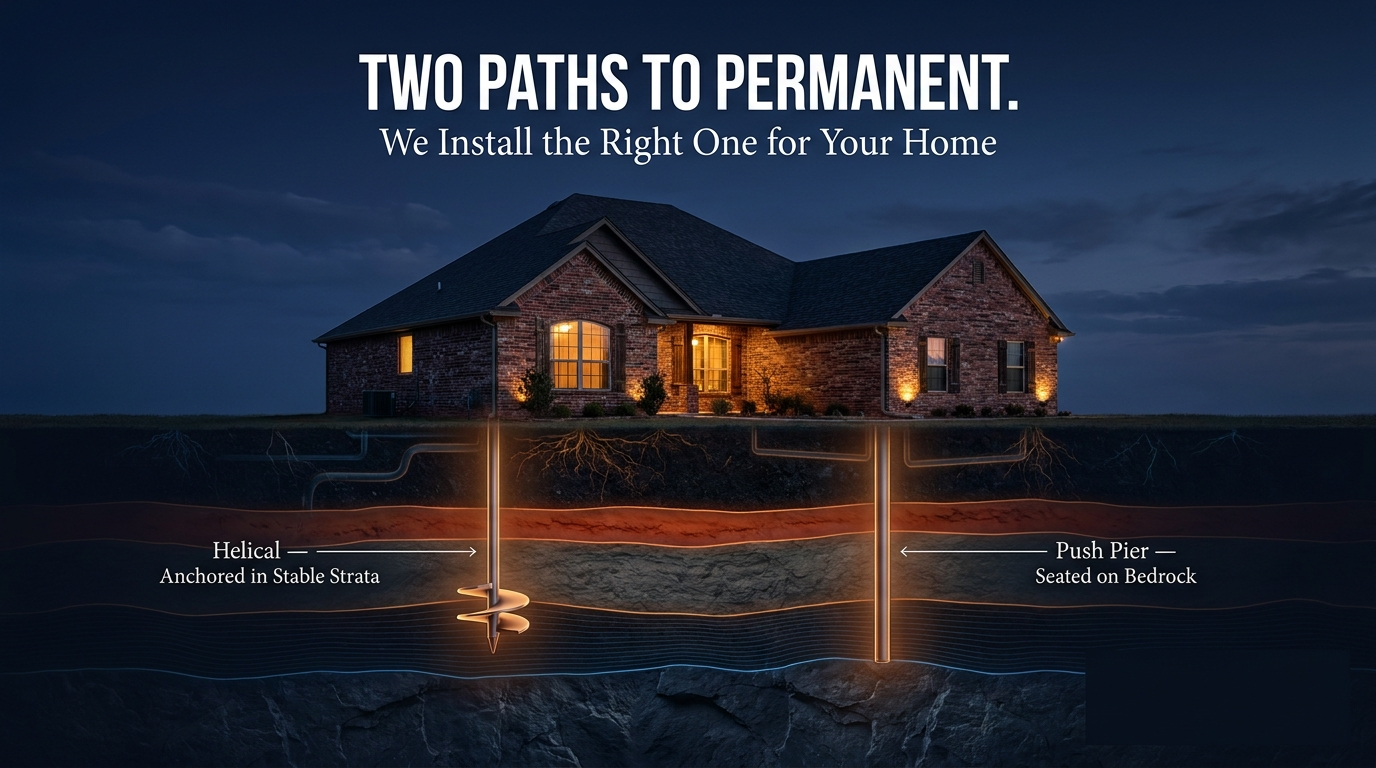
Two paths to permanent. Helical piers anchored in stable strata. Push piers seated on bedrock. Level Home installs the right one for your home.
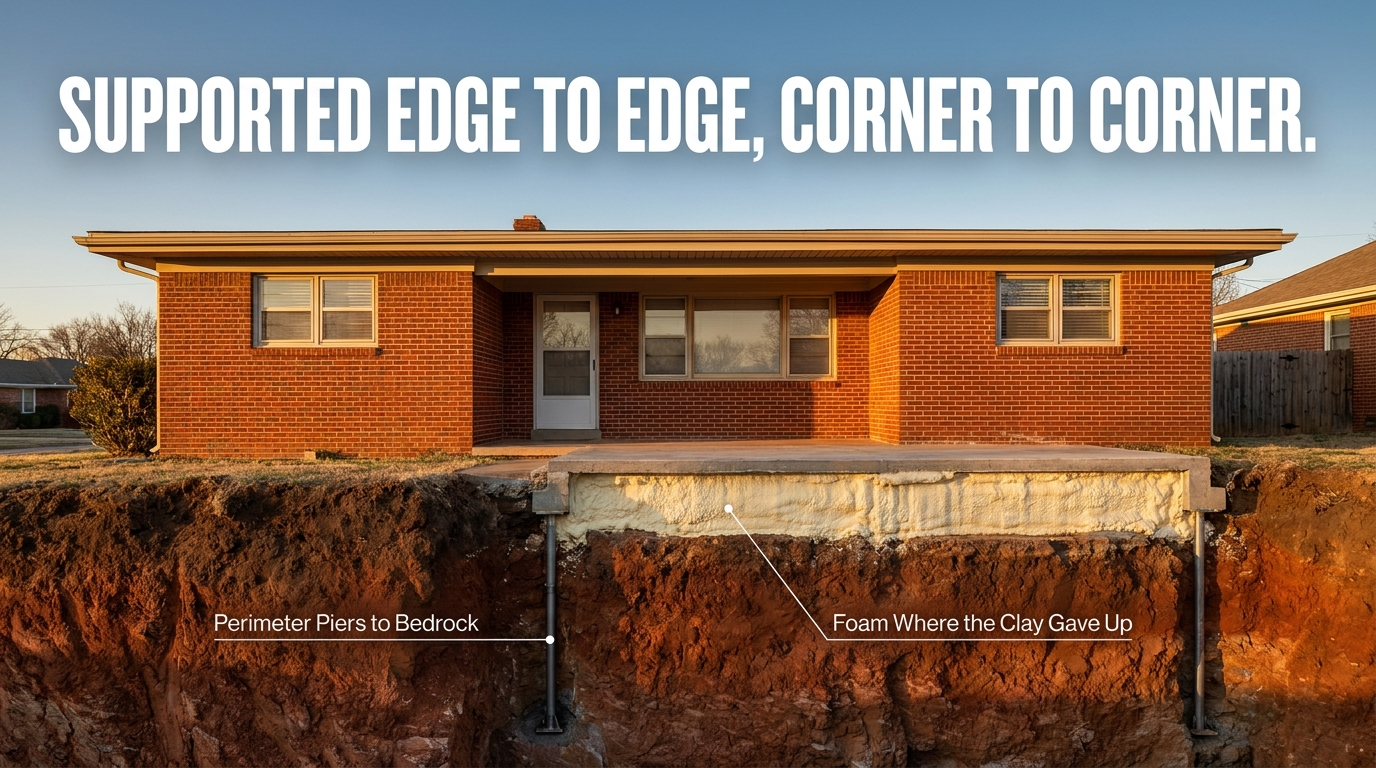
Steel piers stabilize the perimeter. But what about the interior slab? When clay soil contracts, voids form beneath the center of your foundation where piers can’t reach. If those voids go unaddressed, interior floors continue to sag even after the perimeter is locked in place.
That’s why many of our steel pier projects include polyurethane foam injection beneath the interior slab. Perimeter piers anchor to bedrock. Foam fills the voids where the clay gave up. Together, they deliver full-coverage support from edge to edge, corner to corner.
Not every home needs both systems. But when the data shows interior voids, I recommend it — because half a repair isn’t a repair.
There’s a reason steel piers are widely considered the most reliable permanent foundation repair solution in the industry.
Unlike mudjacking or concrete pressed pilings, steel piers reach deep, load-bearing strata that don’t shift with seasonal moisture changes. Once installed, they provide lasting support that prevents future settling.
Galvanized steel construction handles heavier structural loads, resists corrosion, and performs under environmental stress that would compromise lesser materials. Each pier is rated for the specific load requirements of your home.
Installation requires only small excavation areas around your foundation perimeter. No heavy demolition. No torn-up landscaping. Most residential projects are completed in two to four days with the home fully occupied.
Every repair plan is designed around your home’s specific conditions: soil composition, load distribution, settlement pattern, and structural geometry. No one-size-fits-all templates. Each plan is reviewed and approved by a licensed structural engineer.
A stabilized foundation improves both safety and resale value. Buyers and appraisers recognize professionally engineered pier systems as a permanent structural improvement, not a Band-Aid.
Every steel pier installation comes with our written warranty. We stand behind the work because we know how it was built — because we built it ourselves.
If you’re looking for reliable foundation repair in Tulsa, choosing the right repair strategy is one of the most important decisions you can make for your home’s long-term structural health.
Level Home Foundation Repair is not just a repair company. We are a leader in foundation pier innovation.
I design and manufacture pier systems right here in Tulsa, engineered specifically for Oklahoma’s reactive clay conditions. Several of our proprietary pier designs have been licensed by pier manufacturers and are now sold to foundation repair companies across the country. When other companies buy off-the-shelf pier systems, some of those systems started in our shop.
That pioneer mentality — always pushing for a stronger, smarter solution — is the same mentality that goes into every repair we perform on your home. You’re not getting a crew that follows a manual. You’re getting the team that wrote it.
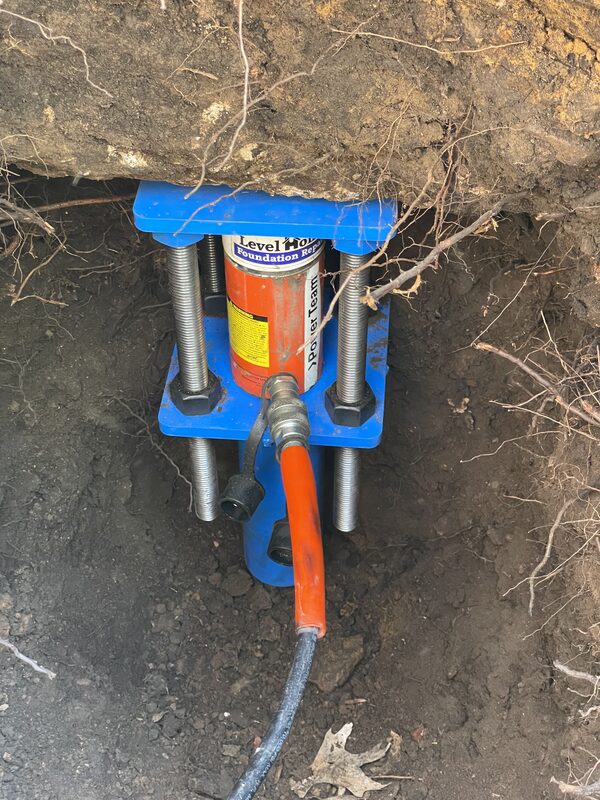
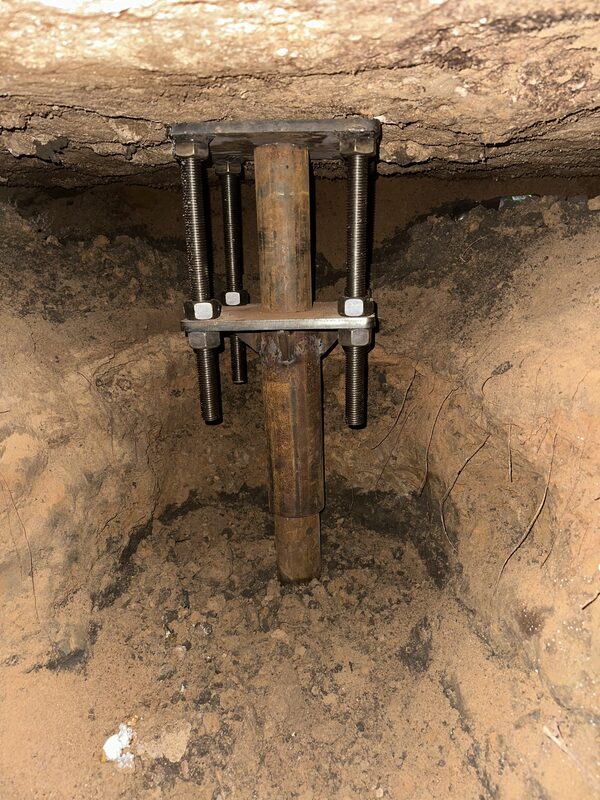
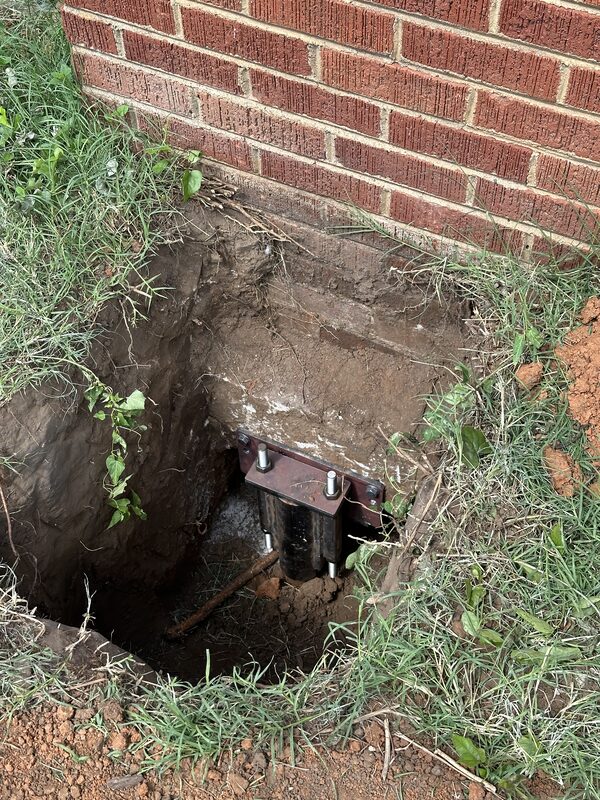
Proprietary pier brackets designed, machined, and manufactured by Level Home in Tulsa. Licensed designs now used nationwide.
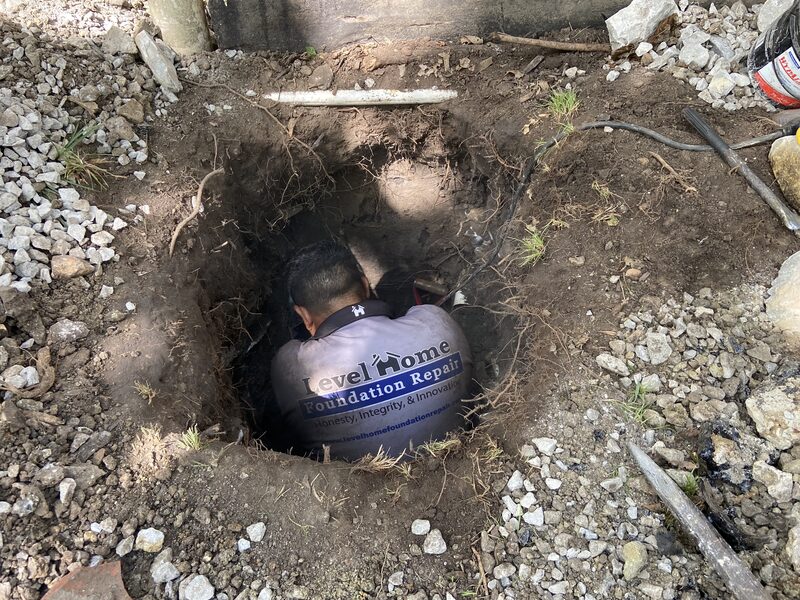
Hands-on installation by the Level Home crew — every pier placed with precision and care.
When I send someone to evaluate your foundation, they’re not reading from a script. They’ve spent years in the field — under homes, inside crawl spaces, in excavation trenches — learning how soil behaves, how structures respond to movement, and how to read the story a crack is telling.
Our inspectors understand the difference between cosmetic settling and active structural failure because they’ve repaired both. They know why crawl space foundations fail differently than slab-on-grade systems, and they know which pier system, placement, and depth will solve the problem — not just slow it down.
This isn’t a two-week sales training program. It’s years of real work on real foundations in real Oklahoma soil. That experience is what separates a diagnosis from a guess.
Homes with crawl space foundations often require more piers due to distributed load patterns, but only a thorough site assessment will determine exact needs and costs. Here’s what the process looks like with Level Home.
We assess your foundation using elevation measurements, crack pattern analysis, and soil data to determine the exact placement, type, and number of piers your home needs. This inspection is free, thorough, and comes with zero obligation.
Your repair plan is reviewed by a licensed structural engineer. Pier locations, depths, and load ratings are specified based on your home’s unique structural geometry and soil conditions. We reimburse structural engineer fees when you move forward with repairs.
Small areas are excavated along the foundation perimeter where piers will be installed. Excavation is surgical — we protect landscaping, driveways, and adjacent structures.
Steel pier brackets are mounted to the footing. Segmented galvanized steel shafts are hydraulically driven through each bracket until they reach refusal in competent, load-bearing soil or bedrock.
Synchronized hydraulic equipment applies controlled pressure across all piers simultaneously, carefully lifting and stabilizing the foundation back toward its original elevation.
All excavation areas are backfilled and compacted. Your property is restored to pre-work condition. You receive your written warranty documentation before we leave.
Most residential projects are completed in two to four days, depending on the number of piers required and site conditions.
Most residential steel pier installations range from several hundred to over a thousand dollars per pier installed. The total foundation pier cost depends on:
While steel piers may carry a higher upfront cost than alternatives like concrete pressed pilings, they deliver significantly better long-term value. A steel pier reaches bedrock. A concrete piling sits in the same clay that caused the problem. For a detailed cost breakdown, see our Tulsa foundation repair cost guide.
Foundation repair is structural work — it protects your family, your investment, and your home’s long-term value. I never want cost to prevent a homeowner from getting the repair they need. That’s why Level Home offers flexible financing options designed to make quality foundation repair accessible. Monthly payments, competitive rates, and approval processes that respect your time.
Depth varies based on soil composition at your specific site. In the Tulsa metro area, steel piers typically reach 15 to 30 feet or more, driven until they hit refusal in stable, load-bearing strata. Every pier is driven to engineered specifications — there is no predetermined depth. The pier goes as deep as it needs to go.
Most residential steel pier projects are completed in two to four days. The timeline depends on the number of piers required, soil conditions, and site access. Your home remains fully occupied throughout the entire process.
We design and manufacture our own pier systems in Tulsa. Several of our designs are licensed and sold nationwide. Every crew member is a Level Home employee — no subcontractors. Every repair plan is reviewed by a licensed structural engineer. And I personally stand behind every project with a written warranty. For more on what sets us apart, visit our Why Trust Level Home page.
Yes. Every inspection is free, thorough, and comes with no obligation. Our field-experienced inspectors assess your foundation, explain exactly what they find, and walk you through your repair options with honest, transparent data. No pressure. No gimmicks. Schedule yours at our free inspection page or call (918) 361-7787.
In most Tulsa applications, yes. Concrete pressed pilings sit in the same unstable clay that caused the foundation to settle. Steel piers bypass that clay entirely and anchor into competent, load-bearing soil or bedrock. The engineering community widely recognizes steel piers as the superior long-term solution for active settlement in reactive clay soils.
Every steel pier installation is backed by our written warranty. Our team is licensed, insured, and every repair is supported by engineer-approved documentation from the first assessment through project completion.
Absolutely. Steel piers are one of the most effective solutions for slab foundation repair in Tulsa. Push piers stabilize the perimeter while poly foam injection addresses interior voids, delivering complete structural support across the entire slab.
Standard homeowners insurance typically does not cover foundation settlement, but coverage varies by policy and cause of damage. We provide thorough documentation that can support insurance claims when applicable. See our insurance coverage guide for details.
Foundation repair is a one-time decision. The system you choose, the team that installs it, and the engineering behind it will determine whether your home stays stable for decades — or whether you’re calling someone again in five years.
I built Level Home to be the company I’d want to hire for my own home: honest inspections, engineered solutions, in-house crews, and a warranty I’d be proud to hand my neighbor. If your home is showing signs of settlement, let’s talk. The inspection is free, and so is the advice.