Level Structural: Commercial & Civil Structural Repair Division of Level Home Foundation Repair
Level Structural is the commercial and civil structural repair division of Level Home Foundation Repair, built for the projects that fall outside the scope of everyday residential work. Multi-story parking structures, industrial warehouses, healthcare campuses, retail centers, and civil infrastructure sites carry loads, soil challenges, and engineering requirements that call for a different level of experience and equipment. That is the work Level Structural was created to handle.
Our team has applied this expertise on projects such as the helical pile installation completed for Saint Francis Health System in Tulsa, where 35-foot precast concrete retaining walls required additional support after erosion had compromised the surrounding soil. Read the full Saint Francis Health System helical piles case study to see how our team approached a large-scale institutional project from assessment through installation.
With over 10 years in the field, more than 3,000 properties stabilized across Oklahoma, and seven proprietary licensed repair products developed specifically for our region’s soil conditions, Level Structural brings a depth of practical field experience that few commercial contractors in this market can match. Property managers, owners, engineers, and contractors turn to our team when a project demands more than a standard foundation repair approach.
A Dedicated Division Built for Commercial and Civil-Scale Structural Work
Commercial and civil structural projects are not simply larger versions of residential jobs. The loads are heavier, the soil profile beneath a single site can vary dramatically from one corner of the footprint to the other, and the consequences of an incorrect repair strategy are measured in tenant safety, business continuity, and significant capital exposure. Level Structural exists as a dedicated division so these projects receive the structural analysis, equipment, and project management discipline they require, separate from the day-to-day residential repair workflow.
Our commercial and civil work is led by a team with hands-on field experience across hundreds of large-scale sites. Founder and president Adam Sedlak built Level Home Foundation Repair on a simple mission: building a foundation of trust in our community through honesty, integrity, and innovation. That same mission carries directly into Level Structural’s approach to commercial work. Operations Manager and Structural Analyst Jerod Sellers and Project Manager and Structural Analyst Tyler McKenzie lead site assessments and engineering coordination on our larger projects, while Office Manager Riley Carman keeps commercial clients informed and projects moving on schedule.
Every commercial and civil project begins with a thorough structural assessment. Our analysts document existing conditions, identify the likely causes of settlement or movement, and, where warranted, coordinate directly with third-party structural engineers before recommending a repair strategy. This is not a sales visit. It is an engineering-minded evaluation designed to protect your investment and your liability exposure.
Settlement Remediation for Large and Complex Structures
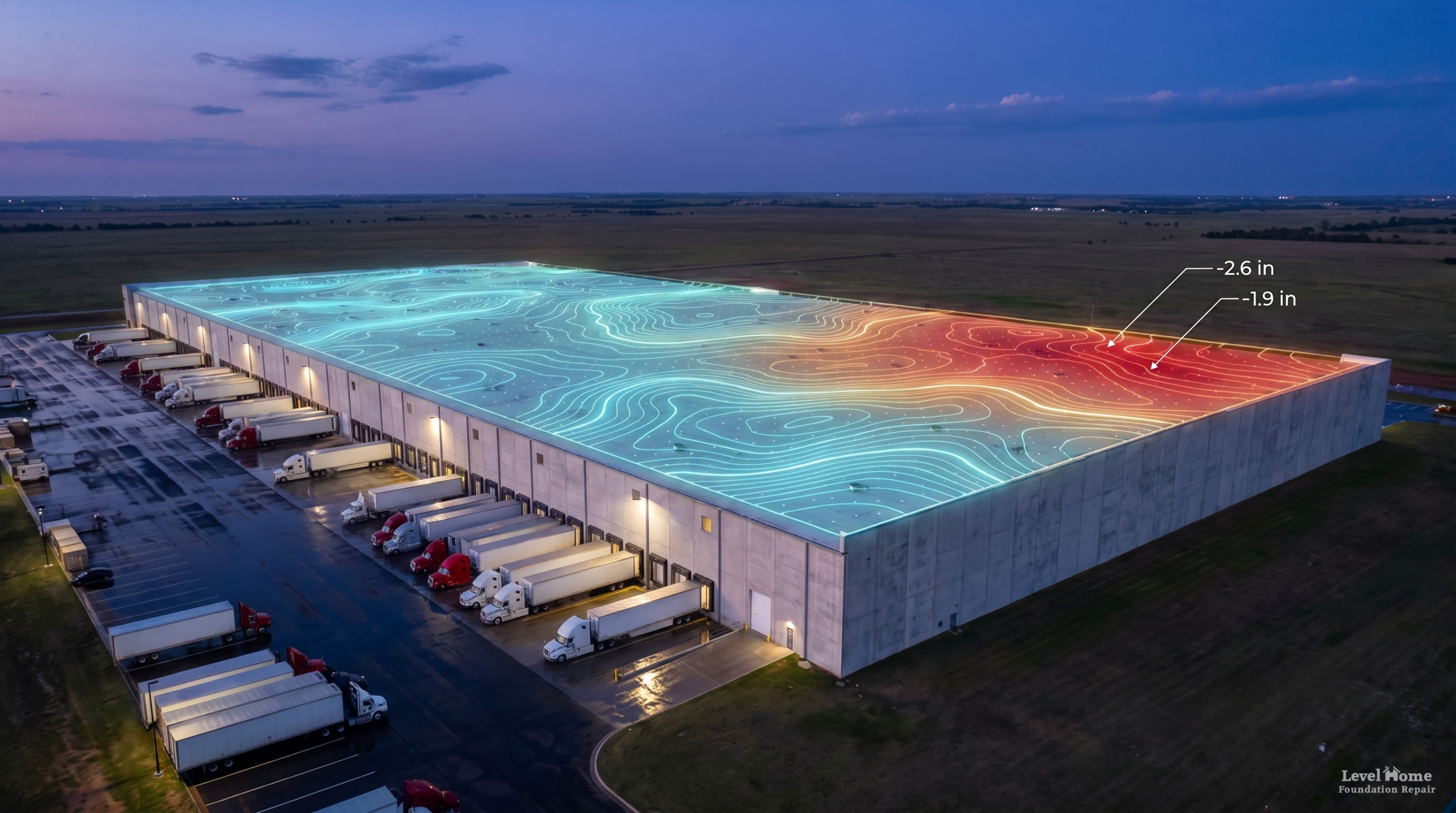
Settlement in a commercial or civil structure rarely shows up the same way twice. A warehouse with concentrated rack loading settles differently than a tilt-up retail building on a spread footing, and a multi-story parking deck settles differently than a loading dock apron poured against a building’s foundation wall. Diagnosing the true cause of movement across a large footprint requires more than a visual walkthrough. Our team maps elevation data across the structure, reviews soil conditions at multiple points, and correlates that data with visible distress such as cracking, door and dock misalignment, or slab separation before recommending a remediation plan.
Because commercial footprints are large and often carry mixed foundation types within a single building, a remediation plan frequently combines several repair methods rather than a single fix. Our team has designed and executed settlement remediation programs that pair deep foundation support with slab leveling and commercial drainage correction in the same project, addressing the structural issue and the underlying cause together rather than treating symptoms in isolation.
Carbon Fiber Reinforcement for Structural Strengthening
When a concrete or masonry wall shows cracking, bowing, or early signs of structural distress, replacement is not always necessary. Carbon fiber reinforcement strips bond directly to the interior face of a foundation wall, retaining wall, or structural beam, adding tensile strength that resists further movement without adding meaningful weight or thickness to the structure. For commercial buildings, this matters because carbon fiber strengthening can often be completed with minimal excavation and without taking a wall out of service.
Level Structural applies carbon fiber reinforcement on foundation walls in basements and below-grade commercial spaces, on tilt-up panel connections, and on structural beams and columns that have developed cracking under load. The material resists corrosion, does not add bulk to finished interior spaces, and provides a long-term strengthening solution that engineers regularly specify for commercial rehabilitation projects across Oklahoma. For cracking that is cosmetic or non-structural rather than a sign of active movement, our team also provides standalone foundation crack repair services to seal and protect the affected area.
Permeation and Compaction Grouting for Soil and Excavation Stability
Civil and commercial sites often involve soil conditions that a standard pier installation cannot fully address on its own, particularly around excavations, utility corridors, and areas where erosion or poor compaction has left voids beneath a slab or footing. Permeation and compaction grouting inject specialized grout mixtures into the soil matrix to fill voids, densify loose material, and stabilize ground that would otherwise be prone to further settlement or collapse.
Our team uses grouting techniques on projects where excavation support is critical, where erosion has undermined soil near a retaining structure, or where a commercial slab sits over soil that has lost density due to water infiltration. This approach is particularly valuable on civil infrastructure projects and large commercial sites where digging out and replacing soil is not practical, and where stabilizing the ground in place is the more cost-effective and less disruptive solution.
Ionic Clay Soil Stabilization
Northeast Oklahoma sits on expansive clay soil that swells when saturated and shrinks during dry periods, a cycle that places constant, uneven pressure on commercial foundations, parking lots, and access roads. Level Structural offers ionic clay soil stabilization, a process that introduces specialized ionic agents into the soil to strengthen the bonds between clay particles. The result is soil with greater cohesion and a higher load-bearing capacity, without the cost and disruption of large-scale excavation.
This method is well suited to large commercial pads, parking areas, and access roads where expansive clay has caused ongoing surface movement or where a new commercial development sits on soil known to be problematic. Because the process works with the existing soil rather than removing and replacing it, it reduces both project cost and the environmental impact of the work.
Helical Tiebacks for Bowing and Leaning Retaining and Foundation Walls
Commercial and civil properties frequently rely on retaining walls, loading dock walls, and below-grade foundation walls to hold back soil under significant lateral pressure. When these walls begin to bow or lean, the movement is a structural warning sign that typically worsens over time without intervention. Helical tiebacks anchor horizontally through the soil behind the wall, transferring the lateral load to stable ground and halting further movement.
Our team installs helical tiebacks on commercial retaining walls, parking structure walls, and basement foundation walls where soil pressure has caused visible bowing or cracking. The installation is minimally invasive, typically requiring access from only one side of the wall, and provides immediate stabilization without the extensive excavation that wall replacement would require.
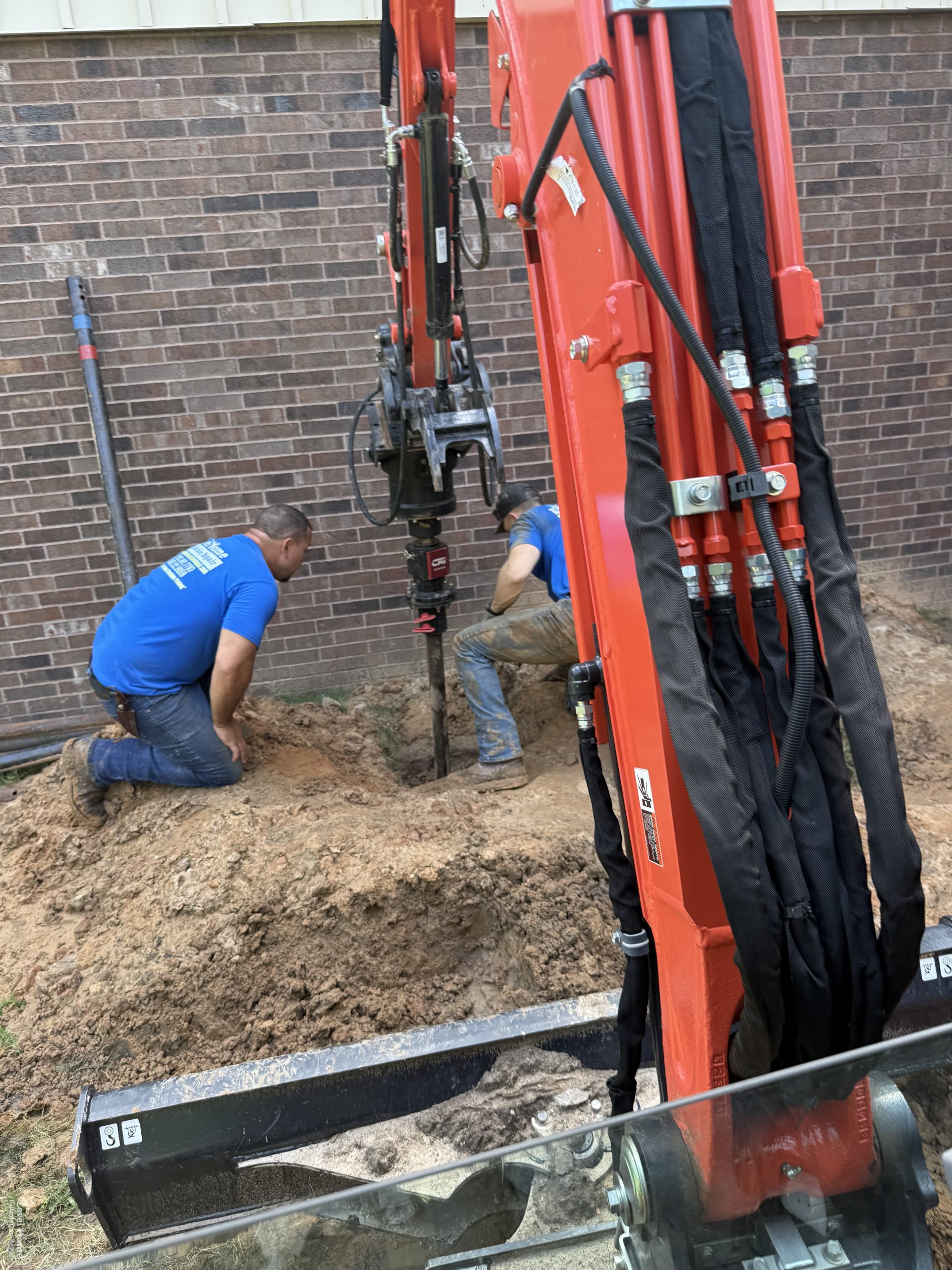
Helical Pier Systems Engineered for Heavy Commercial and Civil Loads
Helical piers used on commercial and civil projects are not the same product installed on a residential foundation. Level Structural specifies larger-diameter shafts, larger helix plates, and higher torque ratings to achieve the load capacity that multi-story buildings, industrial structures, and heavy civil applications demand. Because helical piers reach immediate load capacity once installed to the specified torque, they are particularly valuable on commercial timelines where waiting on cured concrete is not an option.
For readers researching helical pier technology in more depth, our helical pier systems overview covers the fundamentals of how the piers work, and our dedicated pre-construction helical pier page details how developers use this technology to prepare a site before a structure is ever built. Level Structural applies the same underlying technology at a scale appropriate for civil and commercial applications, including new construction support, settlement remediation, and retrofits on existing structures. For projects where steel push piers are the better fit, our team evaluates soil conditions and structural loading to recommend the pier system engineered for the specific project rather than a one-size-fits-all approach.
Structural Support and Repair for Multi-Story Parking Structures
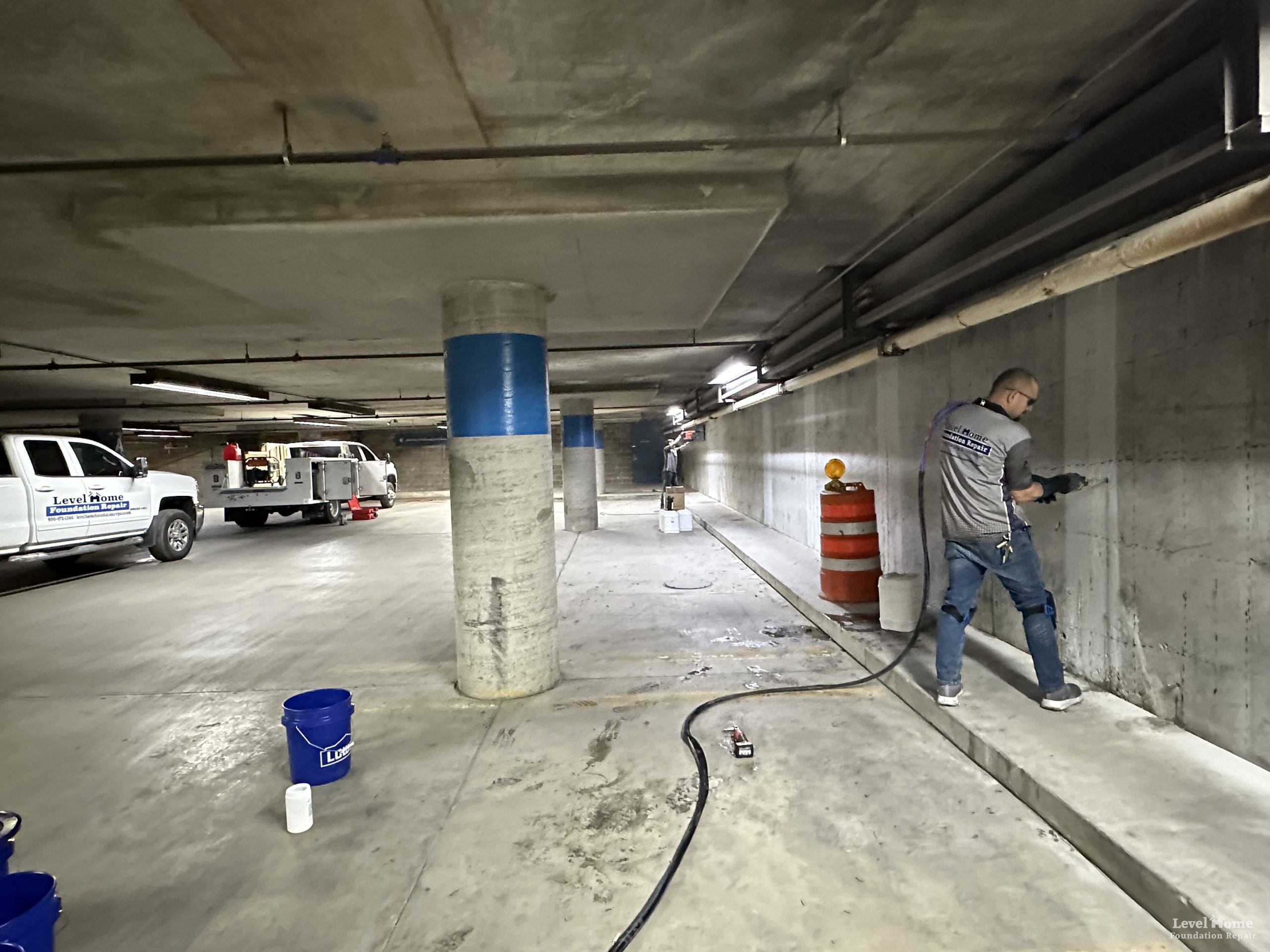
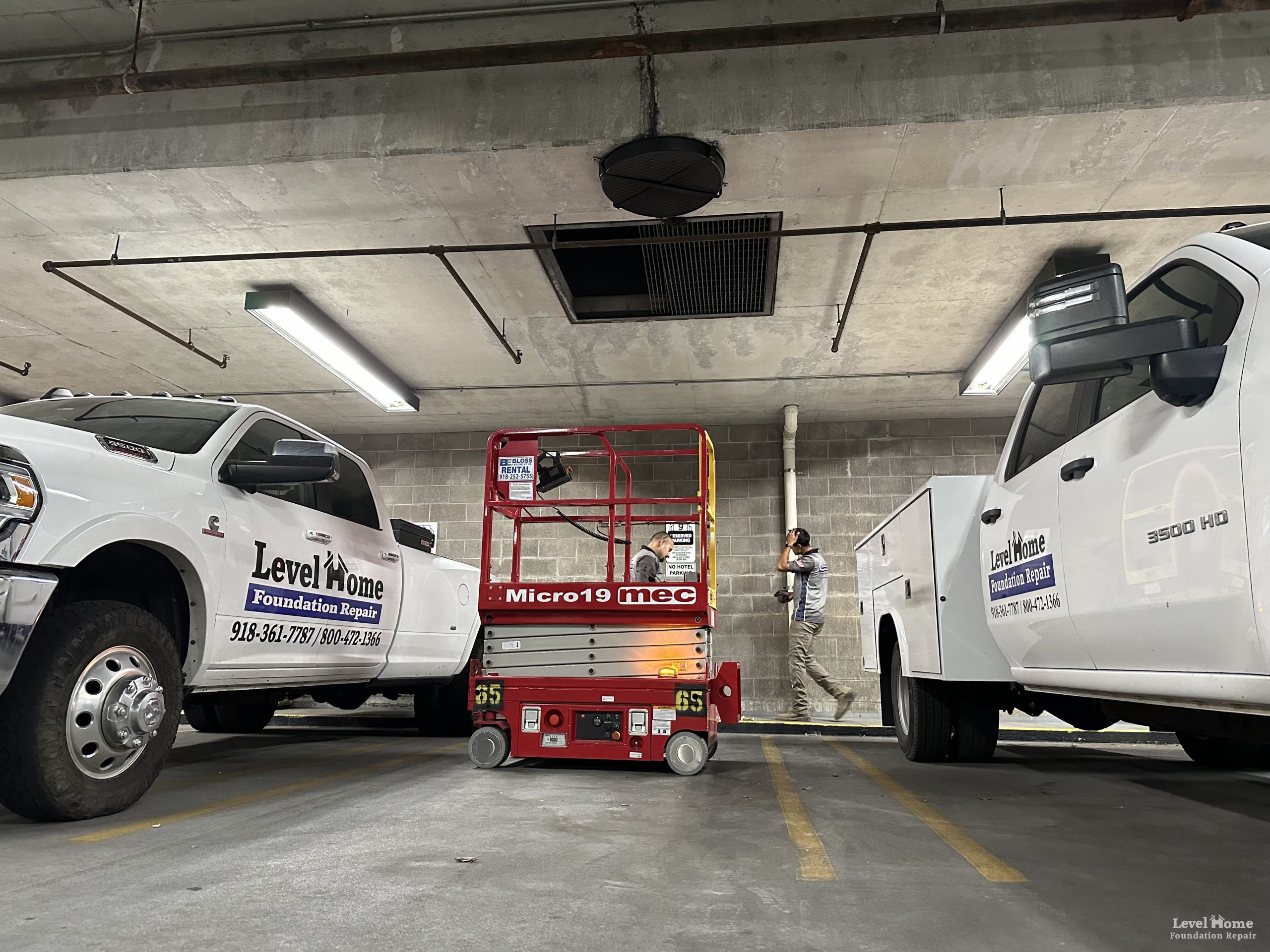
Parking garages present a unique combination of challenges: continuous vehicle loading, exposure to deicing chemicals and moisture cycling, and concrete decks that span large open areas with limited access for repair equipment. Settlement or slab movement in a parking structure creates both a liability concern and an operational disruption for the property. Level Structural has completed slab leveling and structural stabilization work inside operating parking garages, coordinating scissor lift and equipment staging around continued vehicle access wherever possible.
Warehouse and Industrial Facility Floor Repair
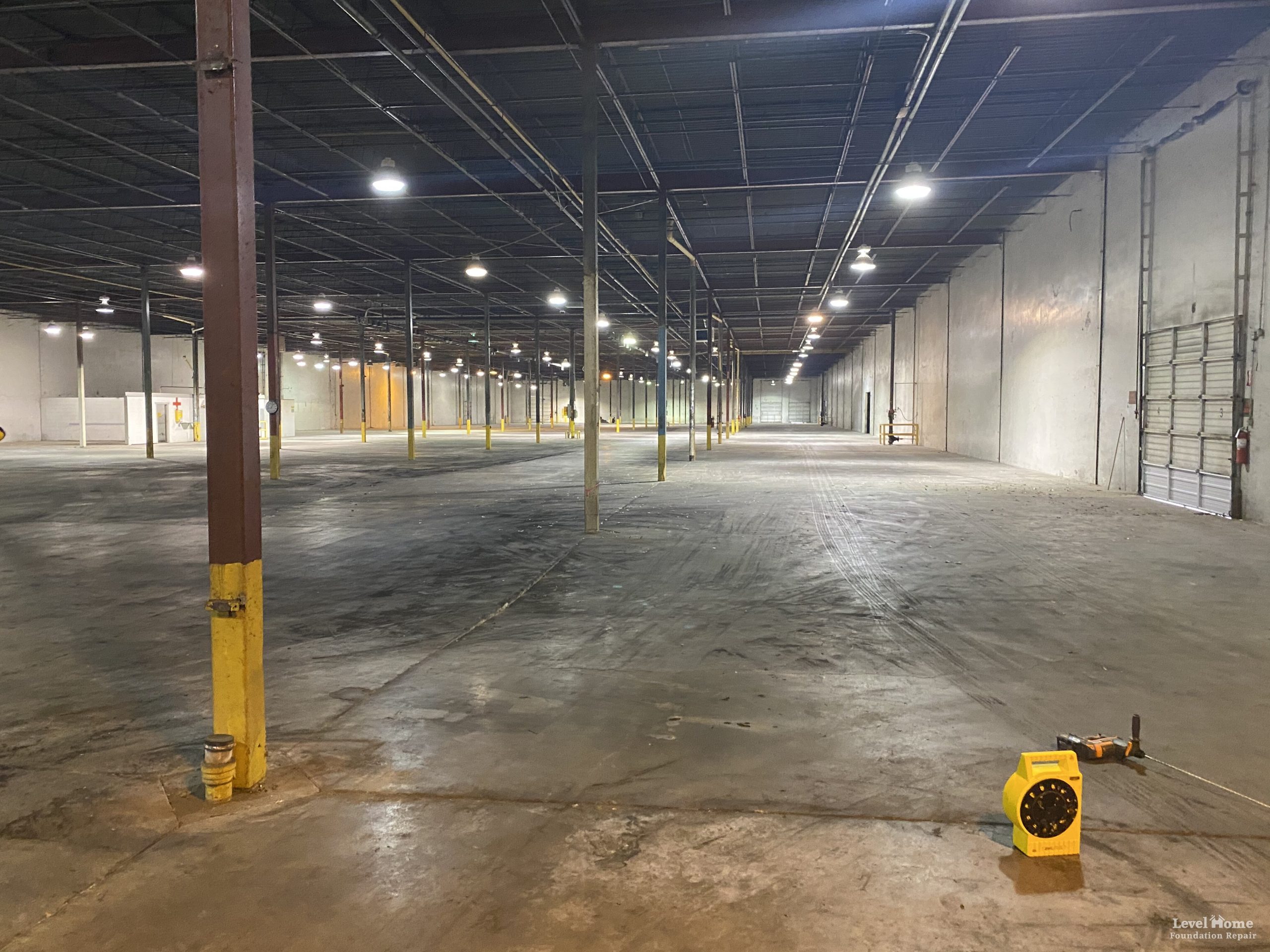
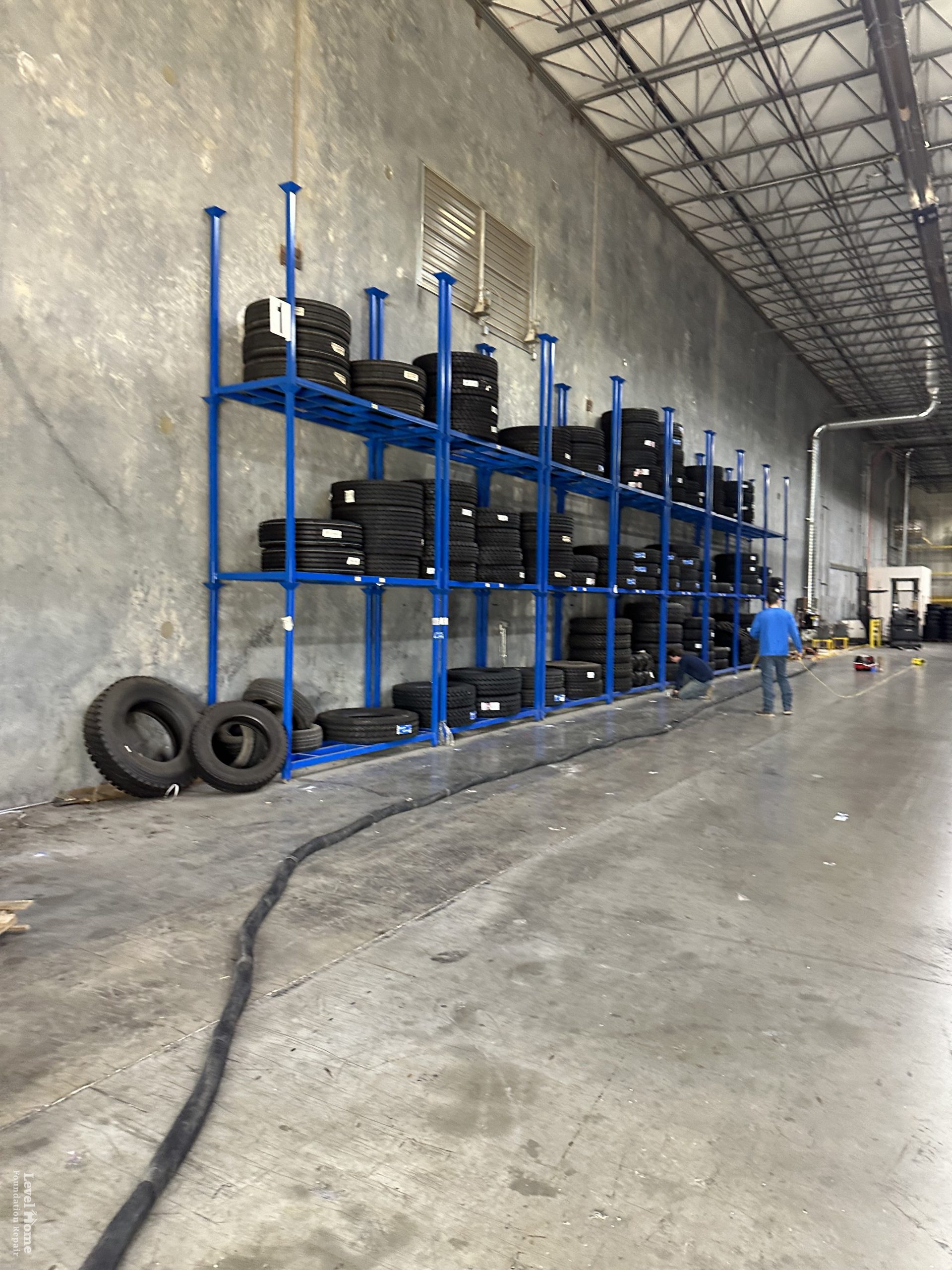
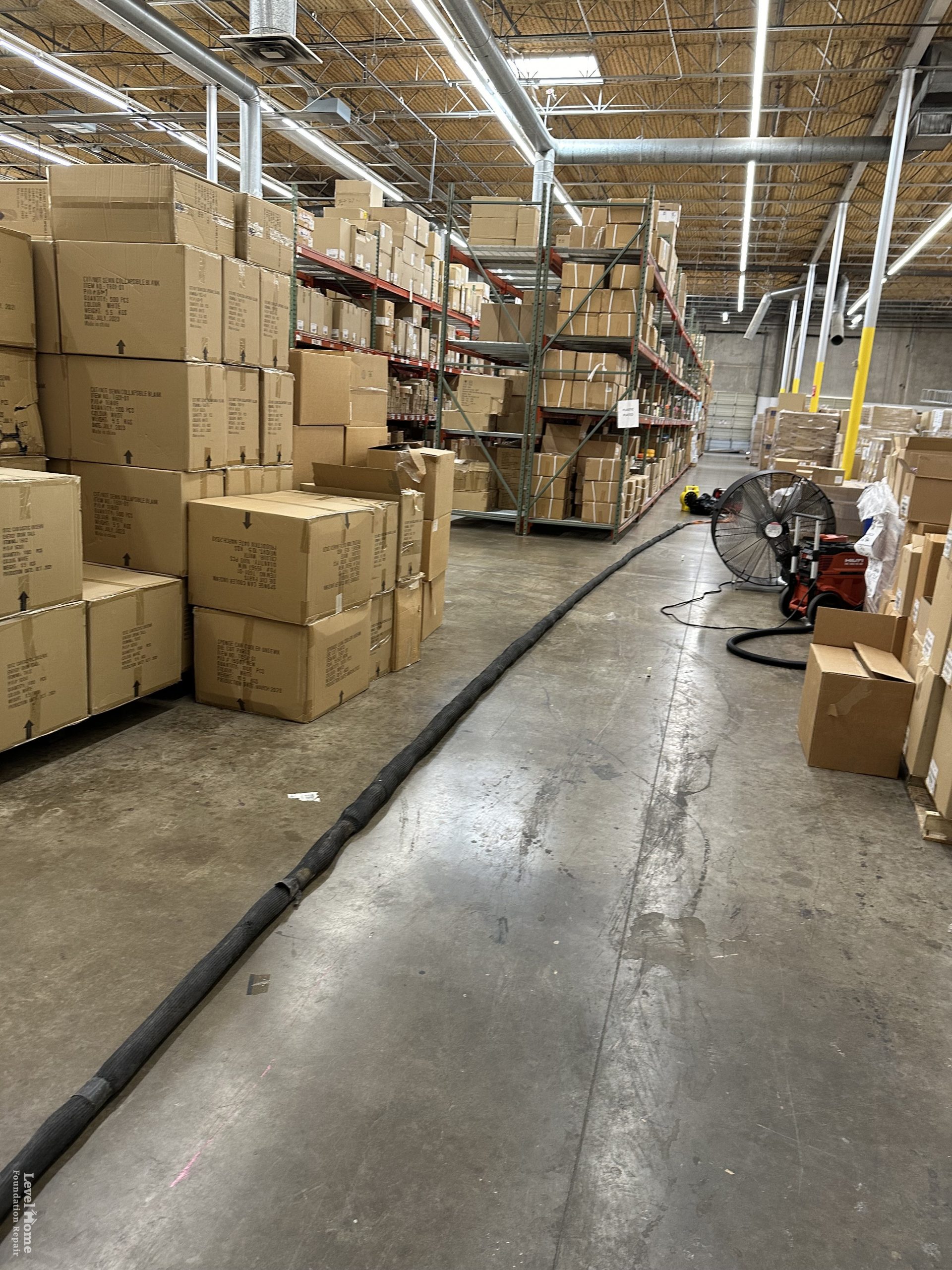
Industrial and warehouse floors carry some of the heaviest, most concentrated loads of any commercial structure, from racking systems and pallet storage to heavy machinery and forklift traffic. Settlement beneath these floors can develop gradually, often going unnoticed until cracking, slab separation, or uneven transitions begin to affect operations and product safety. Our team has assessed and repaired floor settlement in facilities ranging from general storage warehouses to specialized industrial sites, including flooring beneath tire storage racking and heavy equipment staging areas.
Where a slab has settled but remains structurally sound, polyurethane concrete leveling can often restore a level, safe surface in a single day with minimal disruption to warehouse operations. Where the underlying soil requires deeper correction or the slab itself has failed beyond leveling, our team turns to the broader slab foundation repair methods used across our residential and commercial work, combined with the deep foundation and grouting methods described above to address both the surface condition and the root cause.
Loading Docks, Retail Centers, and Multi-Family Commercial Applications
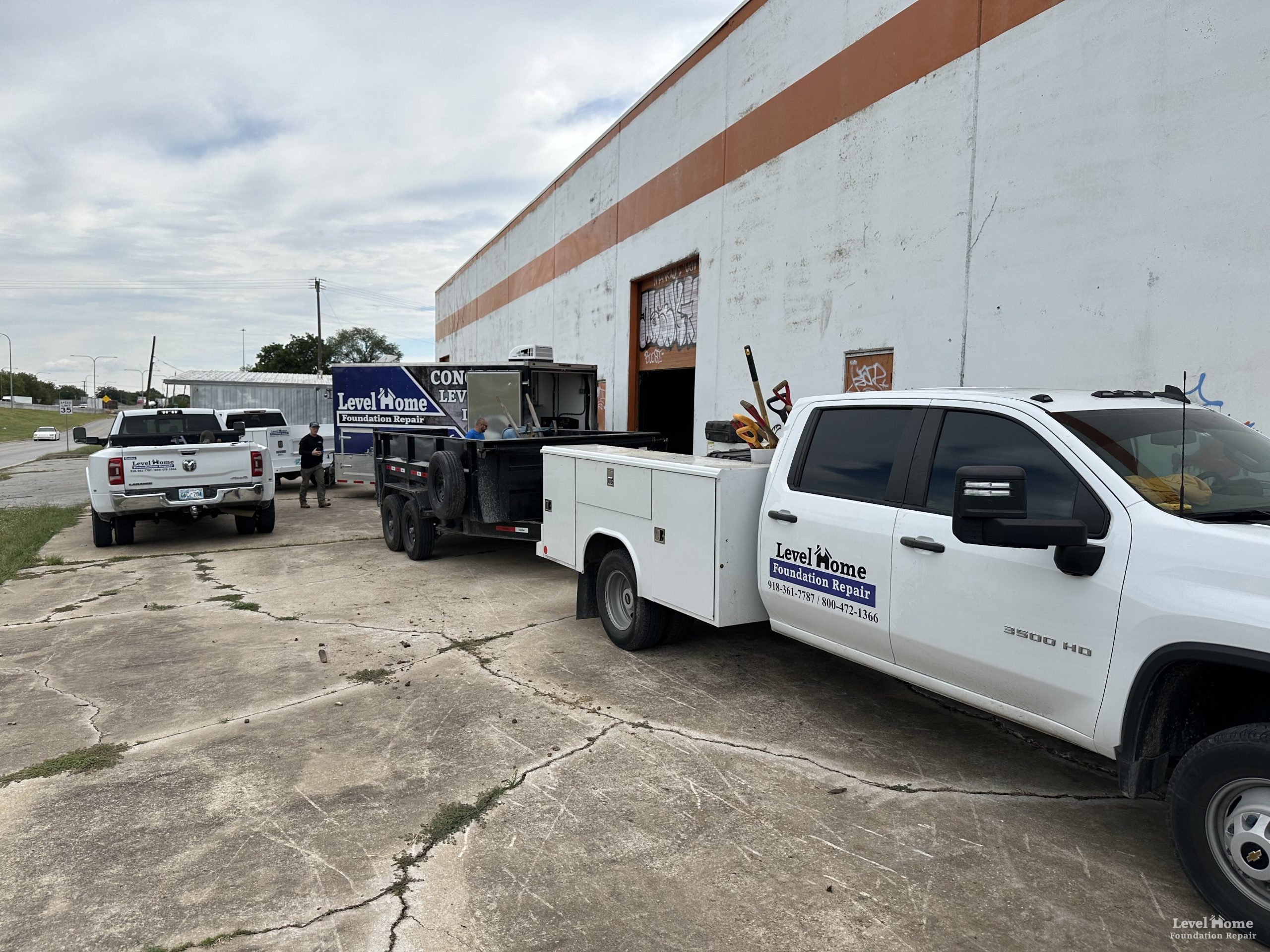
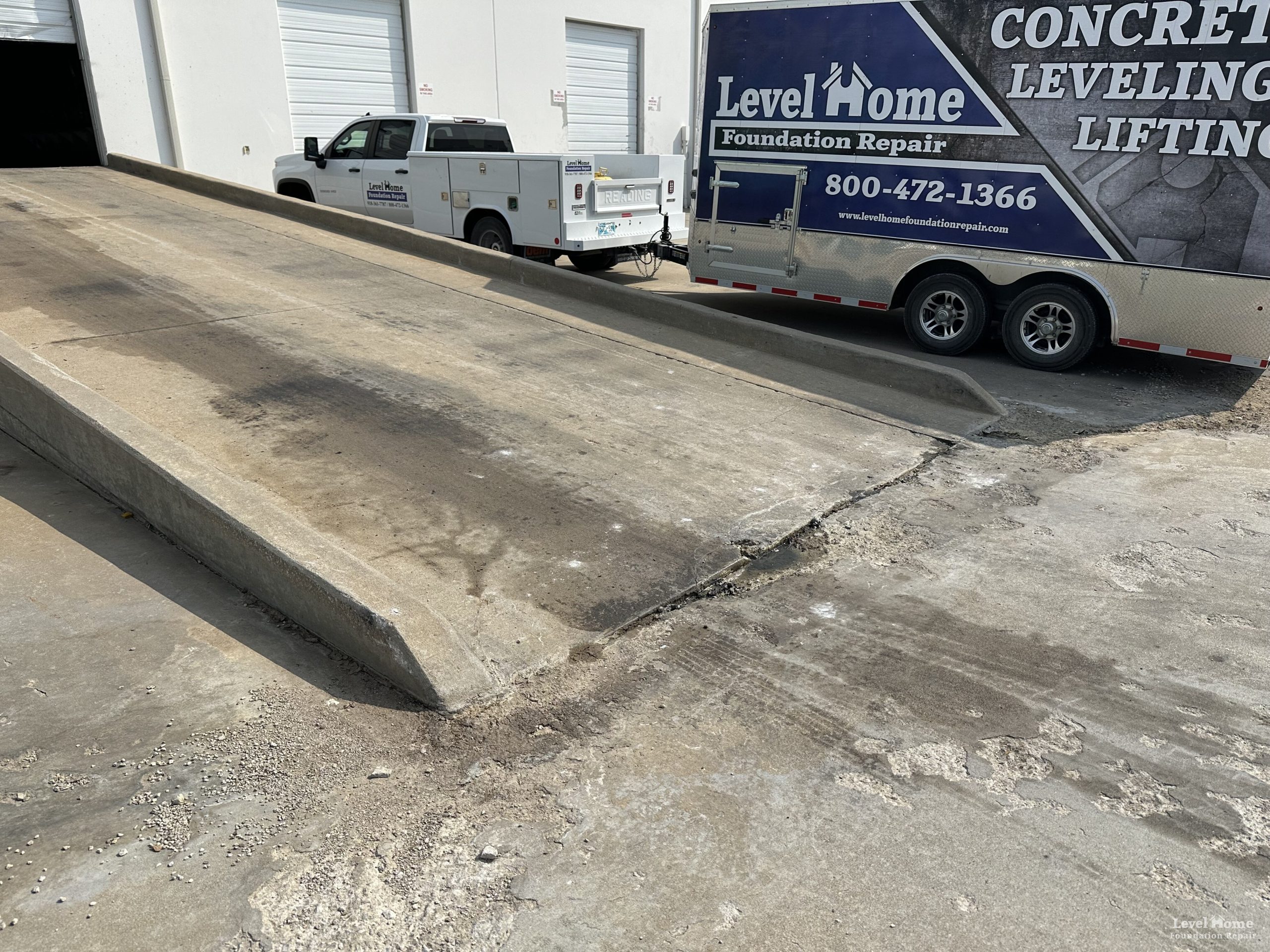
Loading dock aprons take on some of the most concentrated, repetitive loading of any commercial concrete surface, and settlement here can create a safety hazard for drivers and freight handling equipment alike. Our team has repaired loading dock settlement where the concrete had separated from the adjoining building foundation, restoring a safe, level transition for daily freight operations.
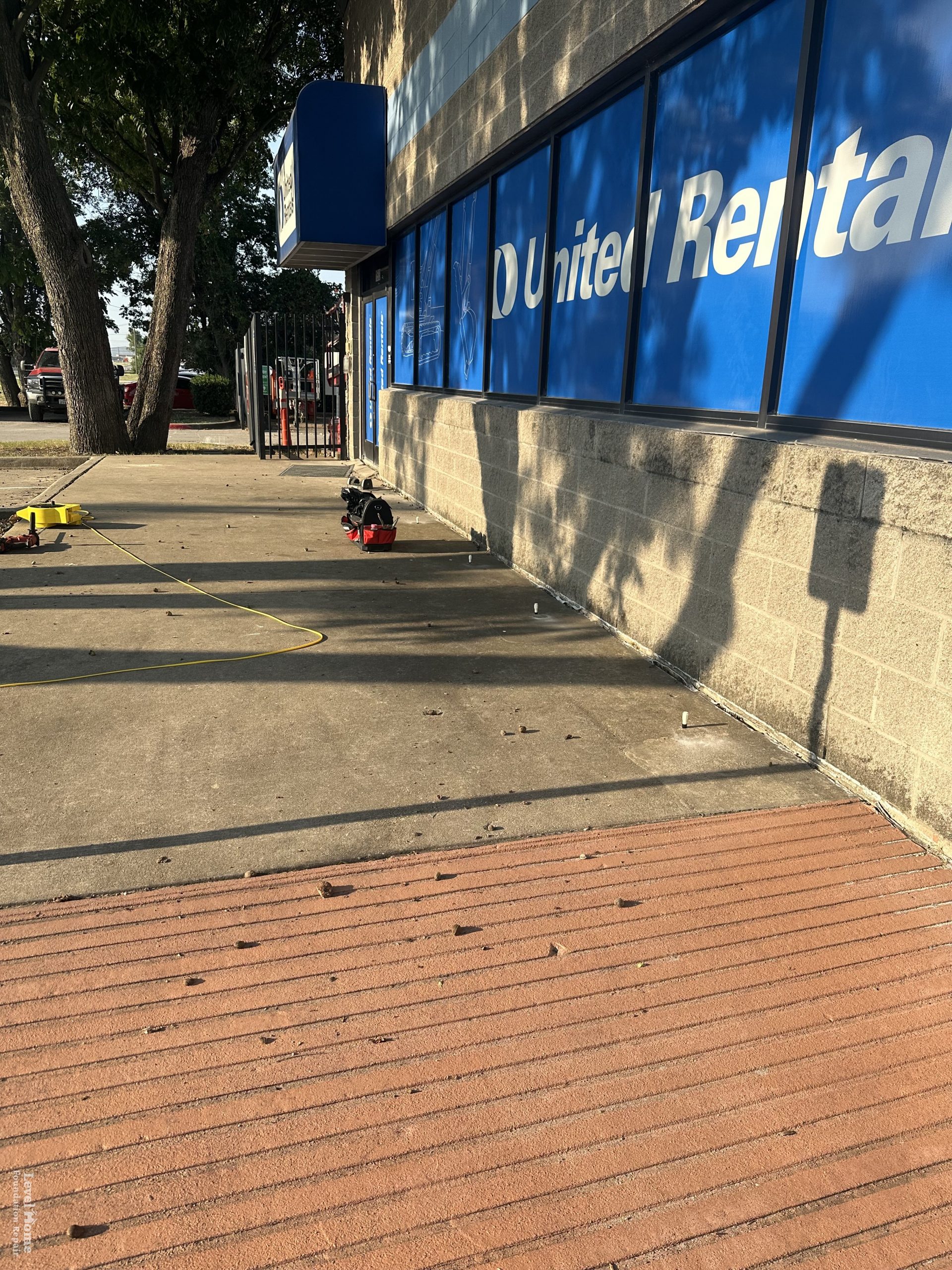
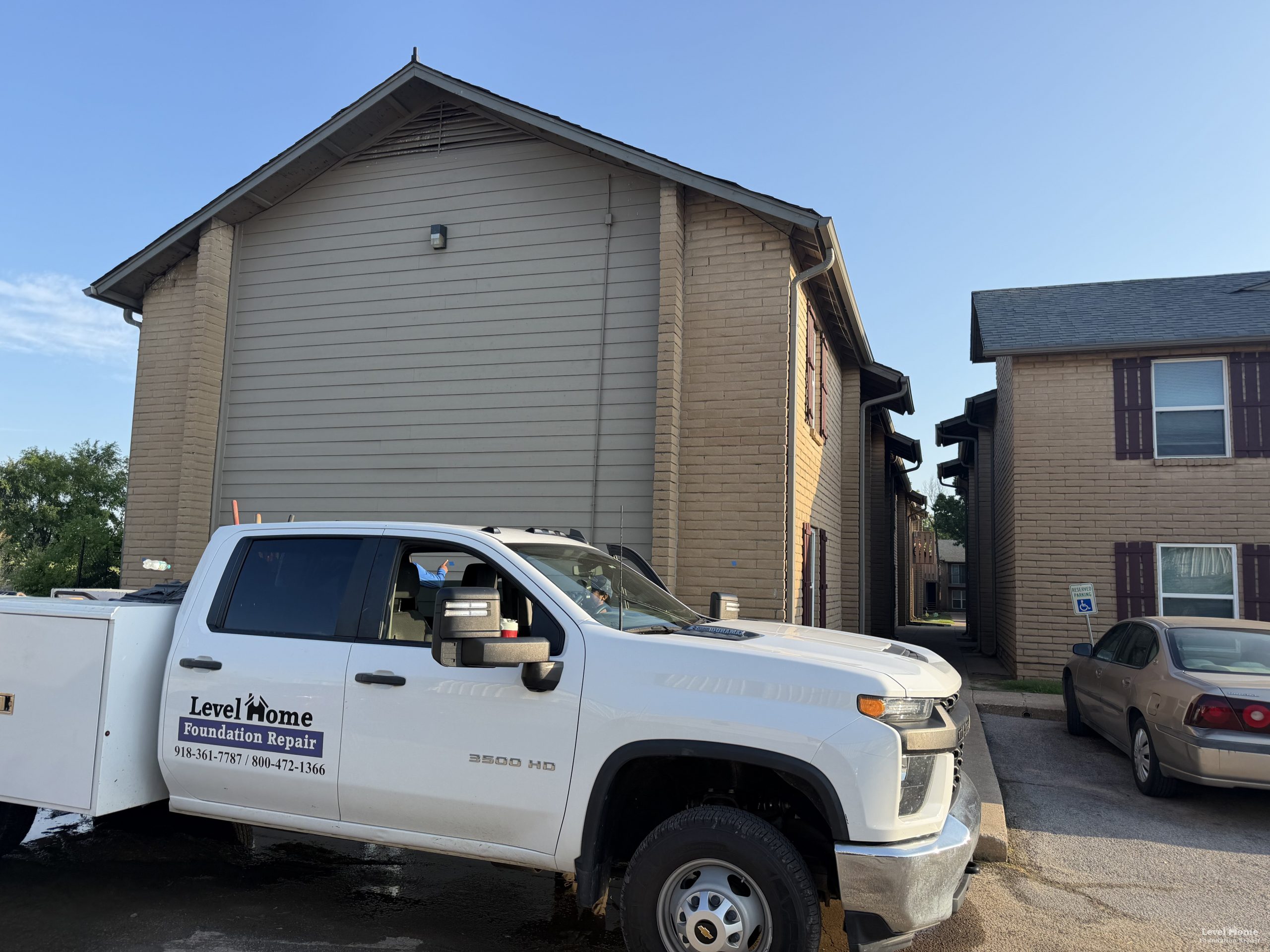
Retail properties bring a different set of priorities, where minimizing visible disruption to customers matters as much as the structural repair itself. Our work for a United Rentals retail location involved concrete repair at the storefront while keeping the business accessible to customers throughout the project. Apartment complexes and other multi-family commercial properties present their own challenge, where shared foundations affect multiple units and tenant disruption must be minimized during the repair process.
Institutional and Healthcare Facility Structural Support
Healthcare campuses, schools, and other institutional buildings carry a higher standard for safety, continuity of operations, and coordination with facility staff, engineers, and inspectors. Our helical pile project for Saint Francis Health System in Tulsa demonstrates the level of technical coordination Level Structural brings to institutional work. The project required supporting 35-foot precast concrete retaining walls after erosion had compromised the surrounding soil, and it demanded close communication between our field team, the facility’s engineers, and project inspectors from the earliest planning stages through final installation. Review the complete Saint Francis helical piles case study for a detailed look at how that project was assessed, engineered, and executed.
Pre-Construction Structural Support for New Commercial and Civil Development
The most cost-effective time to address expansive clay soil is before a structure is ever built on it. Level Structural provides pre-construction helical pier installation for developers and general contractors who want to eliminate foundation risk before pouring, rather than repairing settlement after the fact. Because helical piers reach load capacity immediately upon installation, they fit within tight commercial construction schedules without waiting for concrete cure times.
Our dedicated pre-construction helical pier page covers this service in full detail, including how our team works alongside geotechnical engineers and general contractors to design a pier layout suited to the site’s soil report and the structure’s anticipated loading.
Why Commercial Property Professionals Choose Level Structural
Commercial property managers, owners, and contractors work with Level Structural because our team treats every project with the same standard of communication and technical rigor, regardless of size. A few reasons commercial clients continue to rely on our division:
- Depth of field experience. With over 10 years in the field and more than 3,000 properties stabilized across Oklahoma, our team has encountered nearly every soil and structural condition this region presents.
- Proprietary repair products. Level Structural applies seven proprietary licensed repair products developed specifically to perform in Oklahoma’s expansive clay soil conditions.
- Engineering coordination. Our structural analysts work directly with third-party engineers and inspectors on complex projects, and our team reimburses the cost of independent engineer reports so clients can obtain an unbiased structural opinion at no added expense.
- Transferable warranty coverage. Structural repair work completed by our team is backed by a transferable warranty, protecting the investment for current owners and adding documented value for future buyers or lenders.
- A mission that shows up in the field. Level Home Foundation Repair was founded on building a foundation of trust in our community through honesty, integrity, and innovation, a standard our commercial division holds itself to on every site visit and every project.
Learn more about the people and history behind our company on the about Level Home Foundation Repair page, and review our full warranty and guarantee terms for details on the coverage that comes with commercial structural repair work.
Frequently Asked Questions
What separates Level Structural from a typical commercial foundation repair company?
Level Structural is a dedicated division within Level Home Foundation Repair built specifically for large-scale, technically complex commercial and civil projects. Our structural analysts perform detailed assessments, coordinate with third-party engineers when warranted, and specify equipment and repair methods sized for heavier commercial and civil loads rather than applying residential-scale solutions to a much larger problem.
What types of properties does Level Structural work on?
Our division works on multi-story parking structures, warehouses and industrial facilities, retail centers, loading docks, apartment complexes and other multi-family properties, healthcare and institutional campuses, and civil infrastructure sites throughout Tulsa and Northeast Oklahoma. Learn more about our general commercial foundation repair services for smaller commercial buildings and standard scope projects.
Can commercial or industrial operations continue during a structural repair project?
In most cases, yes. Our team plans commercial and civil projects around your operational schedule whenever possible, staging equipment and sequencing work to minimize disruption to tenants, employees, and customers. The scope, access requirements, and any necessary phasing are outlined clearly during the assessment process.
Does Level Structural work with structural engineers on commercial projects?
Yes. Our structural analysts regularly coordinate with third-party structural and geotechnical engineers on commercial and civil projects, particularly where permitting, load calculations, or an independent professional opinion is required. Our team also reimburses the cost of independent engineer reports so property owners can obtain an unbiased assessment at no additional expense.
What is carbon fiber reinforcement and when is it the right solution?
Carbon fiber reinforcement bonds high-strength carbon fiber strips to the interior face of a concrete or masonry wall, beam, or column, adding tensile strength that resists further cracking or movement. It is typically used when a structure shows early to moderate distress and can be reinforced in place rather than requiring replacement, offering a strengthening solution that adds minimal thickness to finished spaces.
What is compaction grouting and why would a commercial site need it?
Compaction grouting injects a dense grout mixture into loose or void-prone soil to densify it and improve its load-bearing capacity. Commercial and civil sites often need this approach near excavations, utility corridors, or areas where erosion has left soil unstable, particularly when digging out and replacing the soil is not practical or cost-effective.
How does clay soil stabilization help a commercial property in Oklahoma?
Oklahoma’s expansive clay soil swells and contracts with moisture changes, placing ongoing stress on foundations, parking lots, and access roads. Ionic clay soil stabilization strengthens the bonds between clay particles, improving load-bearing capacity and reducing future movement without the cost of large-scale excavation and soil replacement.
What warranty coverage applies to commercial and civil structural repairs?
Structural repair work completed by Level Structural is backed by a transferable warranty, so protection carries forward if the property changes ownership. Specific warranty terms vary by repair method and are detailed in your written estimate. Full coverage details are available on our warranty and guarantee page.
Schedule a Commercial or Civil Structural Assessment
If your property is showing signs of settlement, wall movement, or slab distress, our team is ready to evaluate the site and outline a repair strategy engineered for the scale of your structure. Level Structural serves commercial and civil clients throughout Tulsa and across all of Oklahoma.
(918) 361-7787 | 800-472-1366
Request a Free Commercial Structural Inspection or Contact Level Home Foundation Repair