What a Professional Yard Drainage Installation Looks Like in Tulsa
When water collects beside a Tulsa home, the visible puddle is only part of the story. The more important question is where that water travels after a storm and how long it stays there. A professional yard drainage installation Tulsa homeowners can rely on is not simply a crew digging a trench and dropping in pipe. It is a site-specific system designed around roof runoff, slope, soil, outlets, utilities, landscaping, and the foundation it is meant to protect.
At Level Home Foundation Repair, our team begins with the property rather than a one-size-fits-all drainage product. Founder Adam Sedlak and the Level Home team look at the water’s path, identify the source of the problem, and build a practical route for moving water away from the house. That process matters because water that is merely redirected from one trouble spot to another has not been solved.
This guide walks through what homeowners can expect from a real drainage project: evaluation, layout, excavation, pipe installation, discharge planning, testing, cleanup, and the follow-through that helps the system keep working. If you are still deciding which drainage approach fits your property, start with our broader Tulsa foundation drainage solutions guide; here, we focus on what installation day actually looks like.
Why Tulsa Properties Need Intentional Drainage
Tulsa yards contend with fast seasonal storms, stretches of saturated ground, dry heat, and the expansion-and-contraction cycle of Oklahoma clay soil. Clay can shed water slowly when compacted or saturated, then shrink during dry periods. That movement is one reason surface water should not be allowed to linger around a foundation. Local water-table conditions and low areas can add pressure, especially on properties where runoff from neighboring lots, roofs, patios, or driveways all converges near the home.
Water management is therefore part of protecting the structure, not just improving a muddy lawn. Persistent moisture can contribute to crawl-space humidity, erosion, soft soil at the perimeter, and changing support conditions beneath slabs. Learn more about the connection between Oklahoma clay soil and foundation movement, or see how water can affect a slab in our article on slab settlement and repair options.
Not every wet yard needs the same answer. A roof downspout that dumps beside a walk, a backyard bowl that holds stormwater, and a crawl space taking in seepage are different problems. The goal of a professional installation is to collect the right water, at the right point, and carry it to a responsible discharge location without creating a new issue for the home or a neighbor.
Drainage Systems Our Team May Use
During an evaluation, the Level Home team matches the system to the water source and the property’s grade. Several components may work together on one project.
- Tight lines: Solid PVC pipe carries concentrated water—often from downspouts, catch basins, or area drains—through a buried route to an approved outlet. It is a common choice when the job calls for moving captured water efficiently rather than collecting water along the whole trench.
- French drains: A perforated pipe installed in properly prepared gravel and filter fabric gathers subsurface water along its run. It can help when water is moving through the soil or collecting along an edge of the property. For a decision-focused overview, read our French drain versus surface drain explanation.
- Surface drains: Grated inlets, channel drains, and catch basins collect water visible at the surface, such as runoff at a patio, driveway, low lawn area, or downspout exit.
We do not treat these as competing labels. A surface inlet may feed a tight line; a French drain may connect to a solid outlet section. The layout depends on grade, the amount and source of water, practical access, and where the system can discharge. On homes with runoff at the foundation perimeter, our team may also recommend measures discussed in our guide to perimeter drainage during heavy Oklahoma rains.
What the Installation Process Looks Like, Step by Step
1. Diagnose the water path before proposing a fix
A professional installation starts with observation. Our crew looks for ponding, washed soil, downspout discharge, standing water near the wall, settled pavement, soggy turf, and areas where slope points toward the house. We ask when the water appears: only in a downpour, after days of rain, or during ordinary irrigation. We also consider foundation symptoms and crawl-space conditions. If the concern may extend beyond drainage, a professional foundation inspection in Tulsa helps identify the next right step.
2. Plan the route, capture points, and outlet
Next, the team marks the intended path. This is where experienced planning separates a drainage system from a buried pipe with no destination. We establish where water will enter the system, how the line will maintain functional fall or be otherwise designed for the conditions, and where it can leave safely. The route must avoid—or account for—landscape features, hardscape, irrigation, utilities, gates, and access needs.
Before digging, utilities should be located through the appropriate 811 process. Our team also considers whether a discharge point will erode, freeze, send water back toward the house, or conflict with local site conditions. On some lots, the cleanest route is not the shortest line on a sketch. It is the route that protects the home and can be installed, serviced, and restored responsibly.
Planning also gives homeowners a chance to understand the visible result. Some drainage components are buried; collection grates, downspout connections, cleanouts, or outlet treatments may remain accessible by design. We explain those details before installation so the finished system is not a surprise. This is especially valuable when a route crosses landscaped areas, passes near a fence or patio, or needs to work around a mature tree.
3. Protect the work area and excavate carefully
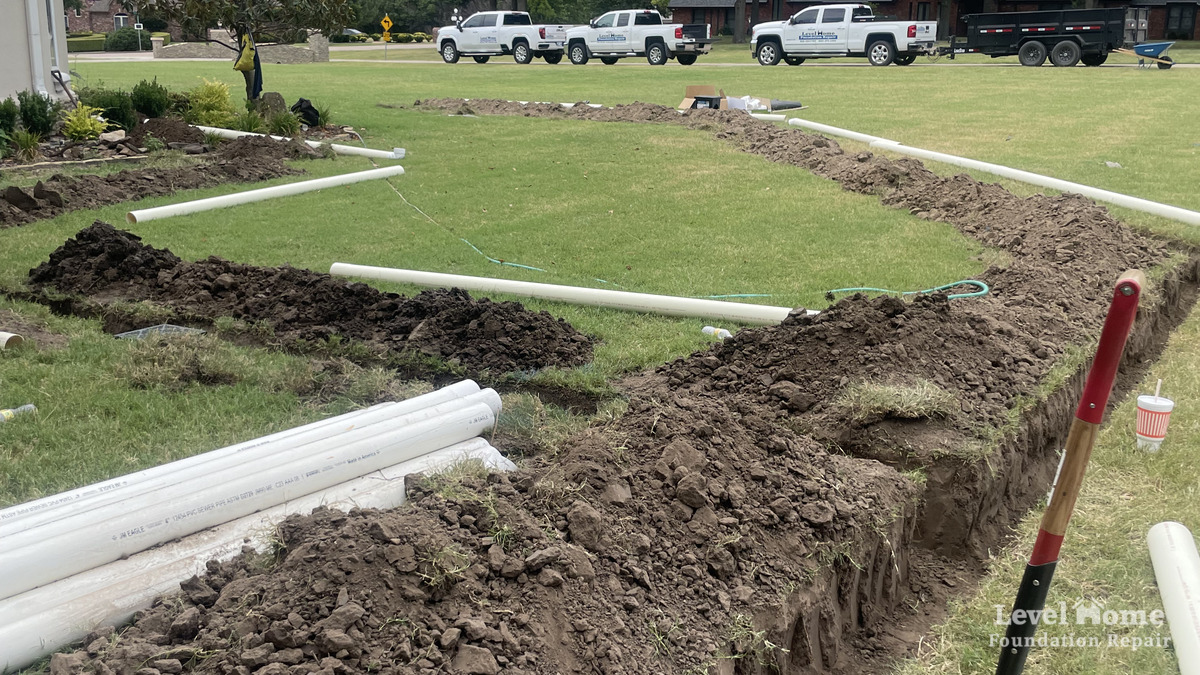
On installation day, the crew confirms the plan, identifies access, and protects practical areas around the work zone. Then excavation begins. Trench width and depth depend on the pipe, soil, system type, and route. A tight-line PVC system is installed differently from a gravel-wrapped French drain, so the crew does not use one trench detail for every application.
Excavation is deliberate work. The crew watches for changing soil, roots, existing lines, and grade. In a Tulsa yard with clay-heavy ground, a trench that appears fine at the start can need adjustment as conditions change. The team keeps the system’s purpose in view: water needs a continuous, protected path from collection to discharge.
4. Build the drainage assembly for the system selected
For a tight line, our team installs durable solid pipe with properly fitted connections, clean transitions from downspouts or inlets, and a protected route to the outlet. For a French drain, installation generally includes a prepared trench, appropriate aggregate, filter fabric, perforated pipe orientation and placement, and a final gravel envelope before restoration. Surface drains require inlets set at the correct elevation so water can actually reach them.
Details matter. Loose connections, the wrong pipe, insufficient bedding, blocked fabric, or an inlet set too high can undermine a system that looked good when it was new. We build with serviceability in mind as well: cleanouts or accessible components may be appropriate depending on the design. The purpose is not to make the trench disappear as fast as possible; it is to create a drainage route that performs through real Tulsa weather.
5. Connect, test, and verify the outlet
Before the trench is closed, the crew checks connections and tests water flow where practical. Testing can reveal a low point, a connection issue, or an inlet that needs adjustment while the system is still accessible. The discharge receives just as much attention as the intake. Water should be directed away from the foundation without dumping it where it can undermine soil, cross an unsafe walking area, or return during the next storm.
6. Backfill, restore, and explain the system
After testing, the trench is backfilled according to the system and site conditions. Gravel systems receive the layers they need; solid-pipe runs are protected and filled appropriately. The crew restores the surface as reasonably as conditions allow, knowing that soil can settle after a trench project and turf recovery takes time. Before leaving, the Level Home team explains the system, shows the important collection and discharge points, and gives homeowners practical maintenance guidance.
What Homeowners Should Expect on Installation Day
A drainage installation is active outdoor construction, so homeowners should expect equipment, excavated soil, visible trenches during the work, and temporary disruption to part of the yard. The exact duration depends on the scope, access, weather, soil, obstructions, and restoration needs. Our team communicates the work area and plans around reasonable site access whenever possible.
Before the crew arrives, clear movable items from the planned work zone, provide access as arranged, and let us know about known irrigation, landscape lighting, pet containment, or private lines. Keep pets and children away from the active area. It is also helpful to point out the places where water has been worst—photos or videos from a storm can be especially useful.
Homeowners should not expect an undisturbed yard at the end of a buried-drainage project. They should expect a careful installation, a tested water path, and straightforward information about restoration and settling. If water has already affected the area beneath the home, our complete crawl-space repair guide explains the conditions our team evaluates, and our crawl-space repair service can help with the structural side of the problem.
Signs Your Tulsa Property May Need Drainage Work
One isolated puddle after an unusually heavy storm does not automatically mean you need a new system. Repeated patterns do deserve attention. Contact Level Home when you notice:
- Water standing near the foundation hours or days after rain
- Downspouts that dump water beside the home or across a walk
- Low lawn areas that stay muddy, bare, or difficult to mow
- Soil washing away, mulch migrating, or exposed roots after storms
- Water entering or raising humidity in a crawl space
- Patio, porch, or driveway runoff flowing back toward the house
- Foundation-adjacent cracking, sticking doors, or uneven floors paired with water issues
Those structural signs can have several causes, but they merit a knowledgeable look. Review the warning signs of foundation problems and our complete Tulsa foundation repair guide for context. Homeowners in older central neighborhoods can also see targeted advice on protecting a Midtown Tulsa home from water damage. For spring-specific preparation, read what heavy spring rain does to Tulsa crawl spaces.
Why Professional Installation Matters More Than a DIY Trench
DIY drainage videos can make a project look simple: rent a trencher, buy pipe, cover it up. The difficult parts are the parts the finished video often does not show. A system needs a workable collection point, appropriate materials, a reliable route, correct connections, and an outlet that will not cause erosion or send water back to the foundation. It must also be planned around utility safety, property grade, existing improvements, and the behavior of clay soil.
A do-it-yourself trench may temporarily move water while concealing a wrong slope, crushed pipe, inadequate outlet, undersized inlet, or a line that fills with sediment. It can damage irrigation or utility lines, disturb hardscape, or leave an unsafe discharge condition. Most importantly, it may delay recognition of a moisture issue that is already affecting the home.
Professional installation is also about judgment when site conditions do not match the original plan. A buried root, unexpected soil condition, existing drain line, or outlet concern may call for an adjustment. Our team can evaluate that condition in the context of the full system instead of forcing a preselected DIY layout to fit. That care helps protect the investment in both the drainage work and the property around it.
Professional drainage work gives homeowners a diagnosis before an installation, an accountable team on site, and a system designed as part of the larger foundation picture. Level Home evaluates whether drainage is the right first fix, whether it should be paired with crawl-space work, or whether foundation stabilization needs separate attention. Explore our professional drainage solutions service to see how we approach these projects.
Start With a Clear Plan for Your Yard
Every Tulsa lot handles water differently. A good drainage installation should reflect your property’s runoff, soil, elevation, home type, and existing conditions—not a generic trench diagram. Adam Sedlak and the Level Home team will explain what we see, recommend a practical path forward, and help you understand what installation will involve before work begins.
Do not wait for the next storm to show you the same problem again. Schedule your free Level Home inspection to discuss standing water, downspout runoff, crawl-space moisture, or foundation-adjacent drainage concerns. You can also return to the Level Home Foundation Repair homepage to explore our Tulsa-area foundation and water-management services.
A site visit also gives homeowners an opportunity to ask practical questions about access, landscaping, outlets, and timing before equipment arrives. Clear expectations are part of a professional project. When our team can see the grades and water patterns firsthand, we can recommend a solution that addresses the cause of the runoff instead of only the symptom left behind after a storm.
Frequently Asked Questions About Yard Drainage Installation in Tulsa
How long does a professional yard drainage installation take?
Many residential projects can be completed in a day or several days, but the timeline depends on the system, trench length, access, soil, weather, utilities, and restoration needs. Level Home explains the expected scope after evaluating the property.
Will a drainage system tear up my yard?
Buried drainage requires excavation, so there will be temporary disruption along the trench route. Our team plans the route carefully, protects the work area where practical, backfills the system correctly, and explains restoration expectations. Some settling and turf recovery can occur after installation.
What is a tight-line drainage system?
A tight line is a solid, buried pipe—often PVC—that transports captured water from a downspout, catch basin, or area drain to a suitable discharge point. It is used to move concentrated water efficiently rather than collect groundwater along the pipe.
Do I need a French drain or a surface drain?
It depends on where the water is coming from. French drains collect subsurface water along their length, while surface drains collect water visible at grade. A property may need one, the other, or a combination connected to a tight-line outlet.
Can yard drainage help protect my foundation?
Proper drainage can reduce prolonged water exposure near a foundation, help limit erosion, and support more consistent soil moisture conditions. It is one part of a broader property-specific foundation-protection plan; an inspection can determine whether other repair work is needed.
Why can’t I just extend my downspouts myself?
Simple downspout extensions can be useful in the right situation, but they do not solve every grading, runoff, or subsurface-water problem. A buried system requires a sound route, safe discharge, utility awareness, suitable materials, and installation details that DIY work can miss.
What should I do before the Level Home crew arrives?
Clear movable items from the work area, arrange access, identify known private irrigation or landscape features, and keep children and pets away from excavation. Share photos or video of the water problem if available, especially if it occurs only during storms.