Most Tulsa homeowners notice the symptoms first: a door that sticks, a hairline crack zigzagging up a wall, or a floor that feels slightly off. What they don’t see is what’s happening underneath — and understanding that is the key to choosing the right repair.
What Is Slab Foundation Settlement?
Slab settlement occurs when the soil beneath a concrete slab foundation loses its ability to support the structure evenly. Instead of the slab staying level, sections sink or shift as the ground underneath changes.
In Tulsa, the cause is almost always the same: our native clay soil.
Why Tulsa’s Clay Soil Creates Voids Under Your Slab
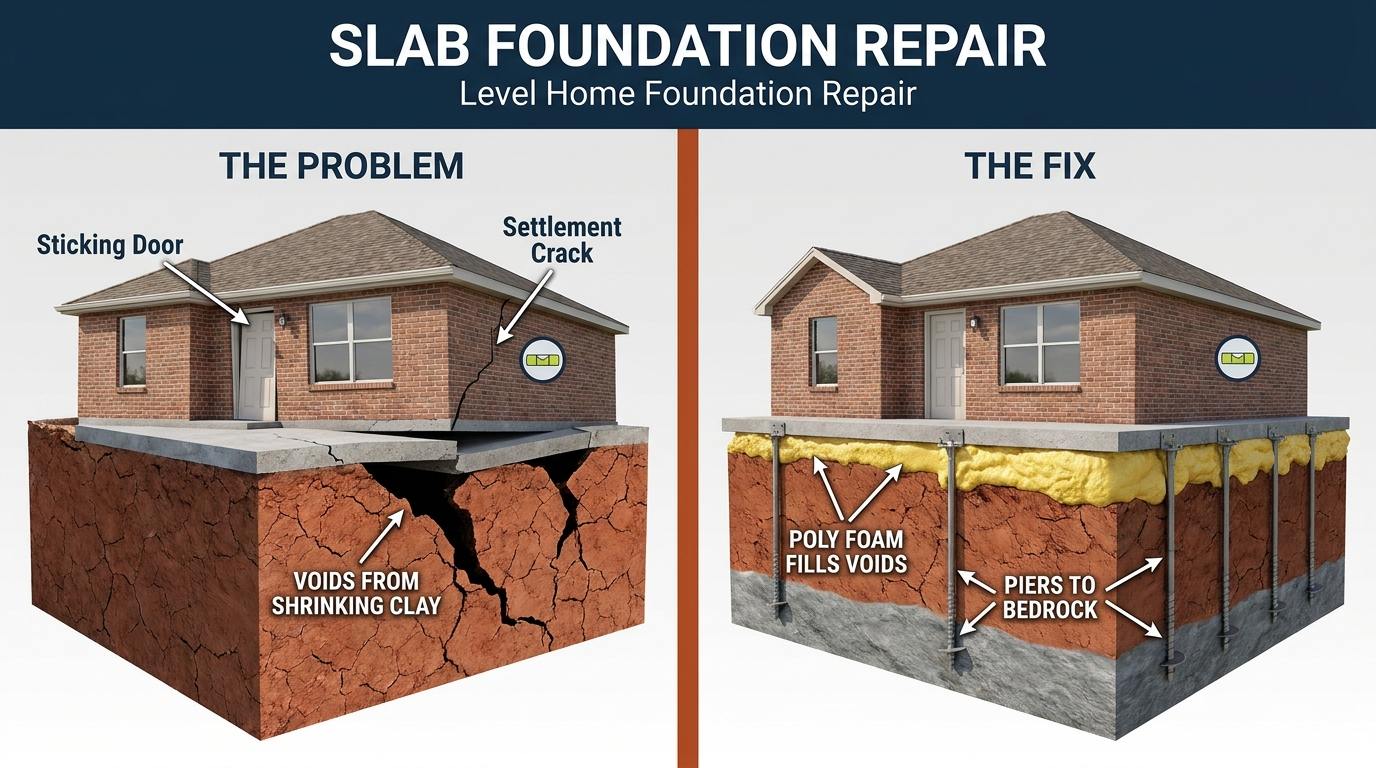
Oklahoma sits on some of the most reactive clay soil in the country. This soil expands when it absorbs moisture and contracts when it dries out. During a typical Tulsa summer, temperatures stay above 90°F for weeks at a time. The soil around and beneath your foundation shrinks, pulling away from the concrete and creating voids — empty pockets with no support.
When the rain returns, the clay expands again, but not evenly. This cycle of swelling and shrinking puts enormous pressure on a slab, and over time the foundation settles into those unsupported areas.
The result: settlement cracks in walls and brick veneer, doors and windows that no longer close properly, and visible gaps between the floor and baseboards.
How Settlement Differs From Other Foundation Problems
Not every crack means settlement. Tulsa homes can also experience:
- Upheaval, where expanding clay pushes sections of the slab upward
- Lateral pressure, where soil pushes against basement or retaining walls
- Moisture intrusion, where water enters through slab cracks without significant movement
Settlement specifically involves downward movement. The slab drops because the soil beneath it can no longer hold the weight. This is what makes it distinct — and why the repair methods target support from below.
The Two Primary Repair Methods for Slab Settlement
Steel Piers: Permanent Stabilization to Bedrock
Steel piers are the standard for serious slab settlement. The process works like this:
- Small sections of soil are excavated along the foundation perimeter
- Steel pier sections are hydraulically driven through the unstable clay until they reach load-bearing bedrock or a stable stratum
- A steel bracket transfers the weight of the foundation from the failing soil to the piers
- The foundation is carefully lifted back toward its original position
Steel piers bypass the problem soil entirely. They don’t rely on clay for support — they anchor directly into stable ground, sometimes 20 to 30 feet below the surface depending on Tulsa’s local geology.
This method is ideal when settlement is significant, when cracks are growing, or when a structural engineer has confirmed ongoing movement.
Poly Foam Injection: Filling Voids and Stabilizing Soil
Polyurethane foam injection addresses the voids that cause settlement in the first place. High-density structural foam is injected through small holes drilled in the slab. The foam expands to fill empty pockets beneath the concrete, compacts loose soil, and can gently lift a settled slab back to level.
Poly foam works well for:
- Concrete slabs that have settled due to soil erosion or washout
- Garage floors, driveways, and patios with moderate sinking
- Situations where voids are the primary issue rather than deep soil failure
The material is lightweight, waterproof, and cures within minutes. It won’t decompose or wash away like traditional mudjacking materials can over time.
When Both Methods Work Together
In many Tulsa slab foundation repair projects, steel piers and poly foam are used together. Piers stabilize the foundation’s perimeter and transfer structural loads to bedrock, while poly foam fills interior voids beneath the slab that piers alone can’t address.
This combination is especially common in homes where clay soil shrinkage has created both perimeter settlement and interior void spaces — which is exactly what Tulsa’s soil conditions tend to produce.
Warning Signs That Point to Slab Settlement
If you’re seeing any of these in your Tulsa home, settlement may be the cause:
- Diagonal cracks at door or window corners
- Sticking or jamming doors, especially interior doors
- Cracks in exterior brick that follow a stair-step pattern
- Gaps between walls and ceiling or walls and floor
- A floor that slopes noticeably in one direction
- Cracks in the garage floor that weren’t there when the home was built
These symptoms tend to worsen during drought cycles, which is when the clay soil contracts the most.
Getting an Accurate Diagnosis
The only way to confirm slab settlement — and rule out other causes — is a professional foundation inspection. A thorough evaluation includes exterior and interior measurements, checking floor elevations across the home, examining crack patterns, and assessing drainage around the property.
At Level Home Foundation Repair, every inspection is free, and every assessment is honest. If your foundation doesn’t need repair, that’s exactly what we’ll tell you.
Protect Your Tulsa Home Before Small Signs Become Major Repairs
Slab settlement doesn’t reverse itself. Clay soil will continue its seasonal cycle, and voids beneath your foundation will only grow larger. Addressing settlement early — before cracks widen and doors stop closing — saves money and prevents structural damage that becomes far more complex to repair.
If you’re noticing signs of settlement in your Tulsa home, call or text (918) 361-7787 to schedule a free foundation inspection. We serve Tulsa, Broken Arrow, Owasso, Bixby, Jenks, and communities throughout northeast Oklahoma.