
5 Warning Signs Your Tulsa Home Has Foundation Problems (And What to Do Next)
You’re walking through your hallway and notice a crack running diagonally from the corner of a doorframe. Or maybe a door that used to close perfectly now sticks every time you try to shut it. It’s easy to brush these things off as “just an old house being an old house” — but in Tulsa, Oklahoma, these small clues often point to something much bigger happening beneath your feet.
Tulsa sits on some of the most problematic soil in the country for homeowners. Our heavy clay soil expands dramatically when it rains and shrinks just as dramatically during Oklahoma’s scorching summer droughts. That constant push-and-pull cycle puts enormous stress on your home’s foundation — and over time, it shows.
The good news? Foundation problems caught early are almost always less expensive and less invasive to fix. The key is knowing what to look for. In this guide, we’ll walk you through the five most common warning signs of foundation damage that Tulsa homeowners encounter, explain why they happen, and tell you exactly what to do if you spot them. If you’re already concerned, foundation repair Tulsa experts like Level Home Foundation Repair offer free inspections — so you never have to guess.
Why Tulsa Homes Are Especially Vulnerable to Foundation Problems
Before we dive into the warning signs, it helps to understand why Tulsa is such a hotspot for foundation issues. It comes down to three factors working together:
Oklahoma’s Expansive Clay Soil
Much of the Tulsa metro area — from Broken Arrow to Owasso, Bixby to Jenks — sits on clay-rich soil. Clay soil is like a sponge: it absorbs water and swells, then dries out and contracts. The soil volume can change by as much as 10–15% between wet and dry seasons. When soil under your foundation expands unevenly, it pushes parts of your slab upward (called “heaving”). When it contracts, sections of your foundation lose support and sink (called “settlement”).
Extreme Weather Swings
Oklahoma’s weather is famously unpredictable. We can go from weeks of heavy spring rain to months of summer drought — sometimes in the same season. These rapid moisture changes accelerate the expansion/contraction cycle in the soil, putting repeated stress on your foundation year after year.
Age of Tulsa’s Housing Stock
Many Tulsa neighborhoods — from midtown to south Tulsa — feature homes built in the 1950s through 1980s when foundation engineering standards were less advanced. These older slab-on-grade and pier-and-beam foundations are particularly susceptible to Oklahoma’s soil conditions.
Now let’s look at the five warning signs that tell you this soil-foundation battle is happening at your home.
Warning Sign #1: Cracks in Walls, Ceilings, or Exterior Brick
This is the single most common sign of foundation movement — and the one most Tulsa homeowners notice first.
What to Look For
- Diagonal cracks radiating from the corners of windows and doors (these are classic indicators of differential settlement)
- Stair-step cracks in exterior brick or block walls, following the mortar joints
- Horizontal cracks in the foundation wall itself
- Hairline cracks that keep growing wider over time
- Ceiling cracks that appear suddenly, especially near where walls meet the ceiling
What It Means
Not every crack signals foundation failure. Small hairline cracks (less than 1/16 of an inch) can result from normal settling and aren’t always alarming. However, cracks wider than 1/4 inch, cracks that grow over time, or stair-step cracks in brick are red flags. Diagonal cracks from window corners are especially telling — they indicate that one part of your foundation is moving differently than another.
The Tulsa Factor
In Tulsa, these cracks often appear or worsen seasonally. You might notice them widening during the dry summer months (July through September) as clay soil shrinks away from the foundation. Then they may partially close during wetter months. This seasonal cycle is a strong indicator that soil movement is the cause.
Pro tip: Take photos of cracks and measure them with a pencil mark on either side. Check again in 30 days. If the crack has grown, it’s time for a professional inspection.
Warning Sign #2: Sticking Doors and Windows
If your doors or windows suddenly become difficult to open or close, your foundation may be shifting.
What to Look For
- Interior doors that stick at the top or won’t latch properly
- Gaps appearing between the door and the frame (especially at the top corners)
- Windows that are hard to open, won’t stay open, or have visible gaps around the frame
- French doors or double doors that no longer align with each other
What It Means
When a foundation shifts — even by a fraction of an inch — it changes the geometry of your entire house. Door and window frames are rigid rectangles, so they’re among the first things to show the effects. A door frame that was perfectly square when your home was built becomes a parallelogram as the foundation moves, which is why the door sticks or won’t close flush.
The Tulsa Factor
Many Tulsa homeowners report doors sticking more in summer, when drought causes the soil to pull away from the foundation. Then in spring, after heavy rains resaturate the soil, the doors may work fine again — until next summer. This on-again, off-again pattern is a hallmark of clay soil-related foundation movement in the Tulsa metro area.
Important note: Humidity can also cause wood doors to swell, especially in Oklahoma’s muggy summers. The difference? Humidity-related sticking affects one or two doors and goes away when the air dries out. Foundation-related sticking affects multiple doors across the house and worsens over time.
Warning Sign #3: Uneven or Sloping Floors
If you set a ball on your floor and it rolls to one side, that’s not just a quirky old-house feature — it’s a sign that your foundation isn’t level.
What to Look For
- Visible slopes when walking across a room
- Furniture that rocks or doesn’t sit flat
- Gaps between the floor and baseboards
- Tile floors with cracking grout lines or popping tiles
- Hardwood floors that are buckling or separating
What It Means
Uneven floors indicate that part of your foundation has settled more than the rest. This is called differential settlement, and it’s the most structurally significant type of foundation movement. While some minor unevenness is normal in older homes (a slope of less than 1 inch over 20 feet is generally within tolerance), anything beyond that warrants investigation.
The Tulsa Factor
Many Tulsa homes are slab-on-grade construction, meaning the concrete slab is the floor. When clay soil beneath the slab shifts, the floor shifts with it. Homes in south Tulsa, Bixby, and Jenks — areas with particularly heavy clay deposits — often see this issue. pier and beam homes in older Tulsa neighborhoods can also develop uneven floors as wooden support beams deteriorate or the piers themselves shift.
If you’ve noticed sloping floors, a professional foundation assessment can determine exactly how much movement has occurred and whether repair is needed.
Warning Sign #4: Gaps Between Walls and the Ceiling or Floor
Separation where structural elements meet is one of the most alarming — and most telling — signs of foundation distress.
What to Look For
- Gaps where interior walls meet the ceiling
- Gaps where walls meet the floor
- Separation between the chimney and the exterior wall
- Crown molding pulling away from the ceiling
- Exterior gaps where the brick meets window or door frames
What It Means
These gaps form when different parts of your home are moving in different directions. For example, if one side of your foundation settles while the other stays put, the walls on the settling side will pull downward, creating visible gaps at the ceiling. A chimney pulling away from the house is especially concerning — chimneys have their own footings, and when they move independently from the rest of the home, it creates a structural separation that can allow water infiltration and further damage.
The Tulsa Factor
Chimney separation is particularly common in Tulsa-area homes. Oklahoma’s extreme temperature swings (we can see 110°F summers and below-freezing winters) cause the brick chimney and the house framing to expand and contract at different rates, compounding any foundation-related movement. If you see your chimney pulling away from the house, don’t wait — this is a clear signal to get a free foundation inspection.
Warning Sign #5: Water Drainage Issues Around Your Foundation
Sometimes the warning sign isn’t inside the house at all — it’s in your yard.
What to Look For
- Water pooling near the foundation after rain
- Soil pulling away from the foundation (visible gap between soil and concrete)
- Erosion channels along the foundation wall
- Downspouts that dump water right next to the house
- Standing water in the crawl space (for pier and beam homes)
- A damp or musty smell near the base of exterior walls
What It Means
Poor drainage is both a cause and a symptom of foundation problems. Water that pools near your foundation saturates the clay soil on one side, causing uneven expansion. Over time, this creates the differential settlement that leads to all the other warning signs on this list. Conversely, if your foundation has already shifted, it can redirect water flow in ways that create new pooling problems.
The Tulsa Factor
Tulsa averages about 42 inches of rainfall per year, with heavy spring storms that can drop several inches in a single day. If your property doesn’t have proper grading and drainage, that water heads straight for your foundation. A proper foundation drainage system is one of the best preventive measures a Tulsa homeowner can invest in.
Quick drainage check: After the next rainstorm, walk around your home’s perimeter within an hour. If you see water sitting within 3 feet of the foundation, you have a drainage issue that should be addressed.
What Should You Do If You Spot These Signs?
If you’ve identified one or more of these warning signs in your Tulsa home, here’s a practical action plan:
- Don’t panic. Foundation problems are common in Oklahoma, and they’re almost always fixable. Catching them early gives you more options and lower costs.
- Document everything. Take photos and measurements of cracks, gaps, and slopes. Note which doors stick and when. This information helps a foundation expert diagnose the issue faster.
- Get a professional inspection. A qualified foundation repair Tulsa company should offer a free, no-obligation inspection. During the inspection, they’ll assess the extent of movement, identify the cause, and recommend a solution if one is needed.
- Be wary of scare tactics. Not every crack requires a $10,000 repair. An honest foundation company will tell you if monitoring is all that’s needed right now. At Level Home Foundation Repair, we believe in honest assessments — we’ll never recommend work you don’t need.
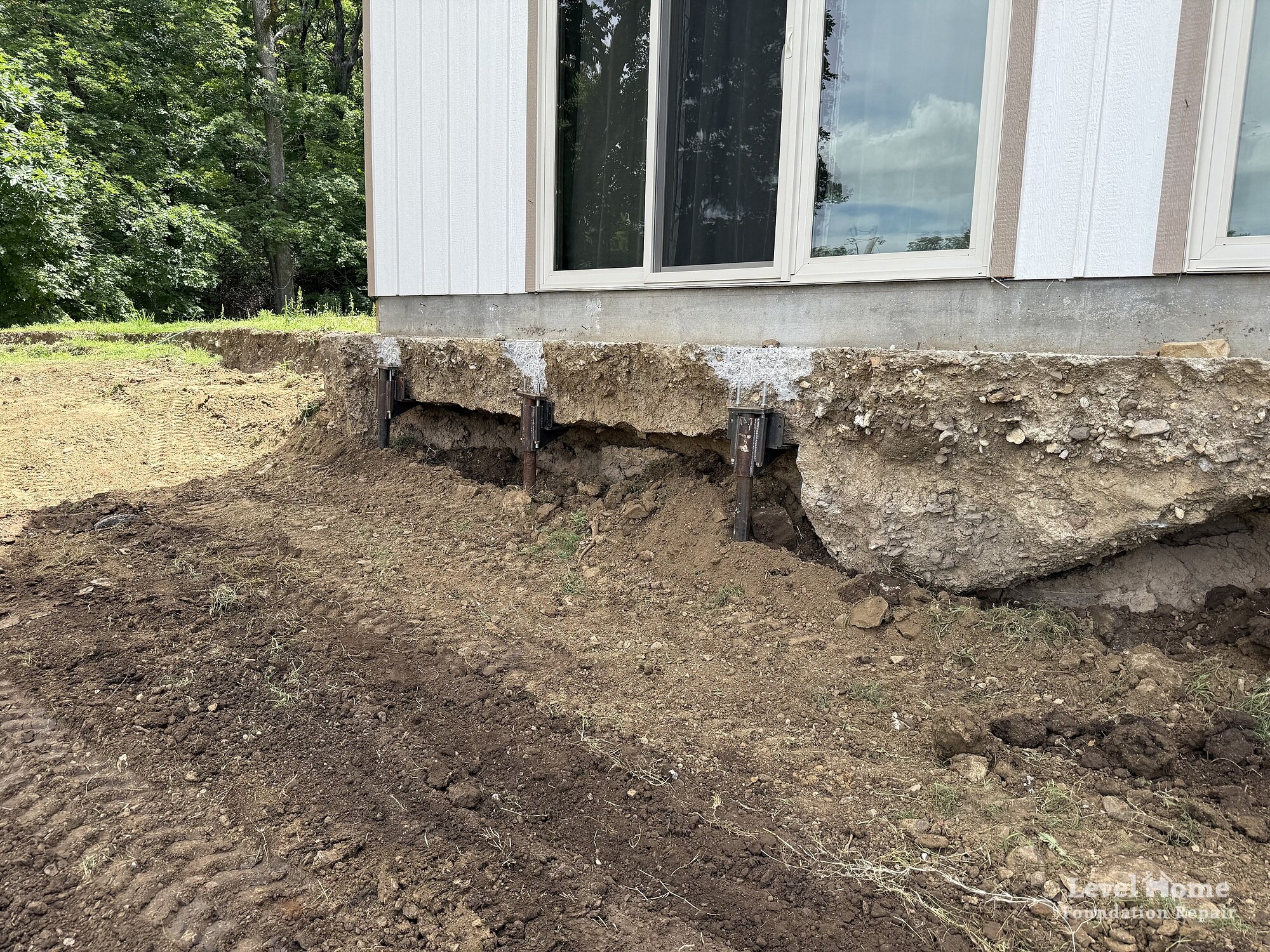
- Understand your repair options. Depending on the type and severity of the issue, solutions might include steel pier installation to stabilize a settling foundation, poly foam lifting to raise a settled slab, crawl space repair for pier and beam homes, or drainage improvements to address the root cause.
How Much Does Foundation Repair Cost in Tulsa?
Cost is usually the first question homeowners ask, and it’s a fair one. In the Tulsa area, foundation repair costs typically range from $2,500 to $15,000+, depending on:
- The type and extent of the damage
- The repair method needed (pier installation vs. foam lifting vs. drainage work)
- The size and construction type of your home
- How accessible the problem areas are
Minor crack repairs or single-pier installations tend to fall on the lower end, while whole-house stabilization with multiple piers can be more significant. The important thing to know is that waiting almost always costs more. A $3,000 repair today can turn into a $12,000 repair in two years if the underlying movement continues unchecked.
Level Home Foundation Repair provides detailed, written estimates after every inspection — no surprises and no hidden fees. Our warranty terms vary by service, so ask about coverage for your specific project.
Foundation Repair in Tulsa: Frequently Asked Questions
How do I know if a crack in my wall is serious?
Cracks wider than 1/4 inch, cracks that grow over time, stair-step cracks in brick, and horizontal cracks in foundation walls are all considered serious. Diagonal cracks from window or door corners indicate differential settlement and should be inspected by a professional.
Can foundation problems be fixed permanently?
Yes. Modern repair methods like steel pier installation anchor your foundation to stable bedrock or load-bearing strata deep below the problem clay layer. This addresses the root cause, not just the symptoms. Reputable companies back their work with a warranty (terms vary by service).
Will my homeowners insurance cover foundation repair?
Most standard homeowners insurance policies in Oklahoma do not cover foundation repair caused by soil movement or settling, as these are considered maintenance issues. However, if foundation damage results from a covered event (like a plumbing leak), some costs may be partially covered. Check with your insurance provider for specifics.
How long does foundation repair take?
Most residential foundation repairs in Tulsa take between 1 and 3 days to complete. Steel pier installation for an average home can often be done in a single day. More complex projects involving multiple repair types may take longer. You can typically stay in your home during the entire process.
Should I get multiple foundation repair estimates?
Absolutely. We recommend getting 2–3 estimates from reputable Tulsa-area companies. Be cautious of any company that uses high-pressure sales tactics or claims your home is in imminent danger. A trustworthy company will give you an honest assessment — even if that means telling you no repair is needed right now.
Don’t Wait — Early Detection Saves Tulsa Homeowners Thousands
Foundation problems don’t fix themselves. In Tulsa’s challenging clay soil, they almost always get worse with each passing season of rain and drought. The good news is that catching these warning signs early — and acting on them — can save you thousands of dollars and protect the value of your biggest investment.
If you’ve noticed cracks, sticking doors, uneven floors, gaps, or drainage issues around your Tulsa home, the smartest move is a free professional inspection. There’s no cost, no obligation, and no pressure — just an honest assessment from people who’ve been repairing Oklahoma foundations for over 15 years.
Contact Level Home Foundation Repair today:
- 📞 Call or text: (918) 361-7787
- 🌐 Visit: levelhomefoundationrepair.com
- 📍 Serving Tulsa, Broken Arrow, Owasso, Bixby, Jenks, Sand Springs, Sapulpa, and surrounding areas
Level Home Foundation Repair — Building a foundation of trust in our community through honesty, integrity, and innovation.