Structural Damage in a House: How to Tell Minor Issues From Major Foundation Problems
Structural damage in a house can feel alarming, especially when a crack, sloping floor, or sticking door appears without warning. Not every visible flaw means the home is unsafe. Some are cosmetic or seasonal. Others show that the foundation, framing, or supporting soil is moving and needs prompt attention. For Tulsa homeowners, the most useful first step is understanding the difference between a surface issue and a pattern that is affecting the home’s structure.
At Level Home, our team looks beyond any single crack. We assess the location, direction, change over time, moisture conditions, floor elevation, and the way multiple symptoms relate to one another. This guide explains how to sort structural concerns by urgency, what can cause them in northeastern Oklahoma, and how a professional evaluation leads to the right repair plan.
What structural damage means in a home
Structural damage is damage or movement that affects a component responsible for supporting the home or transferring its loads safely to the ground. That can involve the foundation, footings, crawl space piers and beams, load bearing walls, floor framing, or portions of a concrete slab. The key distinction is not whether a mark is visible. It is whether the condition compromises, or may compromise, the way the house carries weight and remains stable.
A hairline paint crack, for example, may be a finish issue. A widening crack that continues from drywall through masonry, aligns with a sloping floor, and causes a door to bind deserves closer attention. Homeowners can learn the broader symptom list in our guide to warning signs of foundation problems in Tulsa, but a complete assessment should connect those clues to the condition below the home.
Structural movement does not automatically mean a house is in danger of collapse. It does mean the cause and progression matter. Addressing movement while it is localized is usually more straightforward than waiting until finishes, plumbing connections, framing, and exterior surfaces have all been affected.
Minor, moderate, and major concerns are patterns, not labels
Severity cannot be determined responsibly from one photograph or one measurement. Still, these categories can help homeowners decide how quickly to schedule an evaluation.
- Minor concerns are often isolated, thin, stable, and limited to a finish material. Examples can include a small drywall seam crack or a surface concrete blemish without displacement. Photograph it, note the date, and watch for change.
- Moderate concerns involve repeated symptoms or a condition that is growing. Diagonal cracks around openings, new gaps at trim, recurring door problems, or a floor that feels consistently out of level call for a professional inspection soon.
- Major concerns include rapid change, pronounced floor deflection, visibly bowed walls, separation at structural connections, substantial masonry movement, or signs that a wall or floor is no longer carrying load normally. Restrict access to an affected area if necessary and arrange a prompt expert evaluation.
Do not use crack width alone as a verdict. A narrow crack can be meaningful when it is newly active or part of a larger movement pattern. Conversely, a larger old crack may be stable after an earlier event. Our article on horizontal and vertical foundation cracks explains why crack direction and location provide useful context, while an on site evaluation determines what they mean for a specific house.
Signs that indicate structural damage may be active
Active movement often shows up in more than one place. Look for cracks that lengthen, widen, or reappear after patching. Check whether interior doors begin to rub, swing open, or leave uneven gaps. Notice whether windows bind, cabinet doors no longer meet, baseboards separate from the floor, or a chimney and exterior wall pull apart.
Floor symptoms deserve special attention. A floor can feel uneven because of a finish issue, an aging framing member, a settling foundation, or weakening support in a crawl space. If the condition is new, gets worse, or is paired with wall or door symptoms, document it. Our guide to uneven floors in Tulsa homes describes common foundation related causes.
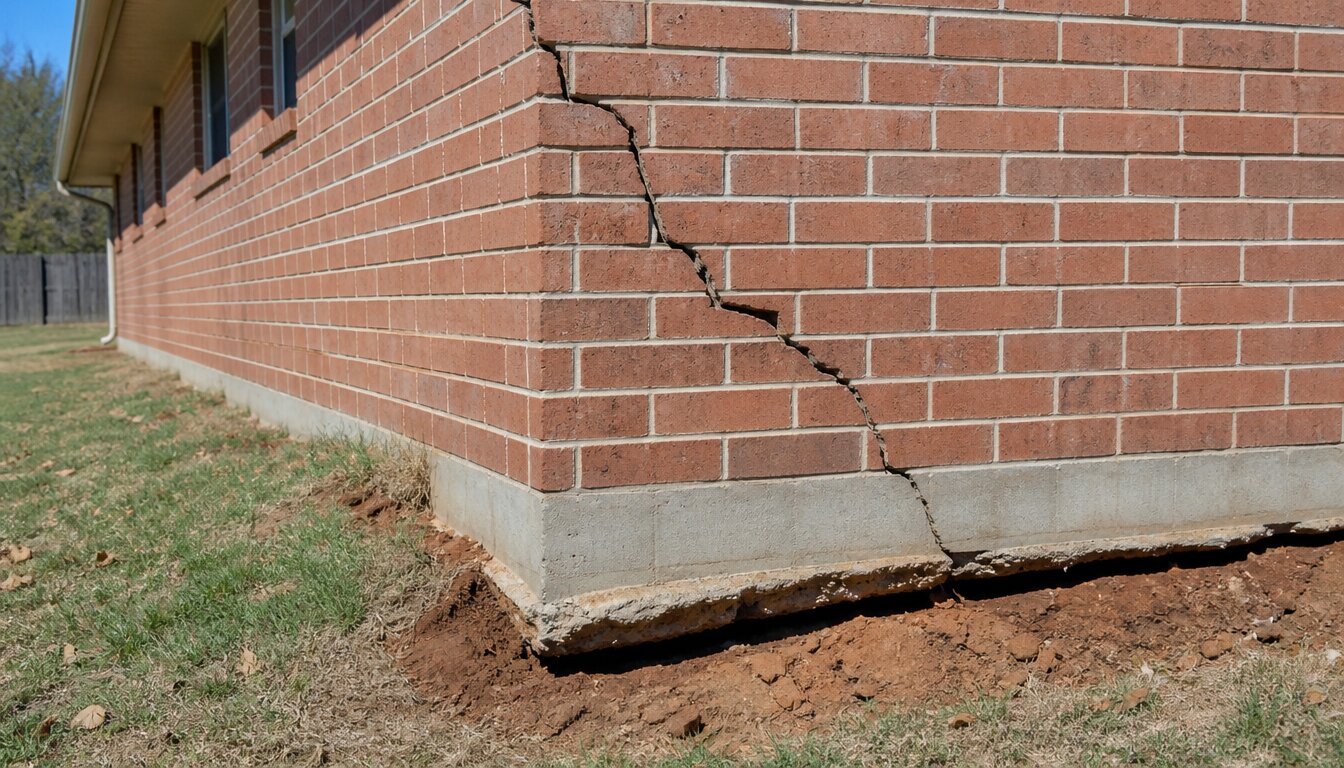
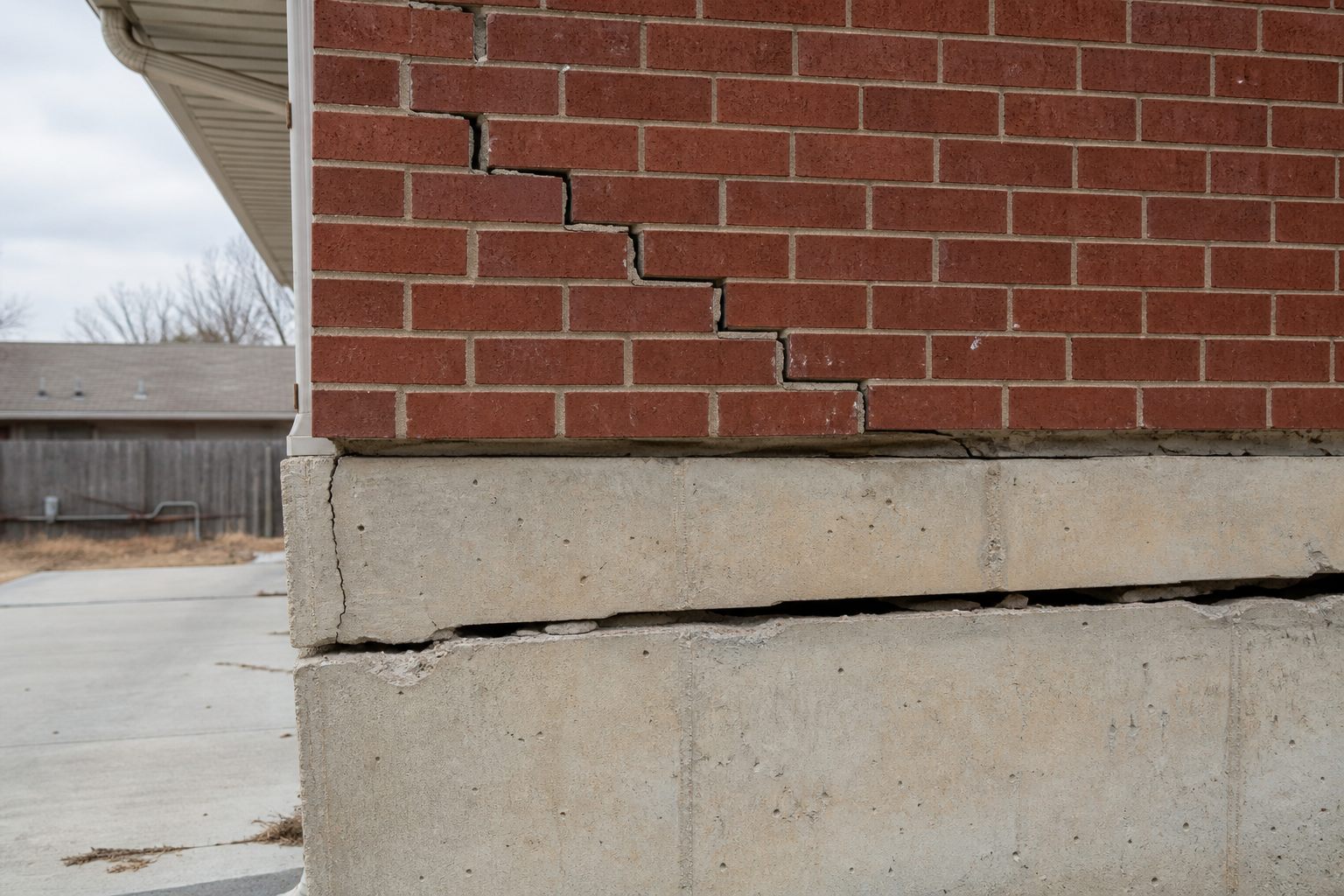
Exterior evidence matters too. Stair step cracks in brick, gaps at fascia, leaning retaining elements, or soil that has washed away near the perimeter may reveal movement that is not obvious indoors. For a focused explanation of surface versus structural symptoms, read our guide to exterior wall cracks.
Why Tulsa soil and water can turn small movement into a structural issue
Tulsa area homes are exposed to cycles of rain, heat, drought, and expansive clay soils. When soil becomes saturated, it can soften and lose bearing capacity. When it dries, it can shrink away from the foundation. Repetition can leave different portions of the house supported differently, creating stress in slabs, beams, walls, and finishes.
Water does not need to enter the living space to cause trouble. Roof runoff discharged beside the foundation, a low spot that holds water, failed grading, or a leaking underground line can change soil conditions beside or beneath the home. Over time, erosion can remove supporting soil and concentrated moisture can drive uneven movement. See how Oklahoma clay soil affects foundations and why foundation drainage solutions are part of protecting a repair.
The goal is not simply to move water away after a problem appears. It is to establish predictable moisture conditions around the home. A properly planned drainage solution can reduce the conditions that cause further soil movement, but it does not replace a structural repair when settlement has already occurred.
How load bearing walls, framing, and foundations work together
A house functions as a system. Roof and upper level loads transfer through load bearing walls, beams, posts, and framing to the foundation and soil. When support below shifts, the visible symptom may appear at a wall or door far from the original cause. This is why simply repairing drywall, replacing a door, or filling a crack may not solve the underlying issue.
In a crawl space home, sagging or bouncy floors can stem from deteriorated wood, inadequate or shifted piers, moisture damage, or settlement at the perimeter. Level Home can evaluate these conditions through crawl space repair and pier and beam foundation repair. In a slab home, cracking, differential settlement, and interior floor elevation changes may point to a need for slab foundation repair.
Never remove, cut, or modify a suspected load bearing wall to solve a cosmetic problem. Renovation work can change loads and expose hidden conditions. If a planned remodel reveals movement, obtain a qualified evaluation before proceeding so the project accounts for the home’s real support needs.
What a professional structural assessment should examine
A meaningful foundation assessment is more than a walk through and a quick estimate. Our team considers the history of the home, the timing of symptoms, site drainage, surface grades, exterior materials, crawl space or slab conditions, and interior evidence. We take measurements where appropriate and look for a consistent movement pattern.
Homeowners can help by bringing photos from prior seasons, repair invoices, disclosure documents, and a list of changes they have noticed. These details distinguish a stable old condition from one that is active. Schedule a foundation inspection in Tulsa when multiple symptoms appear, when you see rapid change, or before making a major decision based on an assumption about structural damage.
Sometimes the best recommendation is monitoring, targeted maintenance, or a repair to a localized component. Sometimes a structural engineer’s independent design or opinion is appropriate. Our discussion of a structural engineer versus a foundation company helps homeowners understand the roles without treating either as a substitute for the other.
Repair options depend on the cause, not just the symptom
There is no universal fix for structural damage in a house. A sound repair plan supports the affected portion of the home at suitable bearing material, corrects deteriorated crawl space supports, addresses water management, and sets realistic expectations about what can be lifted or stabilized.
For foundation settlement, steel piers can transfer load deeper than unstable near surface soils. helical piers may be an effective engineered option for certain residential conditions and can also be used where new support is needed. The exact system, depth, spacing, and lift potential should follow the conditions found at the property.
Not every sunken concrete surface is a structural foundation failure. When a settled driveway, walk, patio, or porch slab is otherwise suitable, concrete leveling in Tulsa may restore a safer, more functional surface. Separating flatwork settlement from house foundation movement prevents homeowners from paying for the wrong scope of work.
What not to do when you suspect structural damage
Do not conceal an active symptom with caulk or fresh paint and assume the matter is resolved. Cosmetic repairs can be worthwhile after stabilization, but they should not be used as the diagnostic step. Do not route large volumes of water toward the house, pile soil above siding, or ignore a new drainage path created by landscaping.
Avoid choosing a repair based solely on the lowest quote or on a neighbor’s solution. Similar looking cracks can have different causes. Our article on foundation repair misdiagnosis explains why an accurate cause matters. For an overview of what follows a correct diagnosis, see our foundation repair process.
If a condition affects a commercial building, warehouse, retaining element, or project site, the stakes and project requirements may differ. Level Home’s commercial and civil division can evaluate appropriate structural support solutions for those applications.
Structural damage during a home sale or renovation
Structural concerns often surface when a buyer, seller, lender, contractor, or inspector asks for documentation. The productive response is to gather facts. Keep dated photos, inspection findings, repair proposals, permits where applicable, warranties, and records of drainage work. Clear documentation helps people distinguish an old stabilized repair from a currently active problem.
Buyers should not assume that any prior foundation repair is a reason to walk away, nor should sellers minimize current symptoms. A professional evaluation can identify whether movement appears active, whether repairs address the observed cause, and whether additional work is recommended. Before a remodel, resolve questions about support first. New finishes and cabinetry are costly to disturb after the fact.
Whether you are planning a transaction or a project, our complete Tulsa foundation repair guide provides useful context for the process and available options.
When to schedule an inspection
Schedule an assessment now if symptoms are multiplying, movement is visibly accelerating, water is washing out soil near the foundation, floors or walls are noticeably shifting, or a renovation or real estate decision depends on knowing the home’s condition. When in doubt, early information is valuable. It gives homeowners time to correct water issues, compare appropriate options, and plan rather than react.
Level Home serves Tulsa area homeowners with a practical, evidence based approach to foundation and structural support concerns. Schedule a free inspection with our team to discuss the symptoms you are seeing and identify the next sensible step for your property.