If you’ve been told your home needs helical piers, you’re probably wondering what they are, how they work, and whether they’re really worth the investment. This guide covers everything — from engineering basics to real-world costs in Oklahoma — so you can make a confident decision about your foundation repair.
What Are Helical Piers?
Helical piers (also called helical piles, screw piles, or screw piers) are steel foundation supports that are literally screwed into the ground like giant screws. Each pier consists of a central steel shaft with one or more helix-shaped plates welded to it. When rotated into the soil, these plates pull the pier deep underground until it reaches stable, load-bearing soil or bedrock.
Unlike traditional concrete pilings that rely on friction or weight, helical piers derive their holding power from the mechanical advantage of the helix plates bearing against undisturbed soil. This makes them incredibly reliable for helical pier foundation repair — especially in Oklahoma’s unpredictable clay soils.
How Helical Piers Work: The Engineering Behind the Fix
The installation process is surprisingly straightforward, but the engineering is sophisticated:
- Soil analysis — A structural engineer or experienced foundation contractor determines the depth of stable soil and calculates the load each pier must support.
- Pier sizing — Based on the load requirements, the installer selects the correct shaft diameter (typically 1.5″ to 3.5″) and helix plate configuration.
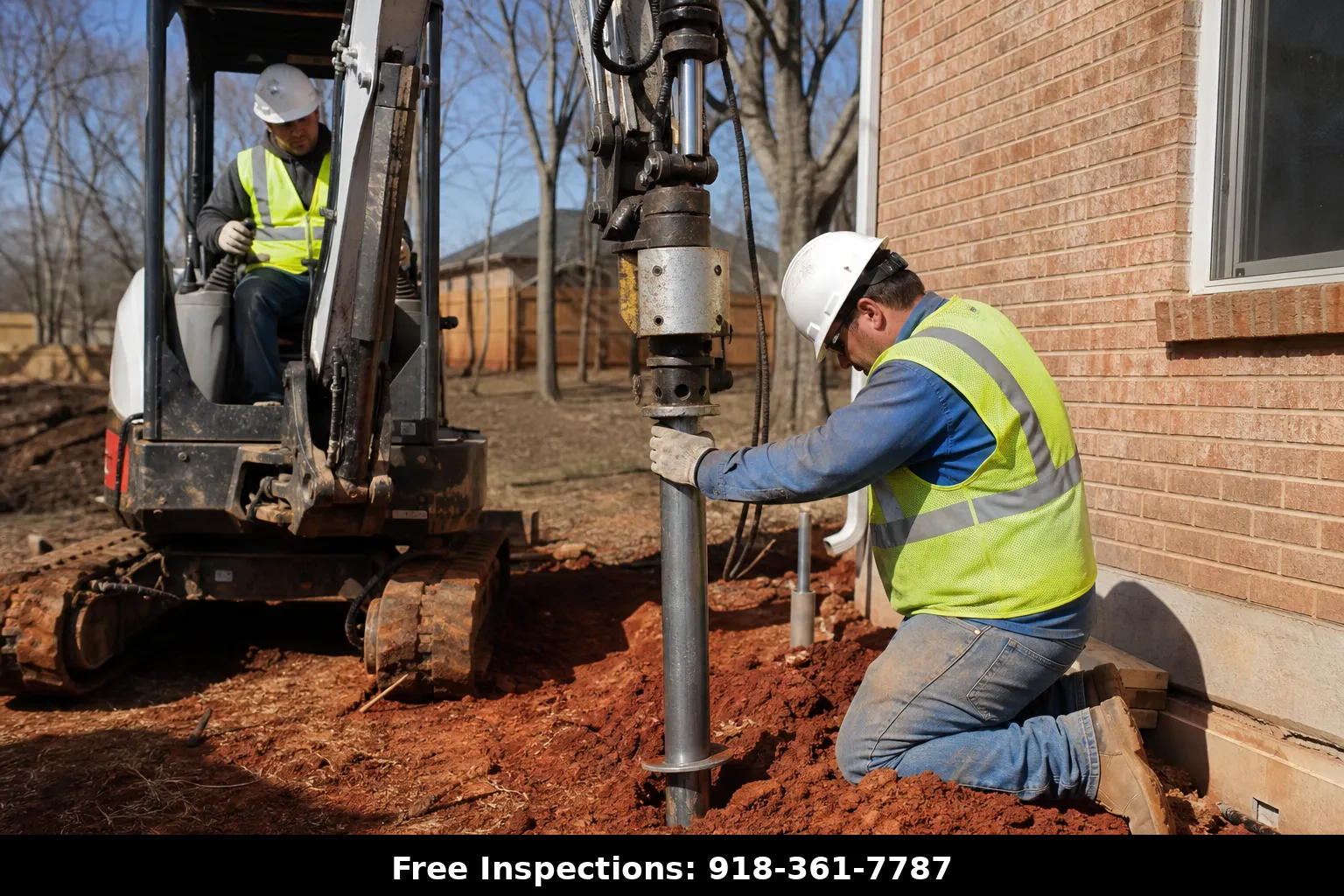
- Hydraulic installation — A hydraulic drive head attached to a mini excavator or skid steer rotates each pier into the ground. The installer monitors torque readings continuously — when torque reaches the target value, the pier has reached sufficient bearing capacity.
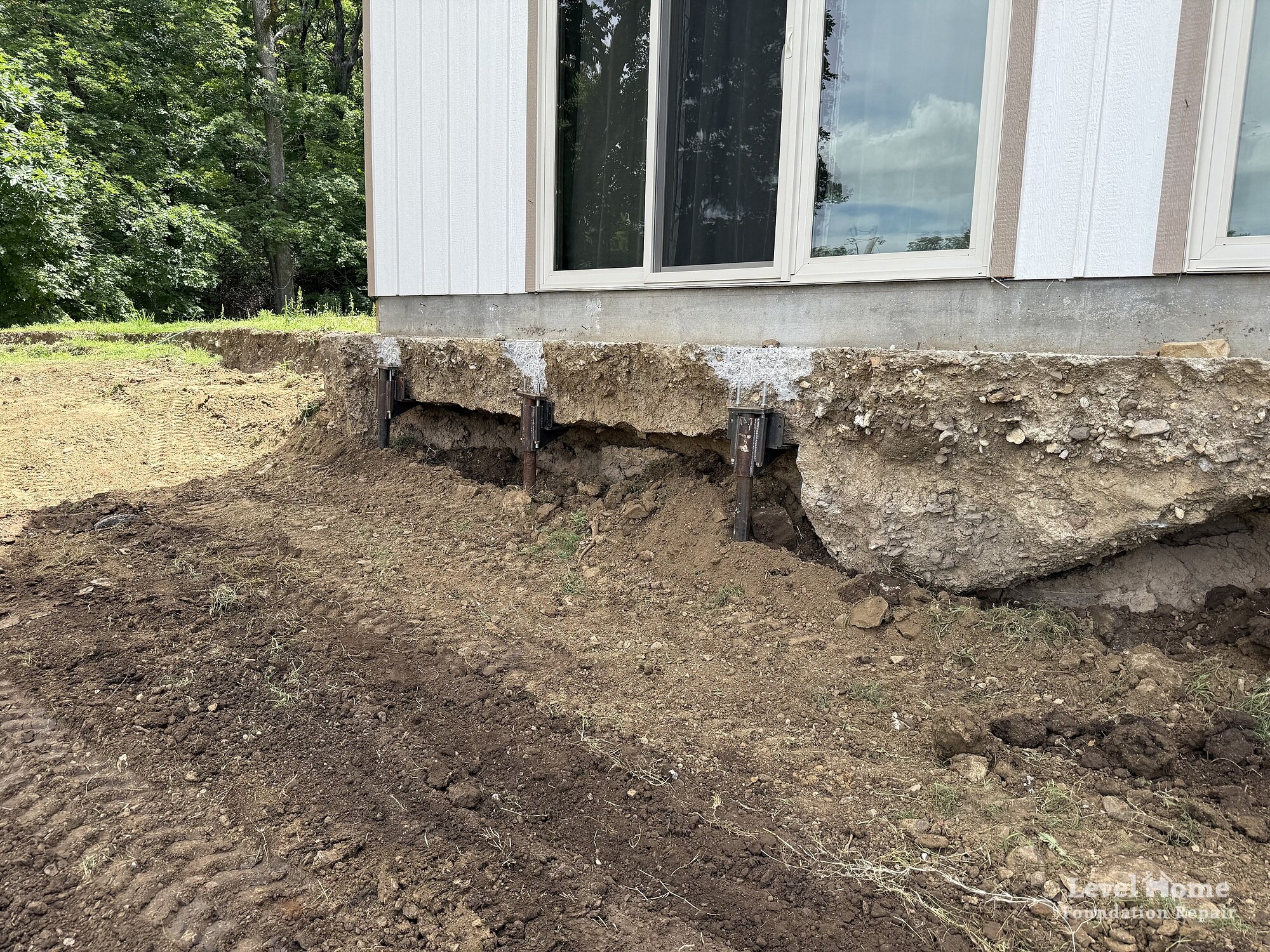
- Bracket connection — A steel bracket connects the pier to your existing foundation footing. Hydraulic jacks can then lift the foundation back to level if needed.
- Load transfer — Your home’s weight transfers from the unstable surface soil to the deep, stable soil where the helix plates are anchored.
The entire process for a typical home takes 1-3 days — not weeks — and most homeowners stay in their homes during the work.
Helical Piers vs. Steel Push Piers: What’s the Difference?
This is one of the most common questions homeowners ask. Both are permanent foundation solutions, but they work differently:
| Feature | Helical Piers | Steel Push Piers |
|---|---|---|
| Installation method | Screwed (torqued) in | Pushed (driven) in |
| Depth | 15-50+ feet | 15-75+ feet |
| Best for | Lighter structures, new construction, tight access | Heavy structures, deep bedrock |
| Vibration | Minimal | Minimal |
| Immediate load capacity | Yes — torque-verified | Yes — hydraulic resistance verified |
| Removable? | Yes (can be unscrewed) | No (permanent) |
For most Tulsa homes sitting on expansive clay soil, helical piers are often the ideal choice because they can be installed with minimal disruption and provide immediate, verifiable load-bearing capacity.
When Do You Need Helical Piers?
Helical piers are recommended when:
- Your foundation is sinking or settling unevenly — doors won’t close, floors slope, or cracks appear in walls and brick
- You’re building on unstable soil — pre-construction piers prevent settlement before it starts
- Your pier and beam foundation needs reinforcement — helical piers can supplement or replace deteriorating original piers
- You need to stabilize a retaining wall — helical anchors (similar technology) can reinforce bowing walls
- Traditional methods have failed — concrete pilings, mudjacking, or other repairs didn’t hold
Helical Pier Installation: What to Expect
Before Installation
A qualified helical pier contractor will start with a thorough foundation inspection. They’ll assess the damage, determine how many piers are needed, and create an engineered plan showing exact pier locations. At Level Home, we provide this inspection at no cost.
During Installation
Expect the crew to:
- Excavate small holes (about 3 feet wide) at each pier location along the foundation
- Use hydraulic equipment to screw each helical pier to the engineered depth
- Monitor torque readings to verify each pier has reached adequate bearing capacity
- Attach steel brackets and begin the lifting process
- Backfill all excavations and restore landscaping
Most residential projects require 6-12 piers and take 1-3 days to complete.
After Installation
Helical piers begin working immediately. Unlike concrete solutions that need curing time, your foundation is stabilized the moment the last pier is connected. You may notice doors closing better and cracks beginning to close within days as the structure adjusts to its corrected position.
How Much Do Helical Piers Cost?
In the Tulsa, Oklahoma area, homeowners can expect:
| Cost Factor | Typical Range |
|---|---|
| Per pier (installed) | $1,200 – $3,500 |
| Average home (8-10 piers) | $10,000 – $25,000 |
| Minor settlement (4-6 piers) | $5,000 – $15,000 |
| Severe settling (12+ piers) | $25,000 – $50,000+ |
Factors that influence cost include soil depth to stable bearing strata, pier diameter and helix configuration required, accessibility of the work area, and whether the foundation needs to be lifted (not just stabilized). Level Home offers 0% financing to make helical pier installation affordable for every homeowner.
Why Oklahoma Clay Soil Makes Helical Piers Essential
Tulsa and the surrounding areas sit on highly expansive clay soil that swells when wet and shrinks when dry. This constant movement — sometimes several inches per season — puts enormous stress on foundations. Traditional shallow footings simply can’t withstand this cycle over decades.
Helical piers bypass the problem entirely. By anchoring into stable soil 15-50 feet below the surface — well below the “active zone” where moisture fluctuations occur — they isolate your foundation from seasonal soil movement. This is why helical pier foundation repair has become the gold standard in Oklahoma.
Helical Piers for New Construction (Pre-Construction Piers)
One of the smartest investments a builder or homeowner can make is installing helical piers before the foundation is poured. Pre-construction helical piers prevent settlement from ever occurring, which means:
- No future foundation cracks
- No sticking doors or windows
- No costly retrofit repairs down the road
- Higher resale value and buyer confidence
The cost of pre-construction piers is a fraction of what you’d pay for retrofit installation after the home is built. Many savvy builders in the Tulsa area now include helical piers as standard practice on new builds.
Frequently Asked Questions About Helical Piers
How long do helical piers last?
Helical piers are designed to last 75-150+ years. The galvanized or epoxy-coated steel resists corrosion, and because they’re anchored in stable soil below the water table fluctuation zone, they experience minimal environmental stress. Level Home backs every installation with a 20-year transferable warranty.
Will helical piers damage my yard or landscaping?
Minimal disruption is one of the biggest advantages of helical piers. Each pier only requires a small excavation (about 3 feet wide), and the hydraulic installation equipment has a small footprint. Most homeowners are surprised by how little evidence remains after the work is complete.
Can helical piers be installed in winter?
Yes. Unlike concrete solutions that can’t be poured in freezing temperatures, helical piers can be installed year-round. The hydraulic equipment is unaffected by cold weather, and the piers reach well below the frost line.
Do helical piers increase my home’s value?
Absolutely. A professionally installed helical pier system with a transferable warranty is a significant selling point. Real estate agents in Tulsa will tell you that a home with documented, warrantied foundation repair sells faster and for more money than a home with known foundation issues.
How do I find a qualified helical pier contractor?
Look for contractors who are licensed and insured, have specific experience with helical pier installation (not just general foundation work), use engineered plans for every project, monitor torque during installation, and offer meaningful long-term warranties. At Level Home Foundation Repair, our team has installed thousands of helical piers across the Tulsa metro area.
Why Choose Level Home for Helical Pier Installation in Tulsa
With 179 five-star reviews and nearly a decade of experience in Oklahoma foundation repair, Level Home Foundation Repair is Tulsa’s trusted choice for helical pier installation. We offer:
- ✅ Free foundation inspections — no obligation, no pressure
- ✅ Engineered solutions — every project is designed for your specific home
- ✅ 0% financing available — because foundation safety shouldn’t break the bank
- ✅ 20-year transferable warranty — protection that follows the home
- ✅ Licensed, insured, and locally owned — we live and work right here in Tulsa
📞 Call (918) 361-7787 today for your free helical pier consultation, or request your free inspection online.
Planning a new build? Helical piers aren’t just for repair — they’re increasingly used as pre-construction foundation support, anchoring new structures into stable soil before the slab is ever poured.