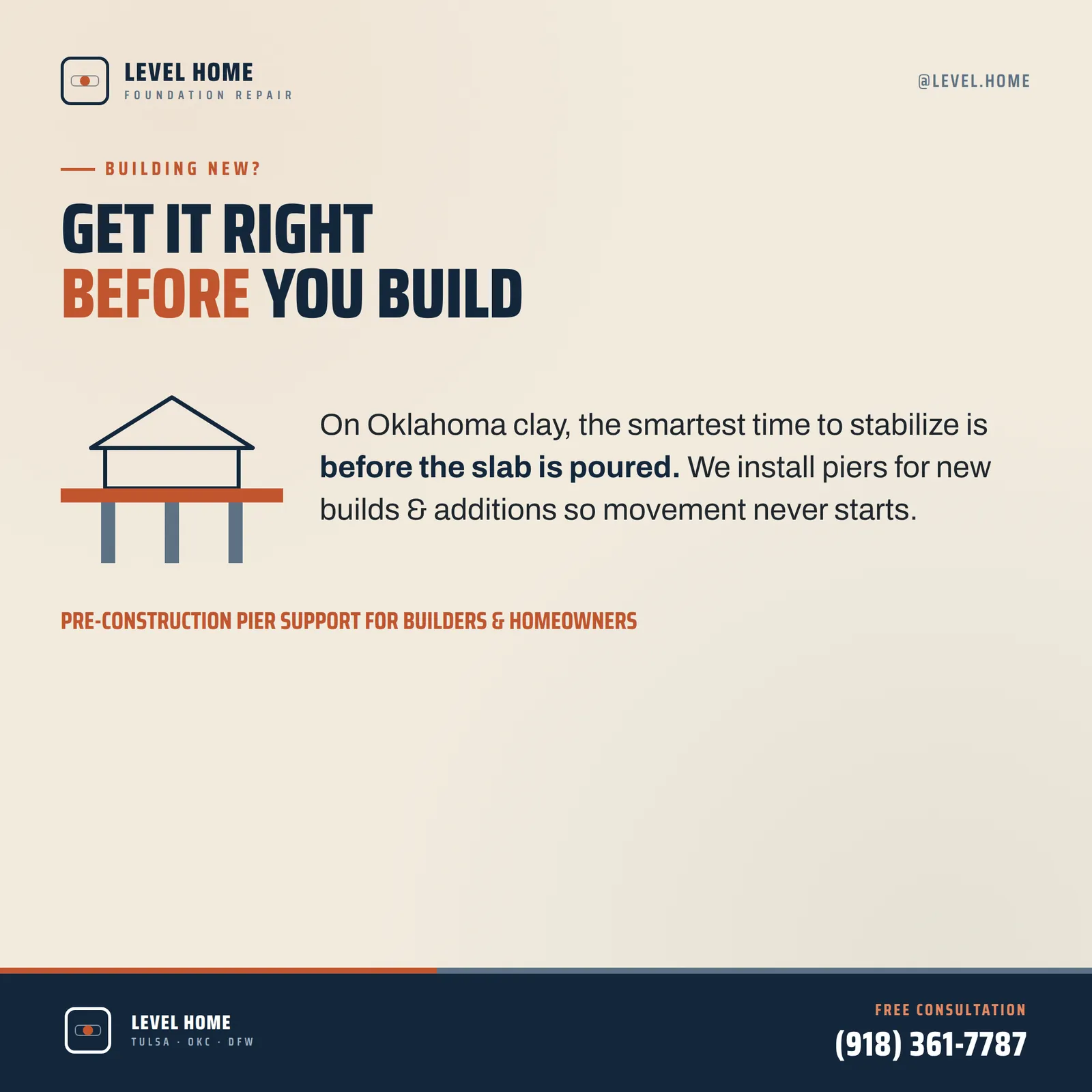
If you’re building a new home or addition in Oklahoma, there’s a decision that can save you tens of thousands of dollars — and it needs to happen before your contractor ever pours the slab.
Pre-construction helical pier foundation systems installation is quietly becoming the standard for builders and homeowners who understand Oklahoma’s soil. Instead of hoping a new foundation holds up against expansive clay, you anchor it into stable, load-bearing soil from day one.
The result? A foundation that doesn’t move. No settlement cracks two years in. No $15,000 repair bill on a home that’s barely broken in.
Why Oklahoma’s Soil Makes Pre-Construction Piers Essential
Oklahoma sits on some of the most challenging soil in the country for residential construction. The clay-heavy composition expands dramatically when wet and contracts when dry — creating a constant cycle of movement beneath your foundation.
This isn’t a problem that only affects older homes. We’ve inspected brand-new builds — some less than two years old — showing visible cracking, door misalignment, and uneven floors. As we’ve explained in our guide on how Oklahoma’s clay soil destroys foundations, the soil doesn’t care when your home was built.
Pre-construction piers eliminate this risk entirely by bypassing the unstable soil layer and transferring structural loads directly to competent bearing strata.
How Pre-Construction Helical Piers Work
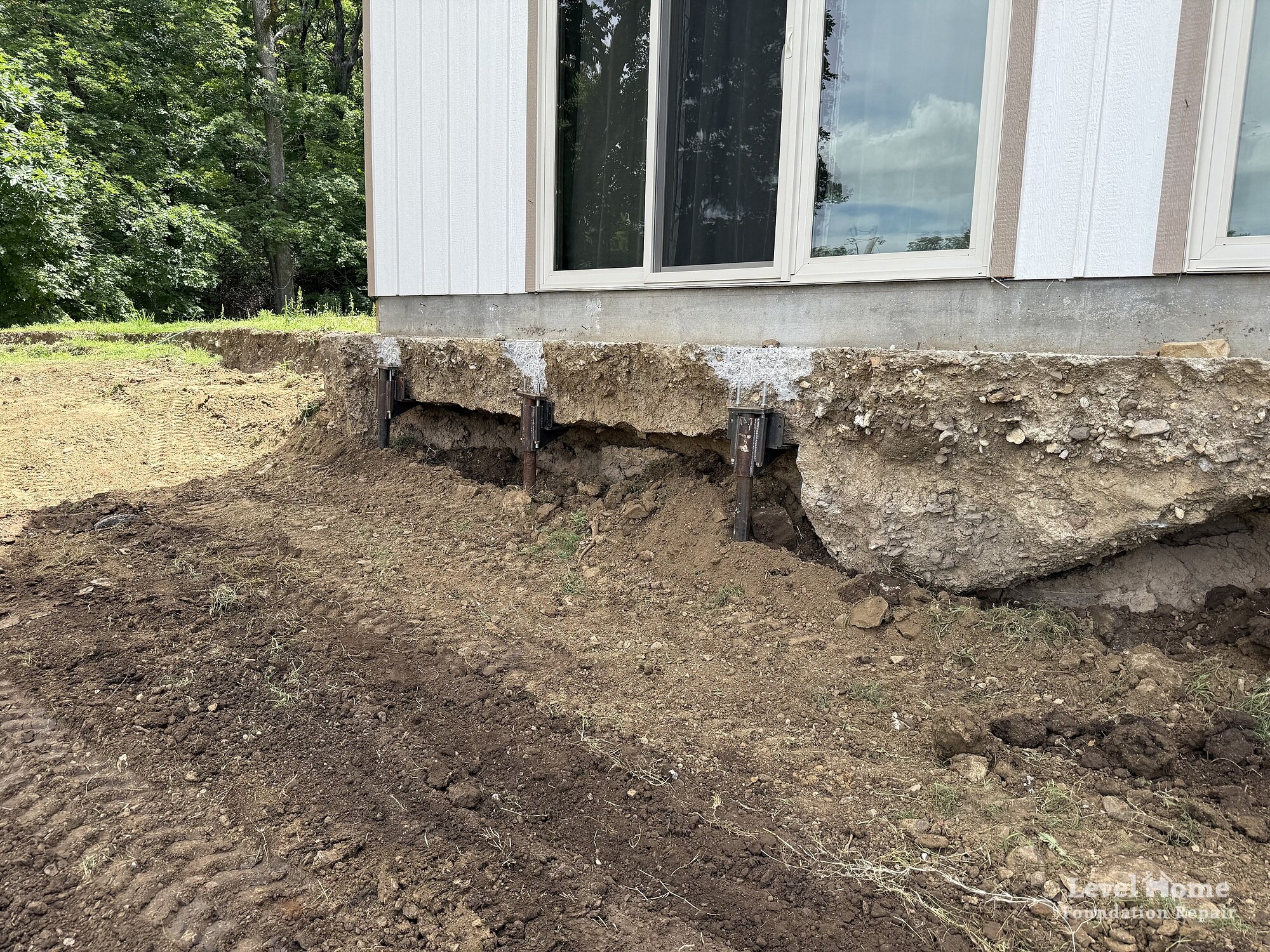
Helical piers are steel shafts with helical bearing plates welded to the lead section. During pre-construction installation, they’re mechanically advanced into the ground before the foundation is poured — typically to depths of 15 to 30 feet, depending on local soil conditions.
The process works like this:
- Site evaluation: A geotechnical assessment determines soil composition, bearing capacity, and optimal pier depth for the specific lot.
- Pier layout design: Engineers design a pier grid based on the planned structure’s load points, accounting for concentrated loads at corners, bearing walls, and columns.
- Installation: Helical piers are driven into the ground using hydraulic torque motors mounted on compact equipment — minimal disruption to the building site.
- Load verification: Each pier is torque-monitored during installation to verify it’s reached adequate bearing capacity. This provides documented, measurable proof of support.
- Foundation integration: The slab or grade beam is poured directly onto the pier system, creating a unified structure that’s anchored to stable soil from the start.
The entire installation typically adds just one to two days to the construction timeline — a negligible delay for decades of structural stability.
Pre-Construction vs. Post-Construction Pier Installation: The Cost Reality
Here’s the math that makes pre-construction piers a no-brainer:
Post-construction foundation repair on a typical Oklahoma home runs $8,000 to $25,000+, depending on the severity of settlement and the number of piers required. That doesn’t include cosmetic repairs — drywall patching, door re-hanging, floor leveling, and sometimes plumbing or drainage work. As we break down in our foundation repair cost guide, total project costs can climb well beyond the structural work alone.
Pre-construction pier installation on the same home? Typically 40-60% less than the equivalent post-construction repair. There’s no existing structure to work around, no landscaping to protect, no interior finishes to repair afterward. Access is unrestricted and installation is straightforward.
More importantly, you’re paying once — before the problem ever exists — instead of paying to fix damage that’s already occurred.
Who Should Consider Pre-Construction Piers?
Custom Home Builders
If you’re investing in a custom build, you’re already making decisions that prioritize quality and longevity. Pre-construction piers are the foundation equivalent of upgrading to impact-rated windows or a standing-seam roof — they protect the entire investment.
Production Builders and Developers
For builders developing multiple lots, pre-construction piers reduce warranty callbacks and protect your reputation. Foundation complaints are among the most expensive and reputation-damaging issues in residential construction. Preventing them at the source is smarter than managing them after the fact.
Homeowners Adding an Addition
Room additions are especially vulnerable to differential settlement — the new foundation settles at a different rate than the original structure. Pre-construction piers under the addition eliminate this risk and prevent the cracking that commonly appears at the junction between old and new construction.
Helical Piers vs. Driven Piles for New Construction
Both helical piers and driven piles can support new construction, but helical piers offer significant advantages in the pre-construction context:
- Immediate load capacity: Helical piers can accept structural loads immediately after installation — no curing time, no waiting.
- Measurable installation: Torque correlation provides real-time capacity verification during installation, giving engineers documented proof of bearing capacity.
- Minimal vibration: Unlike driven piles, helical piers produce virtually no vibration — critical when working near existing structures or utilities.
- Compact equipment: Installation equipment has a small footprint, making helical piers practical even on tight residential lots.
- Removable and reusable: In rare cases where plans change, helical piers can be extracted and reinstalled — driven piles cannot.
What to Expect During Pre-Construction Pier Installation
The process is straightforward and minimally disruptive to your construction timeline:
Timeline: Most residential pre-construction pier jobs are completed in one to two days, depending on the number of piers and site conditions.
Site requirements: The building pad should be graded and accessible. No excavation beyond the pier locations is necessary.
Coordination: We work directly with your general contractor, structural engineer, and concrete crew to ensure pier placement aligns precisely with the planned foundation layout.
Documentation: Every pier installation is logged with depth, torque readings, and GPS coordinates — providing a permanent record of the foundation support system for the life of the structure.
The Bottom Line: Prevention Costs a Fraction of Repair
Foundation repair is reactive. Pre-construction pier installation is proactive. On Oklahoma clay, the difference between the two can be $10,000 to $20,000+ — not counting the stress, disruption, and cosmetic damage that comes with fixing a foundation after the home is built and occupied.
If you’re building new, adding on, or developing residential lots in Oklahoma, pre-construction helical piers are the smartest investment you can make in the longevity of the structure.
Ready to discuss pre-construction pier support for your project? Call Level Home Foundation Repair at (918) 361-7787 for a free consultation. We work with builders, developers, and homeowners across Tulsa and the surrounding Oklahoma metro.