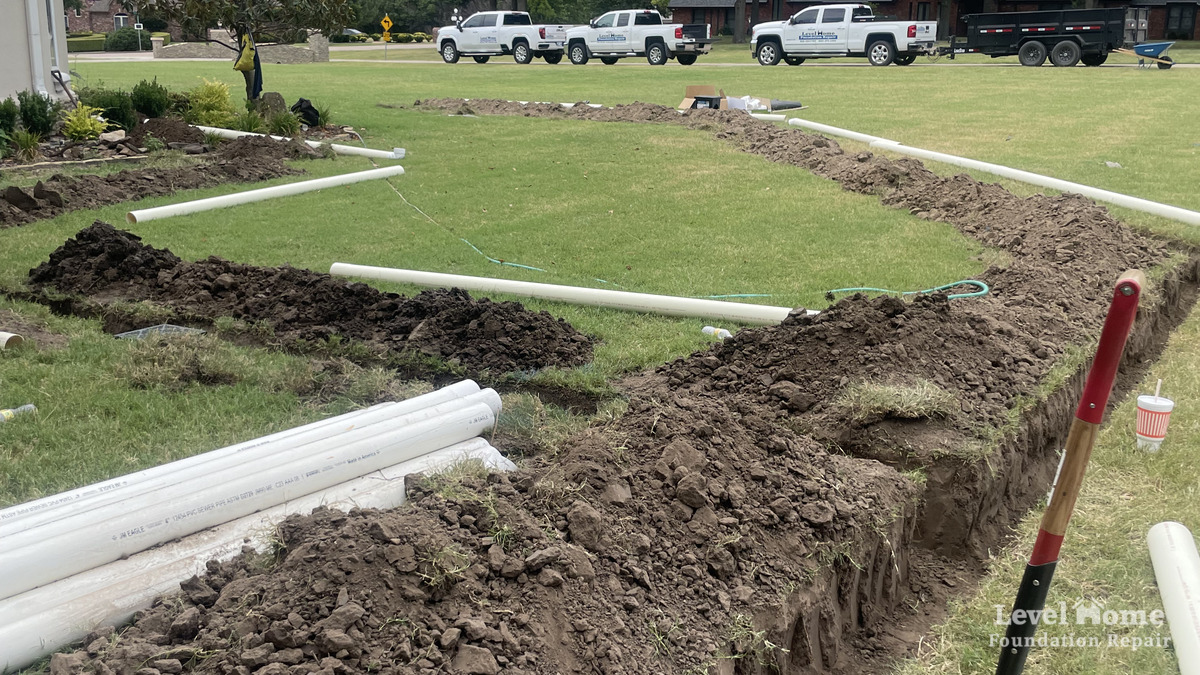
Thousands of homes across Tulsa sit on pier and beam foundations. Many of them were built in the 1940s through 1970s, before slab-on-grade became the standard. Midtown, Maple Ridge, Brookside, Kendall-Whittier, and parts of south Tulsa are full of pier and beam homes that have been standing for decades, and a lot of them are starting to show their age underneath.
If you own one of these homes, the foundation system beneath your floors may be quietly deteriorating. This article explains how pier and beam foundations fail in Tulsa’s soil and climate, what the warning signs look like from inside your house, and what professional repair actually involves.
How a Pier and Beam Foundation Works
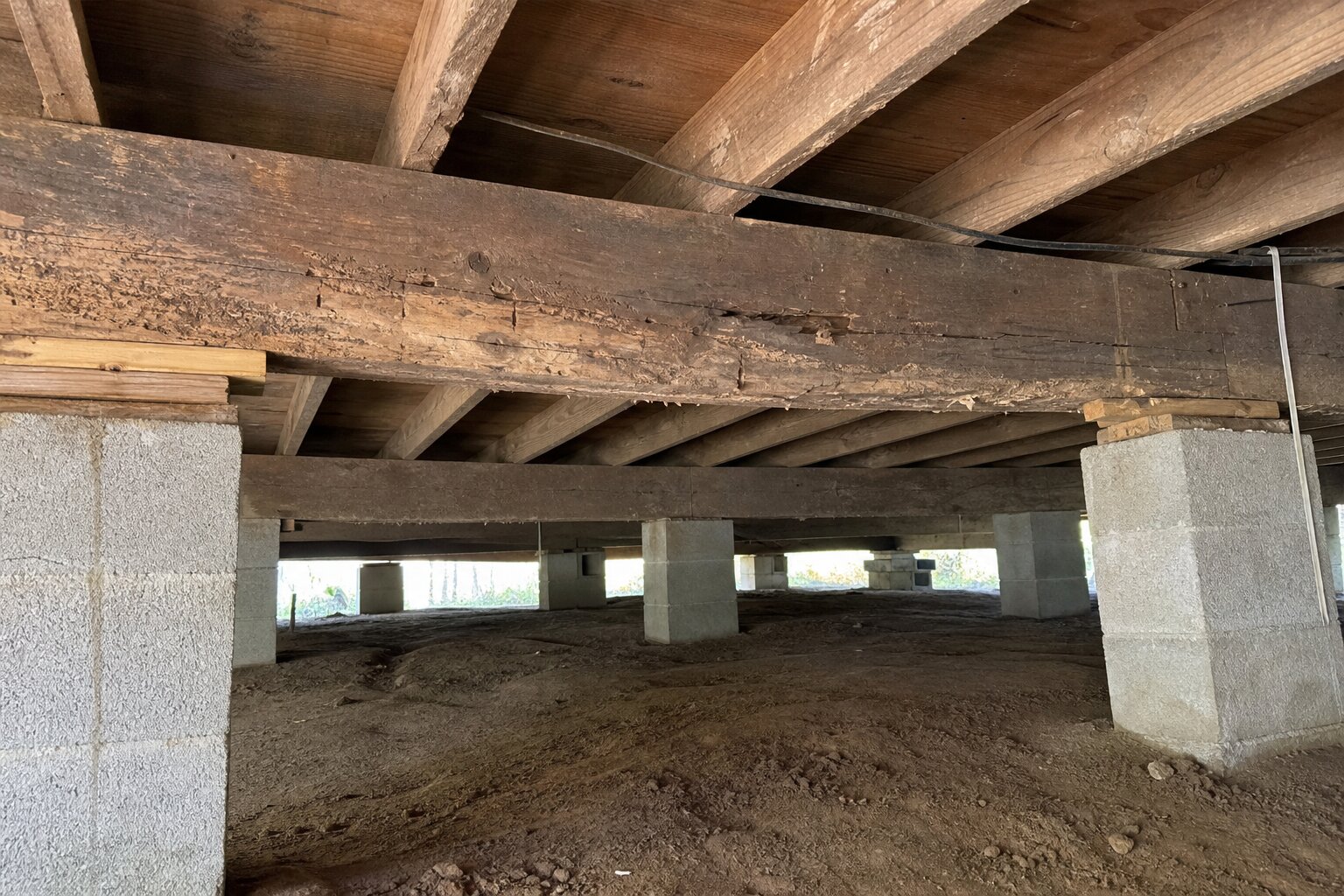
A pier and beam foundation raises the home above ground level, creating a crawl space underneath. Concrete piers or blocks support horizontal beams (usually wood or steel), and floor joists span across those beams to carry the subfloor and everything above it.
This design has real advantages: it keeps the home off the ground, allows access to plumbing and electrical, and can handle sloped lots. But it also creates vulnerability. Every connection point between pier, beam, and joist is a potential failure point, and Oklahoma’s conditions put constant stress on all of them.
Why Pier and Beam Foundations Fail in Tulsa
Three factors drive most pier and beam failures in the Tulsa metro area.
Expansive Clay Soil
Tulsa sits on expansive clay soil that swells when wet and shrinks when dry. That seasonal movement pushes concrete piers out of alignment. Over years, piers shift, tilt, or sink unevenly, and the beams they support follow. A pier that drops even half an inch transfers stress across every joist it carries.
Moisture and Wood Deterioration
Oklahoma’s humid summers push moisture into crawl spaces. Without proper ventilation or vapor barriers, that moisture soaks into wooden beams and joists. Over time, wood rot weakens structural members from the inside out. In severe cases, beams lose so much integrity that they compress under the weight of the home. Termites compound the problem: subterranean termites thrive in damp crawl spaces and can hollow out load-bearing wood before anyone notices.
Age and Original Construction Quality
Many of Tulsa’s pier and beam homes were built with construction methods that would not meet today’s code. Undersized joists, inadequate pier spacing, and missing cross-bracing were common. After 50 to 80 years of service, original materials fatigue. Steel shims rust. Wooden shims compress. Concrete blocks crack. The cumulative effect is a foundation that gradually loses its ability to hold the home level.
Warning Signs Inside Your Home
Pier and beam problems almost always show up inside the house before you ever look underneath it. The signs can be subtle at first, but they get worse if the underlying cause is not addressed.
- Bouncy or sagging floors: This is the most common complaint. If walking across a room feels soft or springy, the joists below may be deteriorating or the beams have dropped.
- Sloping floors: A marble rolling to one side of the room usually means one or more piers have settled lower than the rest. Uneven floors are not cosmetic; they indicate differential settlement.
- Sticking doors and windows: When the frame shifts, door and window openings go out of square. Sticking doors paired with drywall cracks is a strong indicator of foundation movement, not just seasonal humidity.
- Gaps between walls and floors or ceilings: As beams drop, interior walls pull away from the ceiling or separate from the floor. Baseboards may pop loose.
- Musty smell from below the house: Persistent musty odors suggest moisture buildup in the crawl space, which accelerates wood rot and structural decline.
- Cracked interior walls: Diagonal cracks near door frames and window corners follow the path of structural stress caused by uneven support below.
What a Pier and Beam Inspection Looks Like
A proper foundation inspection for a pier and beam home involves crawling underneath the structure to visually assess every accessible pier, beam, and joist. The inspector checks for:
- Pier settlement or lateral displacement
- Beam cracking, splitting, or sagging
- Joist deterioration from rot or insect damage
- Standing water or excessive moisture
- Inadequate ventilation or missing vapor barriers
- Previous repairs that may have been done incorrectly
Elevation measurements taken at multiple points across the floor reveal the pattern of settlement. This data tells the repair team exactly which piers need attention and how much lift is required to bring the home back to level.
How Professional Pier and Beam Repair Works
Repair strategies depend on what is failing. In most Tulsa pier and beam jobs, the work falls into one or more of these categories.
Pier Replacement or Reinforcement
Concrete block piers that have shifted or cracked are replaced with new poured concrete pads or, in cases requiring deeper stabilization, helical piers that anchor into load-bearing soil below the active clay layer. Helical piers eliminate the risk of future settlement from soil movement because they bypass the problem soil entirely.
Beam and Joist Repair
Rotted or damaged beams are sistered (a new beam bolted alongside the damaged one) or replaced entirely. The same approach applies to floor joists. In homes where the original lumber was undersized, adding supplemental joists eliminates the bounce and brings the floor system up to modern structural standards.
Shimming and Leveling
When piers are structurally sound but have settled slightly, precision shimming can restore level. Steel shims are preferred over wood because they resist compression and moisture. House leveling on a pier and beam home is often faster and less invasive than on a slab because the crawl space provides direct access to the support system.
Crawl Space Moisture Control
Structural repair without addressing moisture is incomplete. Crawl space encapsulation with a heavy-duty vapor barrier, combined with proper drainage, stops the moisture cycle that caused the damage in the first place. This protects new and existing structural wood from future rot and termite activity.
How Much Does Pier and Beam Repair Cost in Tulsa
Costs vary widely depending on the scope of damage. Minor shimming and leveling on a few piers might run $1,500 to $3,500. Full beam and joist replacement across a large crawl space can reach $8,000 to $15,000 or more. Helical pier installation adds cost but provides permanent stabilization that concrete block piers cannot match in Oklahoma’s soil conditions.
A detailed breakdown of pricing by repair type is available in our foundation repair cost guide.
Why Waiting Makes It Worse
Pier and beam problems do not stabilize on their own. A pier that has settled will continue settling. A beam with early rot will lose more strength with every wet season. The floor that feels slightly bouncy today may sag noticeably within a year or two. Repair costs increase with damage severity, and secondary damage to plumbing, flooring, and interior finishes adds up fast.
The most cost-effective time to repair a pier and beam foundation is when the first signs appear.
Get a Free Pier and Beam Foundation Inspection
If your Tulsa home has bouncy floors, sticking doors, or visible settling, a free foundation inspection will tell you exactly what is happening underneath. We inspect the full crawl space, measure elevation differentials, and give you a written report with repair recommendations and pricing, with no obligation.
Level Home Foundation Repair serves Tulsa and communities across northeast Oklahoma, including Broken Arrow, Jenks, Owasso, Bixby, and Sapulpa.