What Is House Leveling and When Does Your Tulsa Home Need It?
You’re walking through your hallway and your coffee starts sliding toward the edge of the mug. Doors that used to swing shut smoothly now stick — or won’t latch at all. And somewhere in the back of your mind, a quiet question forms: Is my house sinking?
If you’re a homeowner in Tulsa, Oklahoma, and something about your floors, doors, or walls just feels off, you might need house leveling. It’s one of the most common foundation repair services in our area — and understanding it could save you tens of thousands of dollars in long-term damage.
In this complete guide, we’ll walk you through exactly what house leveling is, what causes homes in Tulsa to settle unevenly, how much it costs, and how to know when it’s time to call a professional. This is the guide we wish every homeowner had before their first crack appeared.
Why Tulsa Homes Are Especially Vulnerable to Uneven Settlement
Tulsa sits on some of the most challenging soil in the country for residential foundations. The Oklahoma clay soil — technically known as expansive clay — has an almost personality of its own. When it rains, the clay absorbs water and swells. During our brutal summer droughts, it shrinks and pulls away from your foundation.
This constant cycle of expansion and contraction puts relentless pressure on your home’s foundation. Over years and decades, it causes differential settlement — where one part of your home sinks more than another. That’s when you start noticing sloped floors, cracked walls, and doors that won’t close.
Several factors make settlement worse in the Tulsa metro:
- Oklahoma’s extreme weather swings — We can go from flooding rains to 100°F drought in the same season, creating rapid soil volume changes
- Poor drainage — Many Tulsa-area homes built in the 1960s-1980s have inadequate gutter systems or grading that directs water toward the foundation
- Mature tree roots — Established oaks, elms, and pecans draw massive amounts of moisture from soil near your foundation
- Original construction shortcuts — Some older homes in midtown Tulsa and surrounding areas were built on improperly compacted fill soil
- Plumbing leaks — Underground leaks saturate the soil unevenly, causing localized settlement that tilts the home
The bottom line: if you own a home in Tulsa, Broken Arrow, Owasso, Jenks, or any surrounding community, your home is at higher-than-average risk for foundation settlement. That doesn’t mean you’ll definitely need house leveling — but it means you should know the warning signs.
7 Warning Signs Your Tulsa Home Needs Leveling
Foundation settlement rarely announces itself with a dramatic event. Instead, it creeps in slowly. Here are the signs experienced foundation repair professionals in Tulsa look for:
- Sloping or uneven floors — Place a marble on the floor. If it rolls consistently in one direction, your floor has a slope. A slope of more than 1 inch over 10 feet typically warrants professional evaluation.
- Sticking doors and windows — When a foundation shifts, door frames rack out of square. Interior doors that stick at the top or won’t latch are classic indicators.
- Diagonal cracks above doors and windows — These “stair-step” cracks radiate from the corners of openings and indicate the wall is being pulled by differential settlement.
- Exterior brick cracks — Stair-step cracks in brick mortar joints — especially near corners — are some of the most reliable foundation settlement indicators.
- Gaps between walls and ceiling — Crown molding pulling away from the ceiling or visible gaps where walls meet are signs of significant movement.
- Cracked or separating drywall — Horizontal or diagonal cracks in drywall, particularly near the center of walls, suggest foundation stress.
- Chimney leaning or separating — A chimney that’s pulling away from the house is a sign of serious foundation movement that needs immediate attention.
Pro tip: Not every crack means disaster. Hairline cracks in drywall can result from normal seasonal movement in Oklahoma’s climate. The key is pattern — multiple signs appearing together, or cracks that grow wider over weeks or months.
How House Leveling Works: Foundation Repair Methods in Tulsa
House leveling is the process of restoring a settled or tilted home back to its proper elevation. The method used depends on your foundation type, the severity of the settlement, and your soil conditions. Here are the most common methods used by foundation repair Tulsa companies:
Steel Push Piers (Underpinning)
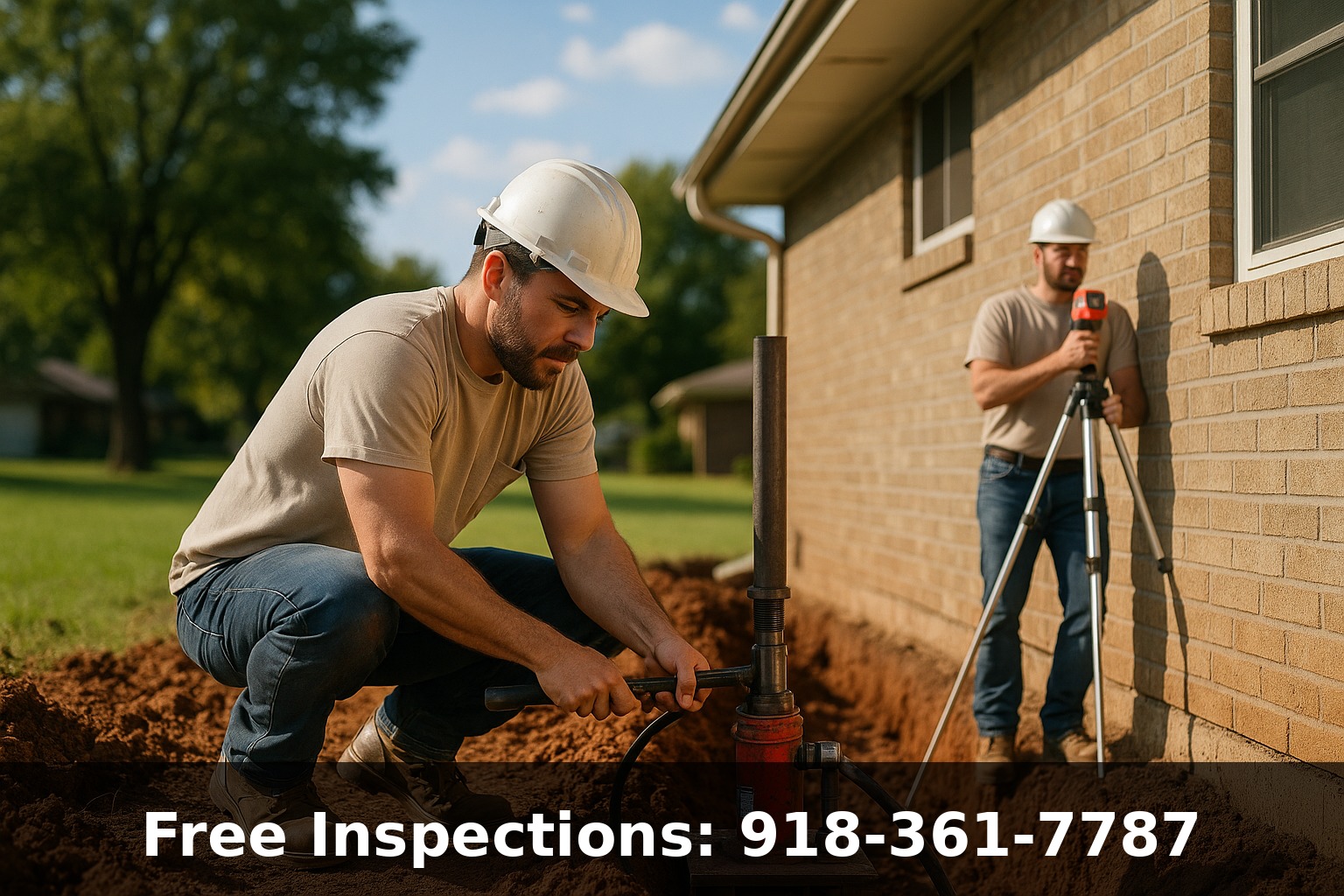
Steel push piers are the gold standard for house leveling on slab foundations. Hydraulic equipment drives steel pipe sections deep into the ground — often 20 to 30 feet — until they reach stable bedrock or load-bearing strata below Oklahoma’s troublesome clay layers. Once the piers are seated on stable soil, hydraulic jacks lift the home back toward its original position.
Steel piers are ideal for most Tulsa homes because they bypass the expansive clay entirely, anchoring your home to soil that doesn’t move with the seasons.
Helical Piers
Helical piers work similarly to push piers but are screwed into the ground like a giant corkscrew. They’re excellent for lighter structures, new construction, or situations where push pier reaction force isn’t available. Helical piers are also popular for crawl space foundation repair in the Tulsa area.
Polyurethane Foam Injection (Slab Leveling)
For concrete slabs that have settled — driveways, patios, garage floors, and sometimes interior slab sections — polyurethane foam injection offers a fast, minimally invasive solution. High-density foam is injected through small holes drilled in the slab, expanding underneath to lift the concrete back to level.
Pier and Beam Shimming / Beam Replacement
Older Tulsa homes — particularly in historic neighborhoods like Kendall-Whittier, Florence Park, and Crestview — often have pier and beam foundations. Leveling these homes may involve shimming existing piers, replacing deteriorated wooden posts with concrete or steel, and reinforcing or replacing damaged beams.
House Leveling Costs in Tulsa: What to Budget
We believe in transparency — something not every foundation company in Oklahoma practices. Here are realistic cost ranges for house leveling in the Tulsa metro area in 2026:
- Steel push pier installation: $1,200–$2,500 per pier (most homes need 6–12 piers)
- Total house leveling project (slab): $5,000–$25,000+ depending on severity and number of piers
- Pier and beam re-leveling: $3,000–$15,000 depending on scope
- Poly foam slab leveling: $1,500–$5,000 for typical residential applications
- Minor settlement (1-2 areas): $3,000–$8,000
- Moderate settlement (multiple areas): $8,000–$18,000
- Severe/whole-house leveling: $15,000–$35,000+
Important: The cost of not leveling your home almost always exceeds the cost of repair. Deferred foundation issues lead to plumbing breaks, interior damage, and dramatically reduced home value. Homes with unresolved foundation problems in Tulsa typically sell for 10–15% below market value.
At Level Home Foundation Repair, we provide free inspections with honest assessments. If your home doesn’t need repair, we’ll tell you — we’ve built our reputation on never recommending unnecessary work.
How to Choose a House Leveling Company in Tulsa
Choosing the right company is just as important as the repair itself. Here’s what we recommend looking for:
- Free, no-pressure inspections — A trustworthy company evaluates your home at no cost and explains your options without hard-sell tactics
- Local ownership and experience — Local companies understand Tulsa’s unique soil conditions and building practices far better than national chains
- Written warranty — Ask for warranty details in writing (warranty terms vary by service and method)
- Multiple repair methods — Avoid companies that only offer one solution. Different problems require different approaches
- References and reviews — Check Google reviews and ask for references from recent Tulsa-area projects
- Structural engineer option — The best companies welcome independent third-party structural engineer evaluations
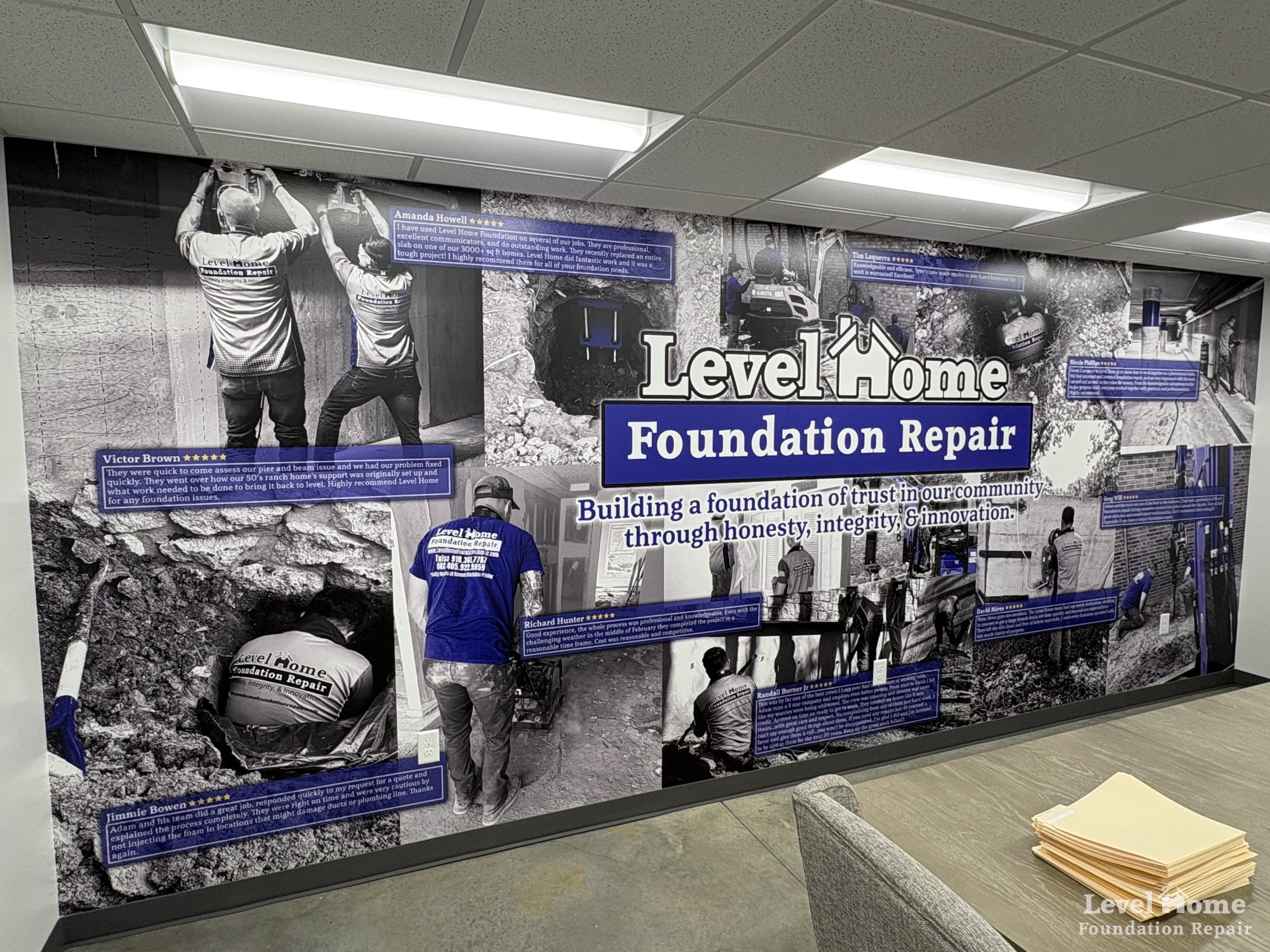
At Level Home Foundation Repair, we’ve restored over 3,000 homes across the Tulsa metro area in our 15+ years of service. We’re locally owned, and our mission is straightforward: Building a foundation of trust through honesty, integrity, and innovation.
Frequently Asked Questions About House Leveling in Tulsa
How long does house leveling take?
Most house leveling projects in Tulsa are completed in 1–3 days. Larger projects involving 12+ piers or significant beam work may take up to a week. You can typically remain in your home during the work.
Does house leveling damage my home?
Professional house leveling is carefully controlled with hydraulic equipment and laser measurements. Minor cosmetic cracks in drywall may appear during the lifting process, but these are easily patched. The structural result far outweighs any cosmetic touch-ups needed.
Will insurance cover house leveling?
Standard homeowners insurance in Oklahoma typically does not cover foundation settlement caused by soil movement. However, damage from plumbing leaks or covered perils may qualify. Check your policy and document everything. Read our full guide on homeowners insurance and foundation repair in Oklahoma.
Can I sell my house if it needs leveling?
Yes, but unresolved foundation issues must be disclosed in Oklahoma and typically reduce sale price by 10–15%. Many sellers find that investing in foundation repair in Tulsa before listing actually nets them a higher return. Read more about how foundation problems affect home value.
How do I know if my home needs leveling or just monitoring?
A professional inspection is the only way to know for sure. Some settlement is normal — especially seasonal movement on Oklahoma clay. But if you notice multiple warning signs, cracks that are growing, or slopes exceeding 1 inch per 10 feet, it’s time for an expert evaluation.
Don’t Wait — Protect Your Tulsa Home’s Foundation
Foundation settlement doesn’t fix itself. In Oklahoma’s expansive clay soil, it almost always gets worse with each seasonal cycle. The longer you wait, the more expensive and complex the repair becomes.
If your Tulsa-area home is showing signs of uneven settlement, Level Home Foundation Repair offers free, honest inspections with zero obligation. We’ll tell you exactly what’s happening, what (if anything) needs to be fixed, and what it will cost — no surprises, no unnecessary upsells.
Contact Level Home Foundation Repair today:
- 📞 Call: (918) 361-7787
- 🌐 Visit: levelhomefoundationrepair.com
- 📍 Serving: Tulsa, Broken Arrow, Owasso, Bixby, Jenks, Sand Springs, Sapulpa, Claremore, and all surrounding Oklahoma communities
Level Home Foundation Repair — Building a foundation of trust in our community through honesty, integrity, and innovation.