If you own a home in Tulsa with a crawl space, there’s a good chance you haven’t been under it in years — maybe ever. You’re not alone. Most Oklahoma homeowners treat the crawl space like it doesn’t exist until something goes wrong upstairs. A door that won’t close. A floor that bounces when you walk across it. A mysterious smell drifting up from below.
By the time those problems show up in your living room, the damage underneath has usually been building for months or even years. And here’s the part that stings: crawl space structural repair caught early might cost a few thousand dollars. Caught late? You could be looking at $15,000 to $30,000 or more — not to mention the headache of living in a home that’s literally sinking beneath you.
We’ve been providing crawl space repair services across the Tulsa metro for years, and we see the same patterns over and over again. Homeowners who waited too long. Homeowners who didn’t know what to look for. That’s why we put together this guide — so you can recognize the warning signs before they become emergencies.
If any of these five signs sound familiar, it’s time to get under the house — or better yet, call someone who does it every day. Crawl space repair in Tulsa starts with knowing what you’re dealing with.
Warning Sign #1: Bouncy or Sagging Floors
This is the one most homeowners notice first, and it’s the one they dismiss the longest. “Oh, it’s just an old house,” they say. But bouncy, soft, or visibly sagging floors are not a cosmetic issue — they’re a structural red flag.
Here’s what’s happening underneath: the floor joists or support beams that hold up your subfloor have either shifted, deteriorated, or lost contact with their piers. In many Tulsa-area pier and beam homes built in the 1950s through 1970s, the original supports were wooden posts sitting on concrete pads. Over decades, those wooden posts rot, the pads settle unevenly in Oklahoma’s expansive clay soil, and the beams they support start to sag.
When the support system fails, gravity does the rest. The floor starts to dip in the middle of rooms, especially in hallways and near load-bearing walls. You might notice that a marble placed on the floor rolls to one side. Furniture might wobble on surfaces that used to be flat.
A floor sagging crawl space situation doesn’t fix itself. It gets worse with every season. Oklahoma’s wet springs cause the soil to expand and push against supports, while dry summers cause it to shrink and pull away. This seasonal cycle — which we covered in depth in our post on Oklahoma clay soil and foundation damage — accelerates the deterioration year after year.
The fix? Crawl space support systems — specifically, adjustable steel columns that replace those failing wooden posts. These columns can be fine-tuned to re-level the floor and are designed to handle the load permanently. If the damage is more advanced, pier and beam foundation repair may involve sistering new joists alongside damaged ones and installing new beam supports.
Warning Sign #2: Visible Wood Rot or Moisture on Joists
If you’ve ever stuck your head into a crawl space and immediately noticed damp wood, soft spots on the joists, or actual fungal growth on the beams — you’re looking at a moisture problem that’s eating your home from the bottom up.
Oklahoma’s humidity is no joke. Tulsa averages around 65-70% relative humidity for much of the year, and inside an unventilated crawl space, that number can climb above 80%. At that level, wood-destroying fungi thrive. They break down the cellulose fibers in your floor joists and support beams, turning solid lumber into soft, spongy material that can’t carry the load it was designed for.
This isn’t just a moisture problem — it’s a structural problem. When joists lose their structural integrity, you’re back to sagging floors, and eventually, you could be dealing with a partial floor collapse. We’ve seen it happen in homes across Broken Arrow, Bixby, Owasso, and Jenks — good houses that just needed someone to catch the moisture issue before it turned into a major crawlspace foundation repair project.
The key here is addressing both the moisture source AND the structural damage. Fixing the wood rot without stopping the moisture is like putting a bandage on a wound while you’re still in the rain. That’s why proper crawl space repair in Tulsa always includes evaluating the moisture pathway — whether it’s groundwater intrusion, poor grading, plumbing leaks, or inadequate ventilation.
Once the moisture source is controlled (often with drainage systems and proper vapor barriers), the damaged structural members need to be repaired or replaced. Sometimes that means joist sistering. Sometimes it means replacing entire beam sections. And in every case, it means installing reliable crawl space support to carry the load going forward.
For a deeper comparison of moisture control options, check out our guide on crawl space encapsulation vs vapor barrier — it breaks down what actually works and what’s just marketing hype.
Warning Sign #3: Cracks in Interior Walls, Especially Near Door Frames
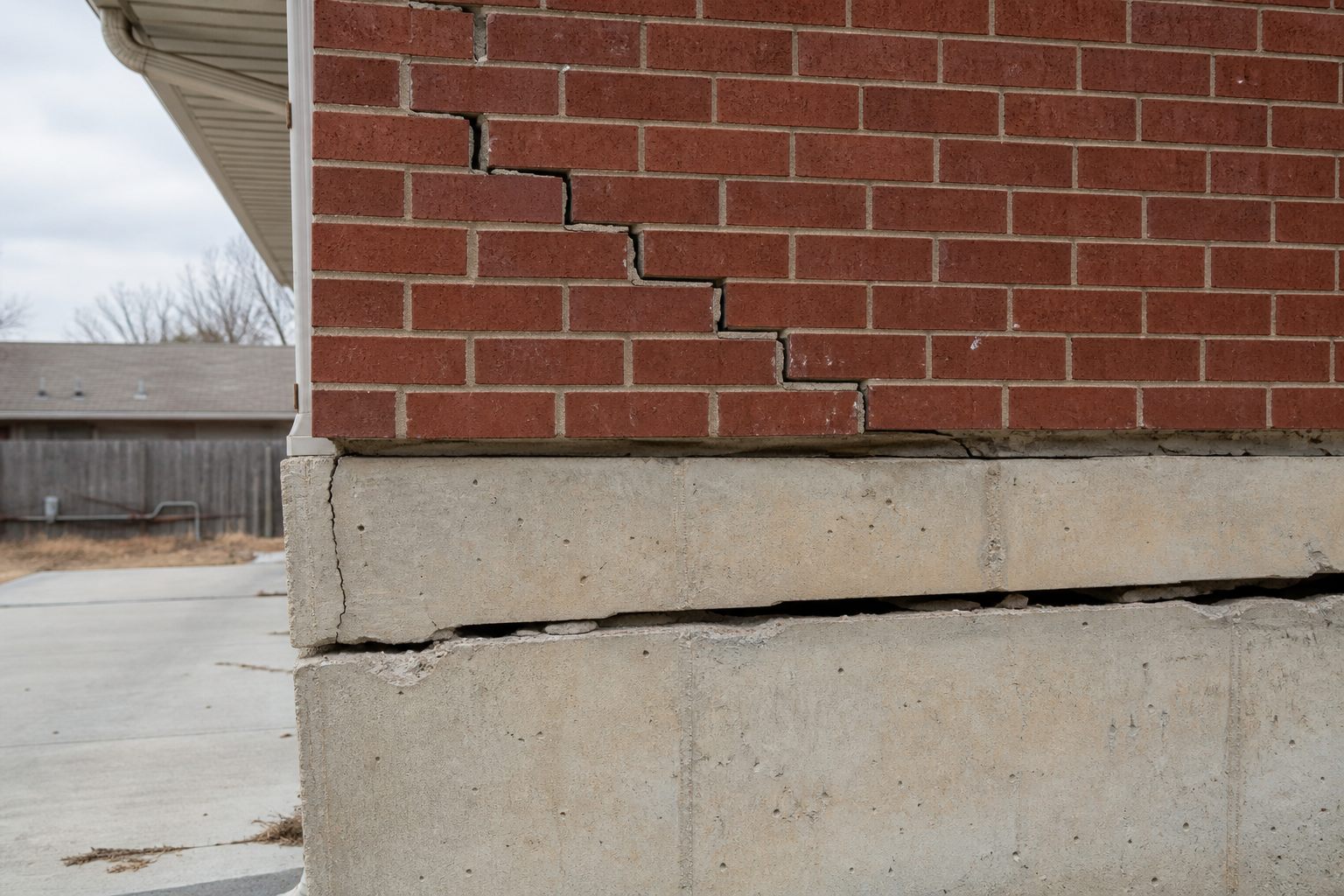
You might think wall cracks are a drywall issue. Sometimes they are — but when they show up at the corners of door frames and window frames, radiating outward in a stair-step or diagonal pattern, they’re almost always telling you something about what’s happening below the floor.
Here’s the mechanics: when crawl space supports settle or fail, the floor above them drops unevenly. That uneven movement transfers stress through the framing and into the walls. Drywall is rigid — it can’t flex with the frame. So it cracks. The cracks typically appear first around openings (doors and windows) because those are the weakest points in the wall structure.
If you’re seeing these cracks and your home sits on a pier and beam foundation, the connection is almost certainly structural. The crawl space has shifted, and the house is telling you about it the only way it can — through visible damage upstairs.
We see this constantly in Tulsa neighborhoods like Midtown, Maple Ridge, and the older sections of Broken Arrow where pier and beam construction was the standard. Homeowners patch the drywall, repaint, and six months later the cracks are back — because the underlying crawl space structural repair was never addressed.
The real fix starts under the house. A thorough foundation inspection will identify exactly which supports have failed, where the floor has dropped, and what needs to happen to bring things back to level. From there, pier and beam foundation repair — including new steel piers, adjusted columns, and possibly joist reinforcement — can stabilize the structure so those cracks don’t come back.
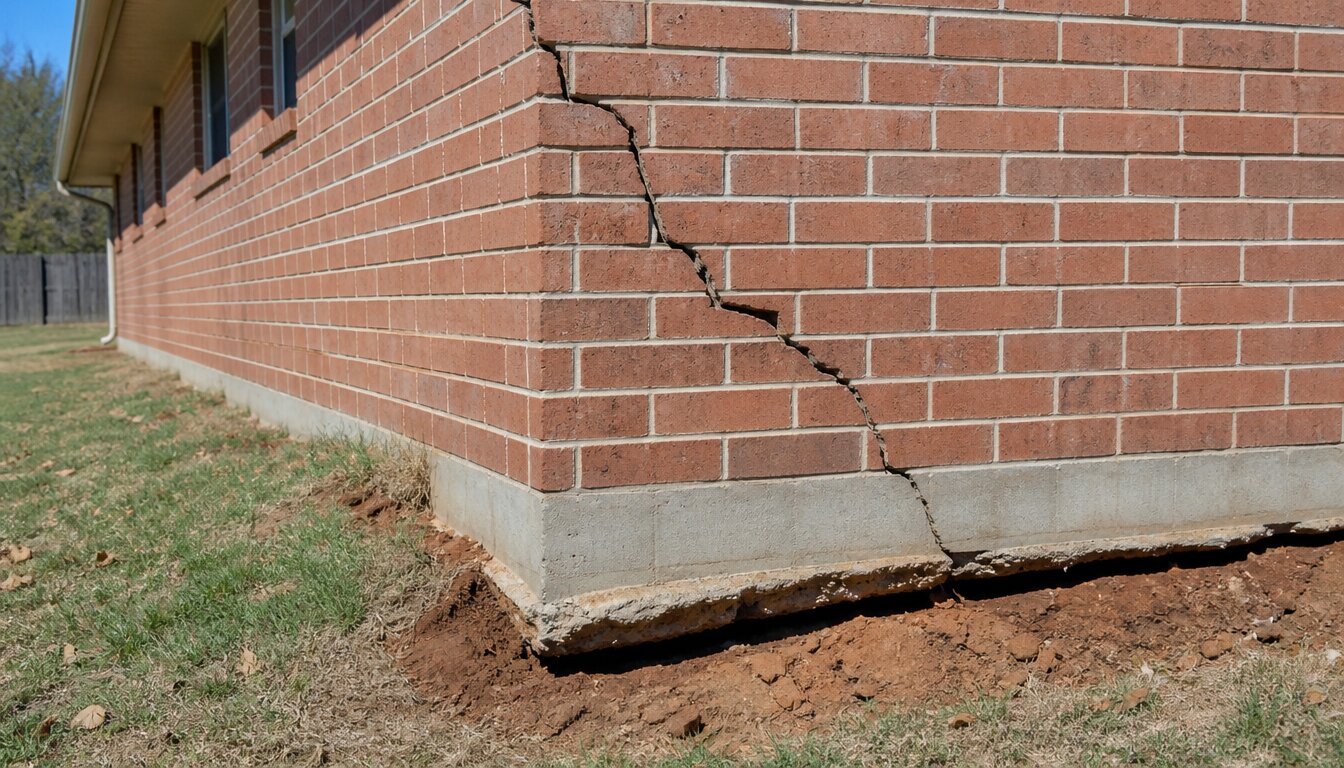
If you’ve also noticed cracks in the exterior of your foundation walls, our foundation crack repair page covers those scenarios specifically.
Warning Sign #4: Musty Odors or Mold Coming Through the Floors
If your house smells musty — especially in certain rooms or near floor vents — the source is almost certainly your crawl space. That earthy, damp smell is a combination of mold spores, decaying organic material, and stagnant moisture-laden air rising through gaps in your subfloor.
This is more than an inconvenience. The EPA estimates that up to 40% of the air you breathe on the first floor of your home comes from the crawl space below, thanks to the natural “stack effect” — warm air rises, pulling crawl space air up through gaps, cracks, and even through the wood itself. If your crawl space has mold, you’re breathing mold.
But here’s the structural angle that most people miss: if there’s enough moisture in your crawl space to grow mold, there’s enough moisture to damage wood. Mold and wood rot go hand in hand. The same conditions that produce that musty smell are actively weakening your floor joists and support beams. By the time the smell reaches your living room, the structural damage may already be significant.
In the Tulsa area, we deal with this frequently. Oklahoma’s clay soil holds moisture like a sponge after rain events, and that moisture migrates into the crawl space through the soil surface and foundation walls. Without proper barriers and ventilation management, it accumulates and creates the perfect environment for both biological growth and structural decay.
The solution is a two-part approach: address the structural damage that’s already occurred (damaged joists, compromised beams, failed supports), and then control the moisture to prevent recurrence. Strong crawl space support comes first — you stabilize the structure, then you protect it. Encapsulation can be a complementary step, but it’s not a substitute for actual structural repair. You can seal up a crawl space all day long, but if the beams are rotting and the piers have settled, you’ve just hidden the problem behind plastic sheeting.
Warning Sign #5: Doors and Windows That Suddenly Won’t Close Properly
This one sneaks up on people. One day the bedroom door closes fine. A few weeks later, it’s dragging on the carpet. Then the bathroom door won’t latch. Then you notice the kitchen window frame looks slightly off-square.
What’s happening is floor displacement caused by shifting crawl space supports. As piers settle, beams sag, or joists deflect, the floor plane changes — sometimes by fractions of an inch, sometimes by much more. That change in floor plane racks the wall framing, which shifts the door and window openings out of square. A door frame that was perfectly rectangular is now a parallelogram, and the door simply doesn’t fit anymore.
This is especially common in Tulsa during seasonal transitions. The spring rain saturates Oklahoma’s clay soil, causing it to expand and push supports upward. Then the summer heat dries it out, the soil contracts, and the supports drop. Each cycle can move things a little further from where they started. Over several years, the cumulative effect becomes obvious — and by then, you’re not talking about adjusting a door. You’re talking about house leveling.
If multiple doors and windows are affected — especially if they’re on the same side of the house or along the same load path — that’s a strong indicator of systematic foundation movement, not just normal settling. It’s time for a professional evaluation and likely crawl space structural repair to stabilize the underlying supports.
What Happens If You Ignore These Warning Signs
We get it — foundation work isn’t fun to think about, and it’s not cheap. But ignoring crawl space problems doesn’t make them go away. It makes them exponentially worse.
Here’s what progressive failure looks like in a pier and beam home:
- Year 1-2: Minor floor bounce, a couple of sticky doors. Easy to dismiss. Repair cost at this stage: often $2,500–$6,000 for targeted support repair.
- Year 3-5: Visible sagging, wall cracks appearing, musty odors. Damage has spread across multiple bays. Repair cost: $6,000–$15,000 depending on scope.
- Year 5-10: Severe structural compromise. Major floor deflection, extensive wood rot, possible plumbing damage from shifting. Repair cost: $15,000–$30,000+. At this point, you may also need plumbing work, drywall repair, and potentially new flooring.
And then there’s resale value. In Oklahoma’s real estate market, a home with documented foundation problems can lose 10-15% of its market value — and that’s if you disclose it (which you’re legally required to). Some buyers won’t touch a home with crawl space issues at any price. Others will demand a repair credit that could cost you more than fixing it yourself.
For more context on our complete approach, read our complete crawl space repair guide — it covers everything from initial assessment to final walkthrough.
The bottom line: early intervention saves money. Every month you wait, the problem grows and the repair gets more involved. Foundation repair in Tulsa isn’t something to put off until next year.
How Crawl Space Structural Repair Works
If you’ve never been through a crawlspace foundation repair project, here’s what the process typically looks like when done right:
1. Comprehensive Inspection
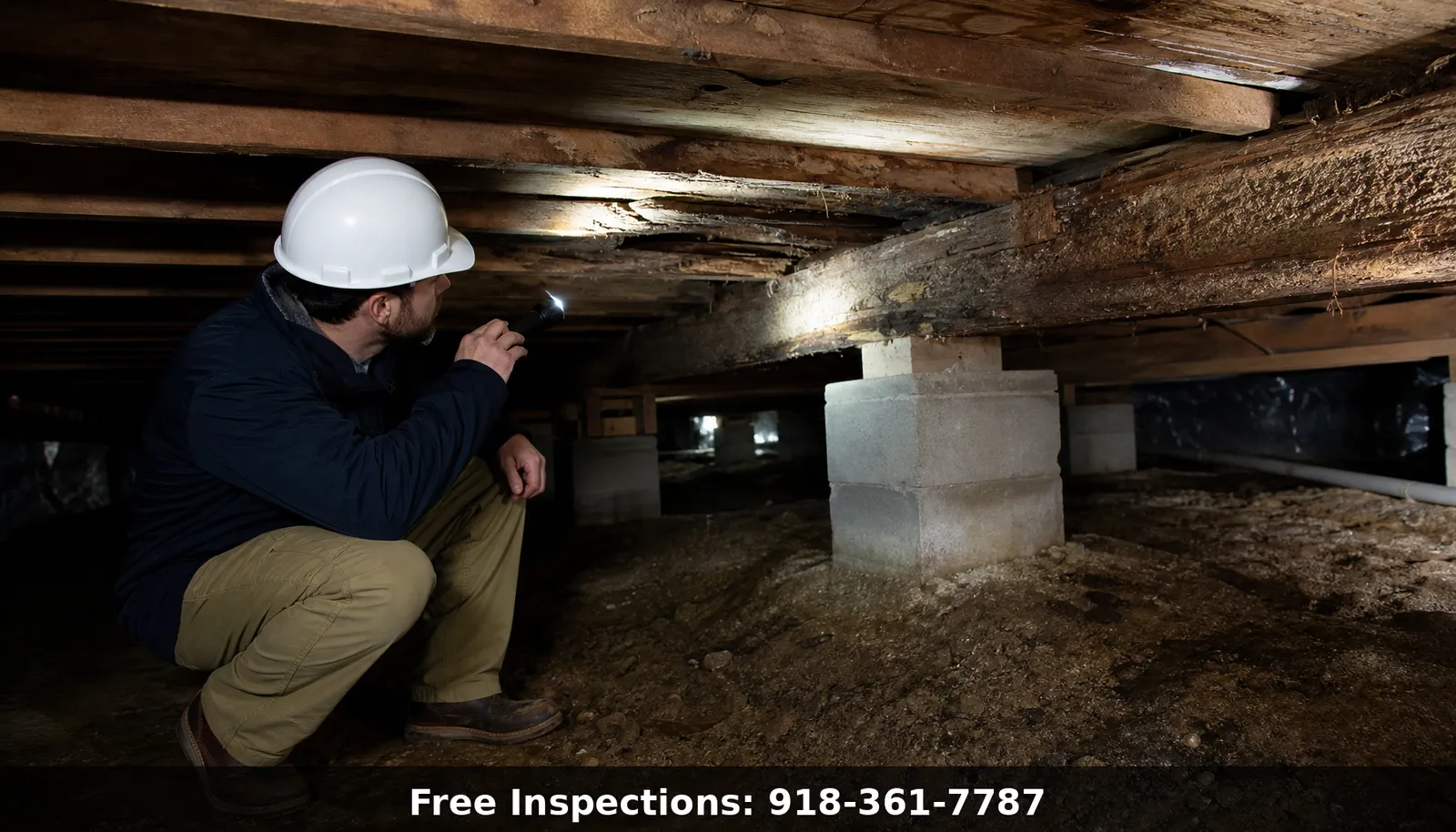
A trained technician enters the crawl space and documents every issue — support conditions, joist integrity, moisture levels, beam deflection, pier settlement, and evidence of biological damage. This isn’t a 10-minute walkthrough. A proper inspection takes 60-90 minutes for an average-sized crawl space and includes measurements at multiple points.
2. Adjustable Steel Column Installation
The backbone of modern crawl space repair in Tulsa is the adjustable steel column. These heavy-duty steel supports replace failing wooden posts and can be precisely adjusted to re-level the floor above. They sit on engineered concrete footings and connect to the beams with load-bearing plates. Unlike wooden posts, they don’t rot, don’t attract termites, and don’t lose strength over time.
3. Joist Sistering and Beam Reinforcement
Where individual joists have been weakened by rot or damage, new lumber is bolted alongside the damaged joist — a process called “sistering.” This effectively doubles the load capacity in that area without requiring complete joist replacement, which would mean tearing up the floor above. For beams that have cracked or sagged beyond adjustment, new engineered beams or steel I-beams may be installed.
4. Pier Stabilization
If the perimeter or interior piers have settled, steel pier installation or helical pier solutions can stabilize them by driving deep into load-bearing soil strata below the unstable clay layer. This is especially important in the Tulsa area where Oklahoma’s expansive clay soil causes ongoing movement in the upper 8-12 feet of soil.
5. Moisture Management
After the structural repairs are complete, moisture control measures are installed to protect the investment. This may include vapor barriers, dehumidification, drainage improvements, or full encapsulation — depending on the specific conditions. The goal is to keep crawl space humidity below 60% year-round to prevent future wood damage.
Strong Structural Support: The Key to a Healthy Home
Here’s something most crawl space companies won’t tell you: encapsulation alone doesn’t fix structural problems. We see homeowners who paid $8,000-$12,000 for a crawl space encapsulation — plastic sheeting on the walls and floor, a dehumidifier, maybe some vent covers — and their floors are still sagging because nobody addressed the actual support system underneath.
Strong structural support is the foundation (literally) of a healthy crawl space. Without it, everything else is cosmetic. You can encapsulate a crawl space with failing supports, and you’ll have a clean-looking crawl space with a sagging floor. That’s not a solution — it’s a cover-up.
At Level Home Foundation Repair, we lead with structural support because that’s what actually holds your house up. The beams, joists, piers, and columns in your crawl space are the skeleton of your home’s first floor. When they fail, everything above them is affected — floors, walls, doors, windows, plumbing, even your roof line over time.
Our approach to crawl space repair in Tulsa is simple: fix the structure first, then protect it. Install the steel columns. Reinforce the joists. Stabilize the piers. Get the floor back to level. THEN address moisture, THEN consider encapsulation if it makes sense for your specific situation. That’s the order that works.
This isn’t a sales pitch against encapsulation — it’s a reality check. Encapsulation is a great tool when it’s part of a complete plan. It’s a terrible solution when it’s used to mask structural failure. If someone is quoting you encapsulation without ever mentioning your sagging beams or settling piers, get a second opinion.
Why Level Home Uses a Different Approach
Most crawl space companies in the Tulsa area market themselves as moisture control or encapsulation specialists. And that’s fine — moisture control is important. But it’s only half the equation.
Level Home Foundation Repair is a structural repair company first. We specialize in the mechanical systems that hold your home up — piers, beams, joists, and columns. When you call us for crawl space repair in Tulsa, we’re not just looking at moisture. We’re evaluating every structural component in your crawl space against engineering standards.
Here’s what makes our approach different:
- We inspect everything. Not just moisture — every pier, every beam, every joist, every connection point. We measure deflection. We probe for rot. We check column plumb and bearing.
- We fix the structure first. Steel columns, pier stabilization, joist reinforcement — whatever the crawl space needs to support your home properly. This is the non-negotiable foundation of every project we do.
- We use commercial-grade materials. Our adjustable steel columns are rated for the loads they carry. Our pier systems are engineered for Oklahoma soil conditions. We don’t cut corners on the parts you can’t see.
- We address moisture as part of the plan. Once the structure is sound, we recommend appropriate moisture control measures based on your specific crawl space — not a one-size-fits-all package.
This approach works because it addresses the actual problem. A sagging floor isn’t a moisture problem — it’s a support problem. Moisture may have caused the support to fail, but installing a vapor barrier doesn’t un-sag your floor. You need steel under there, properly installed and properly adjusted.
We’ve completed hundreds of crawl space structural repair projects across the Tulsa metro area — from Sand Springs to Coweta, from Sapulpa to Claremore. Every project starts with an honest assessment and ends with a home that’s structurally sound and properly supported.
When to Schedule a Crawl Space Inspection
If you’ve recognized any of these five warning signs in your home, don’t wait for more evidence. Crawl space problems don’t plateau — they accelerate. The cost of repair goes up with every passing season as Oklahoma’s clay soil continues its expand-and-contract cycle beneath your foundation.
Here’s when you should absolutely pick up the phone:
- You notice bouncy or uneven floors in any part of your home
- Wall cracks are appearing near doors and windows
- There’s a persistent musty smell, especially on your first floor
- Doors or windows that used to work fine are now sticking or won’t latch
- You’re buying a pier and beam home and want to know what you’re getting into
- Your home is over 30 years old and no one has ever inspected the crawl space
A professional inspection costs you nothing with Level Home — we provide free crawl space and foundation inspections throughout the Tulsa metro area. We’ll get under your house, document what we find, take photos, and give you an honest assessment of what needs attention now, what can wait, and what your options are.
No pressure, no scare tactics — just straight talk about the condition of your crawl space and what it’ll take to make it right. That’s the Level Home way.
Call Level Home Foundation Repair at (918) 361-7787 for a free inspection. Whether you need a simple support column adjustment or a complete crawl space structural repair project, we’ll give you an honest assessment and a fair price. Your home deserves strong structural support — and so do you.