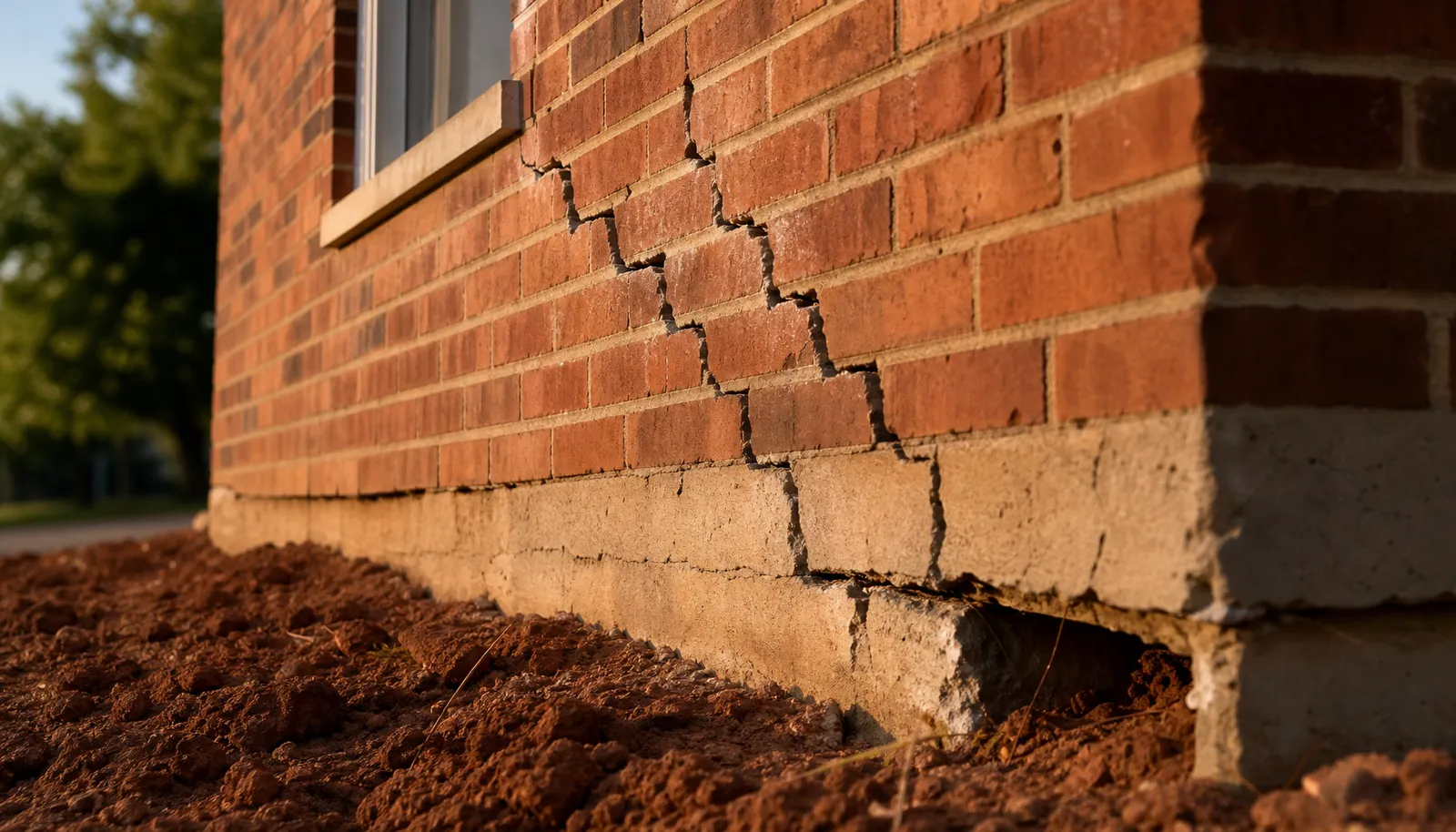
You noticed it a few months ago — a door that used to close perfectly now drags across the frame. Then came the crack running diagonally through the brick on the south side of your house. And last week, your spouse pointed out that the kitchen floor slopes toward the back wall.
Your foundation is sinking. And if you’re reading this, you’re probably wondering what’s actually happening under your home, how serious it is, and what it takes to fix it.
Here’s the straight answer — no sales pitch, no scare tactics.
What Causes a Foundation to Sink?
A sinking foundation almost always comes down to what’s happening in the soil beneath your home. The concrete and steel are doing their job — the ground underneath is not.
In Oklahoma, these are the most common culprits:
Expansive Clay Soil
Oklahoma sits on some of the most reactive clay soil in the country. When it rains, the clay absorbs water and swells. During dry stretches — and Tulsa summers deliver plenty of those — the clay shrinks and pulls away from the foundation. Over years of wet-dry cycles, the soil compresses unevenly and pockets of settlement form. That’s when your foundation starts dropping on one side.
Poor Soil Compaction During Construction
When a home is built, the excavated soil gets backfilled around the foundation. If that fill wasn’t compacted properly — and in many older Oklahoma homes, it wasn’t — it settles over time. The foundation follows it down.
Plumbing Leaks Under the Slab
A slow leak in your water or sewer line can saturate the soil beneath your slab for months before you ever notice. That concentrated moisture softens the bearing soil in one area, and the foundation sinks right into it. We see this regularly in Tulsa homes built in the 1970s through 1990s with cast iron drain lines that have corroded.
Drainage Problems
Water pooling near your foundation — from clogged gutters, grading that slopes toward the house, or missing downspout extensions — erodes and weakens the soil. Over time, that erosion creates voids under the footing, and the foundation settles into them.
How to Tell If Your Foundation Is Sinking (Not Just Settling)
Every house settles a little in the first few years after construction. That’s normal. What isn’t normal is ongoing, uneven movement — one part of the house dropping while the rest stays put.
Here’s what distinguishes active sinking from harmless settling:
- Diagonal cracks in brick, drywall, or block walls — especially cracks that are wider at the top than the bottom
- Doors and windows that suddenly stick, won’t latch, or show gaps at the corners of the frame
- Visible slope in the floors — if you can roll a ball across the room and it consistently goes the same direction, that’s not your imagination
- Gaps between the wall and ceiling or between the wall and floor
- Exterior separation — the foundation pulling away from the soil, creating a visible gap around the perimeter
- Chimney leaning away from the house — this is often the first thing neighbors notice
If you’re seeing two or more of these, you’re past the “just keep an eye on it” stage.
How Sinking Foundation Repair Actually Works
The repair method depends on how your home was built, how deep the stable soil is, and how much movement has occurred. Here are the two primary methods used in Oklahoma:
Steel Push Piers (Resistance Piers)
Steel push piers are driven through the unstable soil until they reach bedrock or a load-bearing stratum — sometimes 15 to 30 feet deep in the Tulsa area. Once seated, hydraulic jacks transfer the weight of your home from the failing soil onto the piers, and the foundation is lifted back to its original position.
Push piers are ideal for slab-on-grade homes and situations where the movement is significant. They can be installed year-round, the equipment fits in tight spaces, and most residential jobs take one to three days.
Helical Piers
Helical piers work on the same principle but are screwed into the ground rather than driven. The helical plates on the shaft provide anchoring in the soil — similar to a giant screw. They’re especially effective for lighter structures, pier-and-beam homes with crawl spaces, and new construction applications where you want to prevent settling before it starts.
Both methods provide a permanent, warrantied solution. The piers don’t rely on the problem soil anymore — they bypass it entirely.
What Sinking Foundation Repair Costs in Oklahoma
Cost depends on the number of piers needed, depth to stable soil, and accessibility. In the Tulsa market, here’s what homeowners typically see:
- Minor settlement (3–5 piers): $3,500 – $7,000
- Moderate sinking (6–12 piers): $7,000 – $18,000
- Significant movement (12+ piers, possible slab work): $18,000 – $35,000+
We’ve seen homeowners get quotes ranging from $4,000 to $40,000 for the same job — which is why getting an honest inspection from someone who isn’t incentivized to oversell is critical. A good inspector will show you exactly what’s moving, measure the deflection, and recommend only the piers you actually need.
What Happens If You Wait?
Foundation problems don’t plateau. The soil conditions that caused the sinking are still there, and every rain cycle and drought makes them worse. Here’s what we see when homeowners delay:
- A $6,000 repair turns into a $20,000 repair because more sections of the foundation have now dropped
- Plumbing lines under the slab crack from the movement, creating leaks that accelerate the settling
- Interior damage — drywall cracking, tile popping, door frames racking — becomes so extensive that cosmetic repairs alone cost thousands
- Home value drops significantly — foundation issues can reduce your home’s appraised value by 10–15% or more
The math is simple: the longer you wait, the more it costs.
How to Choose the Right Foundation Repair Company
This is the part most articles skip, but it matters more than anything else. Here’s what to look for:
- They inspect before they quote. Anyone who gives you a price over the phone without seeing the home is guessing — or worse, selling.
- They explain what they find. A good company walks you through the measurements, shows you exactly where the movement is, and tells you why they’re recommending what they’re recommending.
- They sometimes tell you not to do it. Honesty matters. If your foundation doesn’t need piers, a trustworthy company will tell you that — even though it means walking away from a sale.
- They offer a transferable warranty. Foundation piers should come with a warranty that transfers to the next owner when you sell. That protects your investment and your home’s resale value.
- They have a track record. Look for real reviews from real homeowners — not stock testimonials on a template website.
The Bottom Line
A sinking foundation is serious, but it’s fixable — and the fix is well-understood, permanent, and warrantied. The key is catching it early, getting an honest assessment, and working with a company that shows you exactly what’s happening before recommending a solution.
If your Tulsa-area home is showing signs of foundation settlement, schedule a foundation inspection before the next wet-dry cycle makes it worse. The earlier you act, the simpler and less expensive the repair.