That beautiful oak in your front yard could be silently destroying your foundation. Tree root damage is one of the most misunderstood — and underestimated — causes of foundation problems across the country. In Oklahoma, where our expansive clay soil already puts enormous pressure on foundations, tree roots make everything worse.
Here’s what actually happens underground, what the warning signs look like, and what you can do to protect your home without cutting down every tree on your property.
How Tree Roots Actually Damage Foundations
Contrary to popular belief, tree roots rarely crack a foundation by physically pushing against it. Concrete and steel are far stronger than wood fibers. What roots do is something more subtle and, in Oklahoma, far more destructive: they steal moisture from the soil.
Here’s the chain of events:
- Roots grow toward moisture. A mature tree can absorb 50 to 100+ gallons of water per day. The roots spread outward — often well beyond the tree’s canopy — seeking water wherever they can find it.
- Roots pull moisture from the clay soil around your foundation. Oklahoma’s clay soil is highly reactive to moisture changes. When roots extract water near your foundation, the soil shrinks.
- Shrinking soil creates voids. As the clay contracts, it pulls away from your foundation, creating gaps. Your foundation — which was designed to sit on uniformly supported soil — now has unsupported sections.
- Your foundation settles unevenly. The unsupported sections sink into the voids. This is called differential settlement, and it’s the root cause (pun intended) of cracked walls, sticking doors, and sloping floors.
This process is called desiccation settlement, and it’s particularly aggressive during Oklahoma summers when high heat and low rainfall combine to dry out the soil rapidly.
Which Trees Cause the Most Foundation Damage?
Not all trees pose equal risk. The most problematic trees for Oklahoma foundations are species with aggressive, shallow root systems and high water demands:
- Willows: Extremely water-hungry with invasive root systems that can spread 3x the tree’s height. The single most dangerous tree for foundations.
- Silver maples: Fast-growing with shallow, spreading roots that seek surface moisture near foundations and plumbing lines.
- Cottonwoods: Common across Oklahoma, with aggressive root systems that can extend 100+ feet from the trunk.
- American elms: Broad root spread and high water consumption. Very common in older Tulsa neighborhoods.
- Bradford pears: Shallow root systems that grow close to the surface and can lift sidewalks and patios.
- Oaks (certain species): While generally less destructive than willows, post oaks and red oaks in Oklahoma develop extensive root networks that can affect nearby foundations.
General rule: Any tree planted within 20 feet of your foundation deserves monitoring. Trees with particularly aggressive root systems should ideally be 30+ feet away.
Warning Signs of Tree Root Foundation Damage
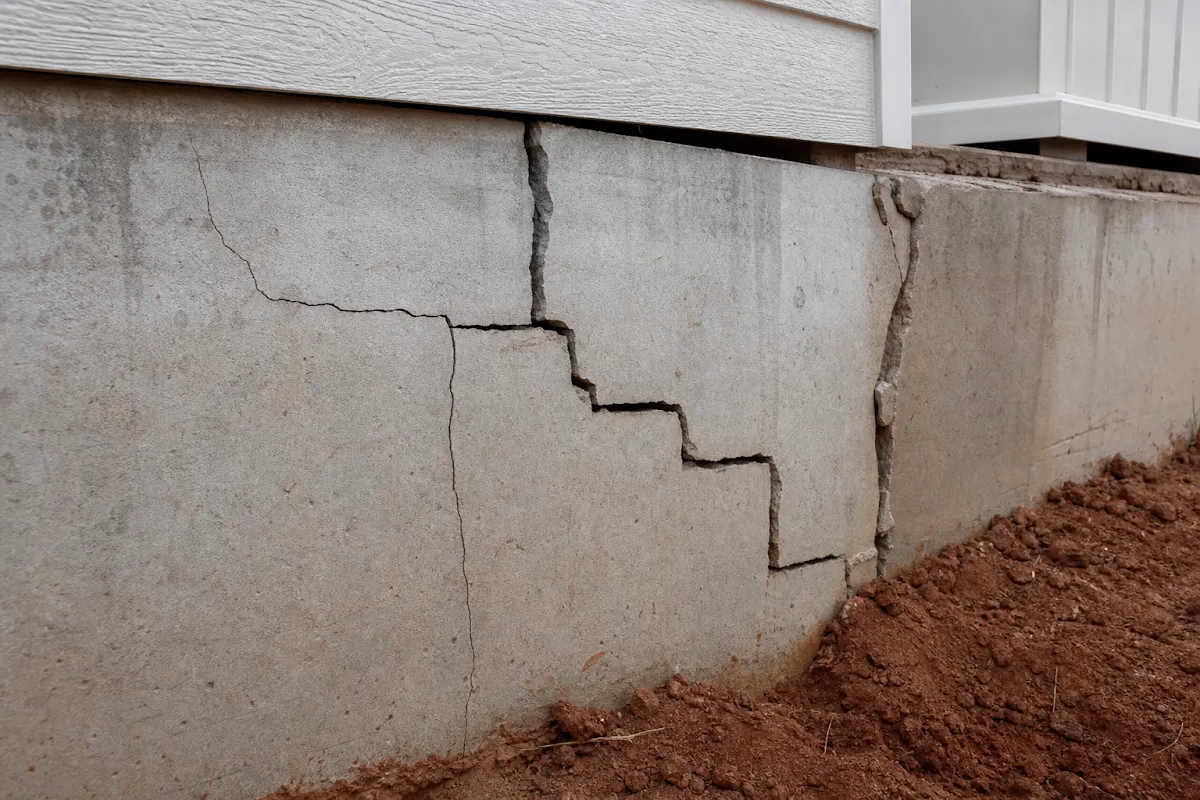
The symptoms of tree root damage look a lot like other foundation problems — because the end result is the same: uneven settlement. But there are some patterns that specifically point to tree roots as the culprit:
- Damage concentrated on one side of the home — the side nearest a large tree — while the opposite side shows no movement
- Cracks that appear or worsen during summer and partially close during rainy seasons (seasonal moisture cycling driven by root water uptake)
- Diagonal cracks in exterior brick radiating from corners of windows and doors nearest the tree
- Floors sloping toward the side of the house where the tree is located
- Visible soil separation — a gap between the soil and your foundation wall, typically 1 to 3 inches wide during dry months
- Doors and windows sticking seasonally, particularly during late summer
If you’re seeing these signs and have a mature tree within 30 feet of your foundation, root-driven desiccation is a strong possibility.
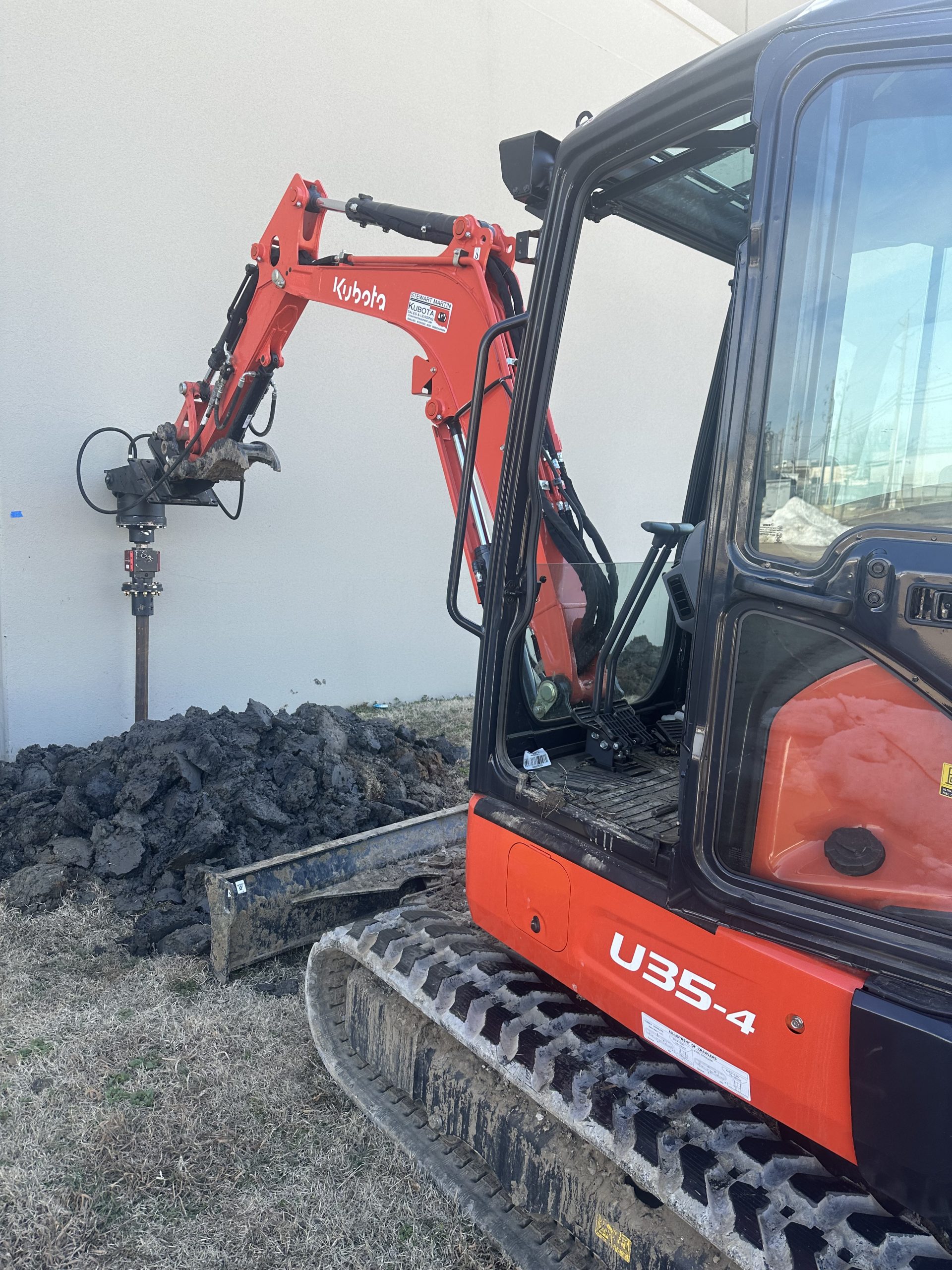 foundation repair in Tulsa crew performing structural repair work on a Tulsa residential foundation” style=”width:100%;height:auto;margin:20px 0;” />
How to Protect Your Foundation from Tree Root Damage
You don’t necessarily need to cut down your trees. Here are proven strategies that work in Oklahoma’s soil conditions:
1. Install a Root Barrier
A root barrier is a physical or chemical barrier installed between the tree and your foundation, typically 18 to 36 inches deep. It redirects roots downward and away from your home. Best installed when the tree is still young or when you’re already doing foundation work.
2. Maintain Consistent Soil Moisture
This is the single most impactful thing you can do. Use a soaker hose along your foundation perimeter during dry spells — run it 2 to 3 times per week during summer. The goal isn’t to flood the soil, but to prevent the extreme drying that causes clay shrinkage. Consistent moisture means the roots have less reason to pull water from near your foundation.
3. Manage Your Drainage
Proper foundation drainage keeps water flowing away from the house during rain, while preventing dry spots near the foundation during drought. Extend downspouts at least 4 to 6 feet from the foundation, and ensure the grade slopes away from the house on all sides.
4. Strategic Tree Planting
If you’re planting new trees, follow this distance guide based on mature tree size:
| Tree Type | Minimum Distance from Foundation |
|---|---|
| Small ornamental trees | 10 feet |
| Medium shade trees | 20 feet |
| Large shade trees (oaks, elms) | 25–30 feet |
| Willows, cottonwoods, silver maples | 40+ feet |
5. Professional Root Pruning
An arborist can selectively prune roots on the foundation side of a tree without killing it. This is a short-term solution (roots regrow over 2 to 5 years) but can be effective while you implement other protections. Never attempt this yourself — cutting the wrong roots can topple the tree.
When Tree Root Damage Has Already Happened
If your foundation has already settled due to tree root desiccation, the damage won’t reverse itself — even if you remove the tree. The soil voids that formed when roots extracted moisture may partially recover during wet seasons, but the foundation has already moved. Seasonal heaving and settling will continue.
The permanent fix involves two steps:
- Stabilize the foundation with steel push piers or helical piers driven to stable soil below the root zone. This permanently supports the foundation regardless of future moisture changes in the surface soil.
- Address the moisture imbalance by installing root barriers, improving drainage, and maintaining consistent soil moisture going forward.
Without addressing both the structural damage and the root cause (literally), the problem will continue. We see this frequently across the Tulsa metro — a homeowner removes a tree thinking that solves the problem, but the foundation has already settled and now needs professional repair.
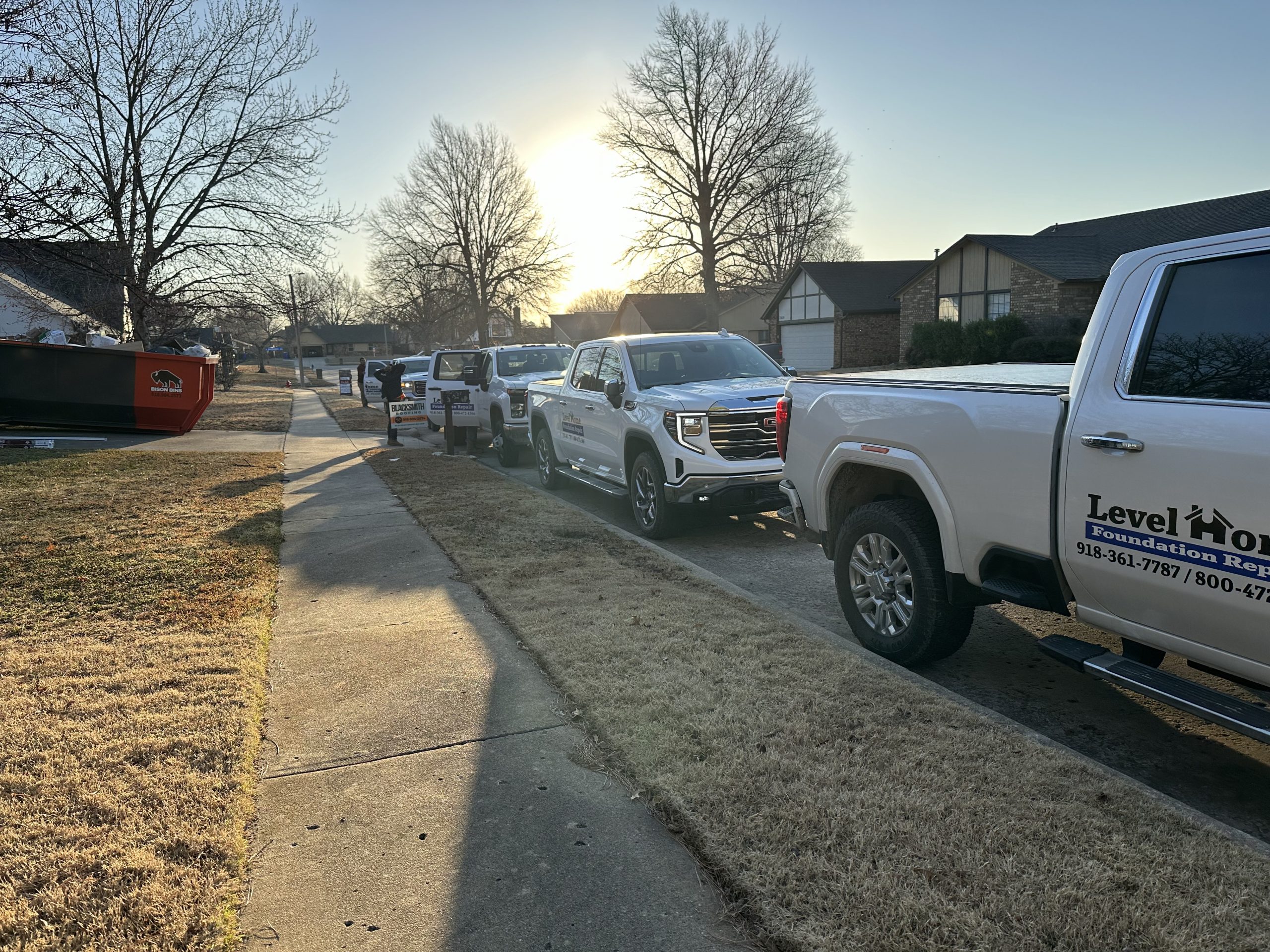
Should You Remove the Tree?
Not always. Tree removal is a last resort, and in some cases it can actually make things worse in the short term. Here’s why: when you remove a large tree, the soil that was being dried by the roots suddenly retains much more moisture. In Oklahoma’s clay, that means the soil expands — and the foundation can heave upward on the side where the tree was removed.
This is called heave recovery, and it can cause as much damage as the original settlement. The smartest approach is usually to:
- Stabilize the foundation first with piers
- Install root barriers
- Manage soil moisture consistently
- Keep the tree if it’s healthy and valuable to the property
Free Foundation Inspection — Get Real Answers
If you suspect tree roots are affecting your foundation, the best first step is a free professional inspection. Our team at Level Home Foundation Repair evaluates both the structural condition of your foundation and the environmental factors — including trees, drainage, and soil conditions — that may be contributing to the problem.
We serve homeowners across Tulsa, Broken Arrow, Owasso, Bixby, Jenks, Sand Springs, Sapulpa, Claremore, and all of northeast Oklahoma. With 180+ five-star reviews, we’ll give you an honest assessment — even if the answer is that your trees aren’t the problem.
Call (918) 361-7787 or schedule your free inspection online today.