You Just Spotted Cracks in Your Exterior Walls — Should You Be Worried?
You’re walking around the outside of your home, maybe pulling weeds or checking on the gutters, and you see it — a crack running through the brick or siding. Maybe it’s a zigzag pattern in the mortar joints. Maybe it’s a long horizontal line near the foundation. Your stomach drops.
Is this a sign of a serious foundation problem — or is it just cosmetic?
If you’re a homeowner in northeast Oklahoma, you’re not alone. This is one of the most common questions we hear at Level Home Foundation Repair, and it’s a fair one. The answer depends on the type, size, location, and pattern of the crack. In this guide, we’ll walk you through exactly how to tell the difference — and when it’s time to call a professional for foundation repair in Tulsa.
Why Exterior Wall Cracks Are So Common in Oklahoma
Oklahoma’s soil is the main culprit behind most exterior wall cracks. The Tulsa metro area and surrounding northeast Oklahoma communities sit on heavy clay soil — specifically expansive clay that behaves like a sponge.
Here’s what happens throughout the year:
- Spring and fall rains: The clay soil absorbs moisture and expands, pushing against your foundation walls.
- Summer drought: The soil dries out and shrinks dramatically, pulling away from the foundation and creating voids.
- Winter freeze-thaw cycles: Moisture in the soil freezes and expands, then contracts when it thaws.
This constant expand-contract cycle puts enormous stress on your home’s foundation. Over time, it can cause your foundation to shift, settle unevenly, or crack — and those forces show up as cracks in your exterior walls, brick veneer, and mortar joints.
Add in Oklahoma’s occasional earthquakes (yes, they’ve increased significantly over the last decade), and your exterior walls are dealing with forces most homes in other states never experience.
Cosmetic Cracks vs. Structural Cracks: How to Tell the Difference
Not every crack means your foundation is failing. Here’s how to evaluate what you’re seeing:
Cracks That Are Usually Cosmetic
- Hairline cracks in mortar joints (less than 1/16 inch wide): Small cracks in the mortar between bricks are extremely common, especially in homes over 10 years old. Normal settling and temperature changes cause these.
- Small vertical cracks near corners of windows or doors: These often result from the natural settling that every home experiences in its first few years.
- Surface-only cracks in stucco or paint: If the crack only affects the surface coating and doesn’t extend into the underlying material, it’s typically cosmetic.
- Cracks that haven’t changed size in years: Old, stable cracks that don’t grow or shift usually indicate past settling that has already stopped.
Cracks That Signal a Foundation Problem
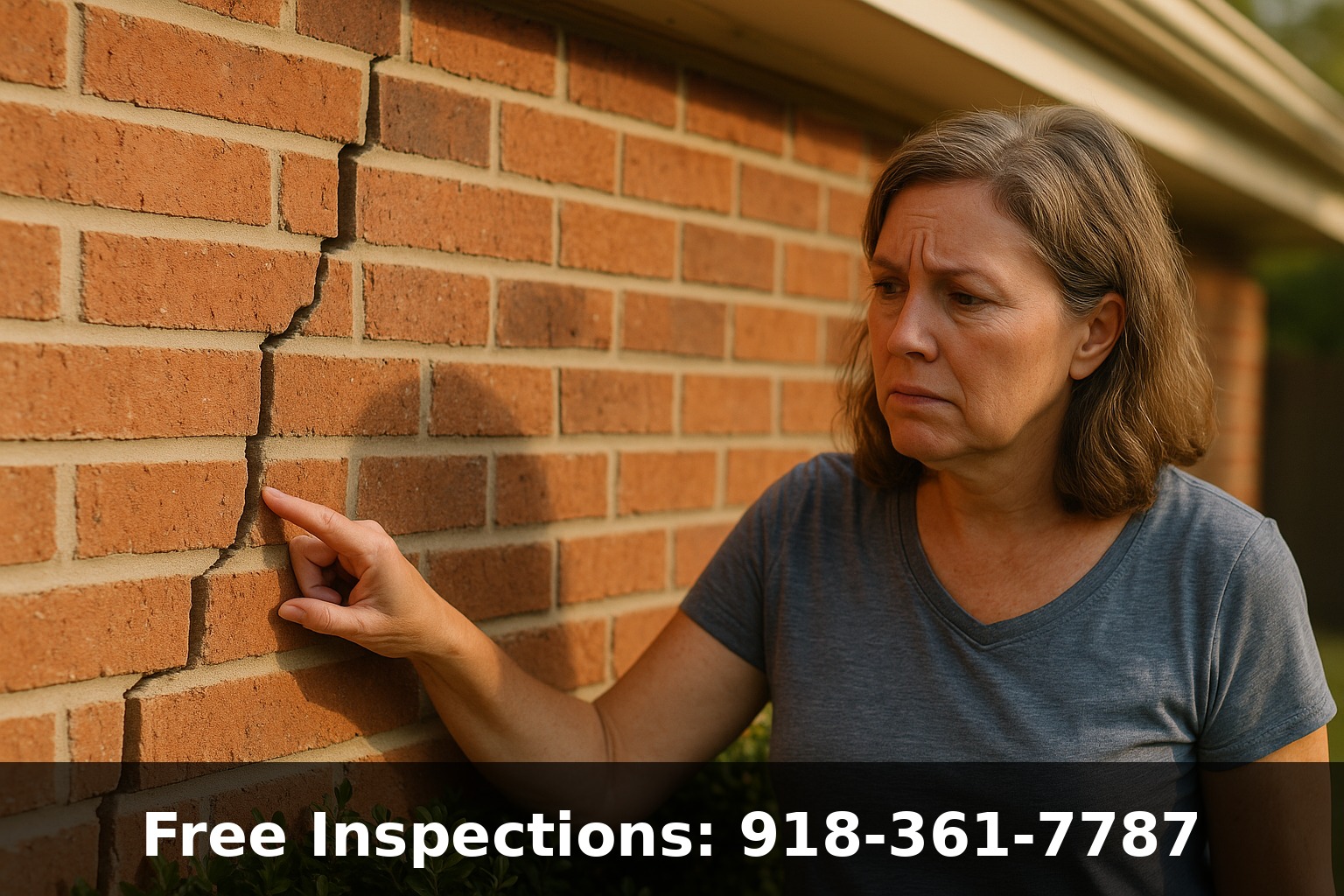
- Stair-step cracks in brick mortar joints: This zigzag pattern following the mortar lines is one of the most reliable indicators of foundation settlement. It means one part of the foundation is sinking lower than the rest.
- Horizontal cracks along the foundation wall: These are serious. Horizontal cracking indicates lateral pressure from soil — the ground is literally pushing against your walls.
- Wide cracks (1/4 inch or more): Any crack wider than a pencil tip deserves professional attention. Cracks you can fit a dime into are a definite red flag.
- Cracks that are wider at the top than the bottom (or vice versa): This V-shaped pattern indicates differential settlement — one section of the foundation is moving while another stays put.
- Cracks accompanied by bowing or leaning walls: If the wall itself is curving inward or tilting, you’re dealing with active structural movement.
- Cracks that keep growing: Mark the end of a crack with tape or pencil. If it extends past your mark within weeks or months, the underlying problem is active and getting worse.
- Multiple cracks appearing simultaneously: When new cracks show up in several locations at once, it usually means the foundation is shifting across a wider area.
The “Whole House” Check — Look for These Companion Signs
Exterior wall cracks rarely appear in isolation when there’s a real foundation problem. If you’re seeing cracks outside, do a quick walkthrough inside your home and check for:
- Doors that stick, won’t latch, or swing open on their own — frames shift when the foundation moves
- Windows that are hard to open or close — the frames are being torqued out of square
- Interior drywall cracks, especially diagonal cracks radiating from door and window corners
- Uneven or sloping floors — place a marble on the floor; if it rolls, you may have settling
- Gaps between the wall and ceiling or wall and floor
- Gaps around exterior door frames — visible daylight where there shouldn’t be
If you’re seeing exterior cracks plus two or more of these interior signs, there’s a strong chance you’re dealing with a foundation issue that needs professional evaluation.
Foundation Repair in Tulsa: What Happens During a Professional Inspection
When you call a reputable foundation repair company in Tulsa, here’s what a thorough inspection should include:
- Exterior walkthrough: Examining all visible cracks, measuring their width, documenting their patterns, and checking for wall movement.
- Interior inspection: Checking doors, windows, floors, and interior walls for companion signs of foundation stress.
- Elevation measurements: Using a manometer or laser level to measure floor elevations throughout the home. This reveals exactly which areas have settled and by how much.
- Crawl space or basement check: If applicable, inspecting the underside of the home for crawl space damage, moisture issues, or structural beam problems.
- Drainage assessment: Evaluating the grading around your home and drainage systems to identify water-related causes.
At Level Home Foundation Repair, inspections are free and come with zero obligation. Our approach is honest: if your cracks are cosmetic and don’t need repair, we’ll tell you. We’ve built our reputation on 15+ years of integrity — never recommending unnecessary work. As highlighted in our recent press release, we believe in building trust through honesty first.
Common Repair Solutions for Structural Cracks in NE Oklahoma
If your cracks are determined to be structural, the repair method depends on the specific problem:
- Steel push piers or helical piers: These are driven deep into stable soil or bedrock below the clay layer to permanently stabilize and potentially lift the settled section. This is the most common solution for settlement-related cracks in northeast Oklahoma.
- Polyurethane foam injection: Used to fill voids under the foundation and re-level concrete slabs. Ideal for lighter settlement issues and concrete patios or driveways.
- Wall anchors or carbon fiber reinforcement: Used when horizontal cracks indicate bowing walls under lateral soil pressure.
- Drainage correction: Often a key part of any foundation repair plan — redirecting water away from the foundation to prevent future soil expansion problems.
Cost range: Foundation repairs in the Tulsa area typically run from $3,000 to $15,000 for most residential homes, depending on the severity of the settlement and the number of piers needed. Minor crack repairs with drainage correction can be on the lower end, while full pier installations on multiple sides of the home are higher. We always provide detailed, transparent estimates — no hidden fees.
Frequently Asked Questions
How do I know if a crack in my brick wall is serious?
Look at the pattern and width. Stair-step cracks wider than 1/4 inch, horizontal cracks, and cracks that are growing are typically structural. Hairline cracks in mortar joints that haven’t changed in years are usually cosmetic. When in doubt, get a free professional inspection.
Can I just fill exterior cracks with caulk or mortar?
Filling a cosmetic crack is fine for appearance. But if the crack is structural, patching it without addressing the underlying foundation problem is like putting a bandage on a broken bone. The crack will reappear and often gets worse.
Do exterior wall cracks affect my home’s value?
Yes. Visible structural cracks can reduce your home’s value by 10-15% or more. Buyers and their inspectors will flag them. The good news: professionally repaired foundations with a warranty (terms vary by service) can actually reassure buyers and preserve your investment.
Are exterior cracks worse after Oklahoma’s dry summers?
Absolutely. Oklahoma’s drought seasons cause clay soil to shrink dramatically, creating voids under your foundation. This is when settlement accelerates and new cracks often appear. Many homeowners first notice exterior cracks in late summer or early fall after extended dry periods.
Should I get a structural engineer or a foundation repair company first?
Either can be a good starting point. A reputable foundation repair company should provide a free, no-pressure inspection. If they recommend significant work, getting an independent structural engineer’s opinion (typically $300-$500) is a smart move for peace of mind.
Don’t Ignore the Cracks — Get a Free Inspection
If you’re a homeowner in Tulsa, Broken Arrow, Owasso, Claremore, Bartlesville, or anywhere in northeast Oklahoma and you’ve noticed cracks in your exterior walls, don’t wait to find out if they’re getting worse. Early inspection can save you thousands.
Contact Level Home Foundation Repair today for a FREE, no-obligation foundation inspection.
- 📞 Phone: (918) 361-7787
- 🌐 Website: levelhomefoundationrepair.com
- 📍 Service area: Tulsa, Broken Arrow, Owasso, Bixby, Jenks, Sand Springs, Claremore, Bartlesville, Catoosa, and all of northeast Oklahoma
Level Home Foundation Repair — 15+ years of honest assessments and expert foundation repair in Tulsa and NE Oklahoma. We’ll tell you what you actually need — nothing more.