
If you’ve ever walked downstairs after a Tulsa thunderstorm and found damp walls, puddles, or that unmistakable musty smell, you know the sinking feeling. Water in your basement isn’t just an inconvenience — it’s a threat to your home’s structural integrity, your indoor air quality, and your family’s health.
And here in Oklahoma, it’s more common than most people realize.
Tulsa sits on expansive clay soil that swells dramatically when wet and shrinks when dry. Add in our spring storm seasons — where 4 to 6 inches of rain can fall in a single night — and you have a recipe for chronic basement moisture problems. The good news: foundation repair Tulsa experts have proven solutions that actually work, and the earlier you act, the less it costs. Learn more about our crawl space repair services.
This guide covers everything Tulsa homeowners need to know about basement waterproofing — from honest cost breakdowns to which methods work best on Oklahoma clay soil, so you can make an informed decision without getting oversold.
Why Tulsa Basements Are Especially Vulnerable to Water Intrusion
Not every city has the same basement waterproofing challenges. Tulsa’s combination of geology, climate, and building history creates a unique set of problems:
Oklahoma’s Expansive Clay Soil
The red clay soil throughout the Tulsa metro area is classified as CH clay (high-plasticity clay) by geotechnical engineers. This soil can expand by 20-30% when saturated, exerting enormous lateral pressure against basement walls. When it dries out during our hot summers, it shrinks and pulls away from the foundation, creating gaps where water funnels directly to your basement during the next rain.
This wet-dry cycle is the #1 cause of basement water problems in the Tulsa area. It doesn’t matter if your home was built in the 1920s Midtown bungalow era or last year in South Tulsa — the soil underneath behaves the same way.
Storm Intensity and Drainage Challenges
Tulsa receives an average of 42 inches of rain per year, with most falling between April and June. But it’s not the total rainfall that causes problems — it’s the intensity. Our thunderstorms can drop 2-3 inches in under an hour, overwhelming gutters, French drains, and city storm sewers simultaneously.
If your home sits in a low area — common in neighborhoods near the Arkansas River, Crow Creek, or Haikey Creek — water naturally flows toward your foundation. Many older Tulsa neighborhoods like Brookside, Florence Park, and Kendall-Whittier were built before modern drainage codes, making basement flooding even more likely.
Aging Foundations and Building Practices
Homes built before the 1970s in Tulsa often used unreinforced concrete block or poured concrete without modern waterproofing membranes. These walls develop hairline cracks over decades, and Oklahoma’s clay soil pressure gradually widens them. Many older homes also lack exterior waterproofing entirely — the builder simply poured the walls and backfilled with the same clay soil.
Basement Waterproofing Methods: What Works in Tulsa
There’s no single “best” method — the right approach depends on where the water is coming from, how severe it is, and your budget. Here’s an honest breakdown of each option:
1. Interior Waterproofing (Most Common in Tulsa)
Interior waterproofing manages water after it enters the basement, channeling it to a sump pump for removal. This is the most popular and cost-effective approach for Tulsa homes.
How it works:
- A perimeter drain channel (interior French drain) is installed along the inside base of basement walls
- Water that seeps through walls or floor joints is captured in this channel
- The channel directs water to a sump pump basin
- The sump pump ejects water away from the foundation
- A vapor barrier may be applied to walls to prevent moisture migration
Cost range: $3,000 – $8,000 for most Tulsa homes (depends on basement perimeter length)
Best for: Chronic seepage through walls or floor joints, hydrostatic pressure from high water tables, homes where exterior excavation isn’t practical
Tulsa advantage: Interior systems work regardless of soil conditions outside. Since Oklahoma clay soil makes exterior excavation expensive and risky (re-compaction is difficult), interior waterproofing is often the smarter choice here.
2. Exterior Waterproofing (The Gold Standard — When Feasible)
Exterior waterproofing stops water before it reaches your basement walls. It’s the most thorough approach but also the most expensive and disruptive.
How it works:
- The soil around your foundation is excavated down to the footing
- Walls are cleaned, inspected, and any cracks are repaired
- A waterproof membrane (rubberized asphalt or sheet membrane) is applied to the exterior wall
- A drainage board and exterior French drain are installed at the footing level
- The excavation is backfilled with drainage gravel
Cost range: $8,000 – $25,000+ depending on home size and accessibility
Best for: New construction, severe structural cracks allowing bulk water entry, homes undergoing major foundation repair in Tulsa where excavation is already happening
Tulsa challenge: Oklahoma clay soil is notoriously difficult to excavate and backfill properly. Improper backfill compaction can actually increase water problems by creating a “bathtub effect” where loose soil around the foundation collects more water than the surrounding undisturbed clay.
3. Crack Injection (For Specific Leaks)
If water is entering through one or two specific cracks in poured concrete walls, injection repair can be a targeted, affordable fix.
How it works:
- Epoxy or polyurethane resin is injected into cracks under pressure
- The material fills the crack from interior to exterior face
- Epoxy creates a rigid, structural bond; polyurethane stays flexible to accommodate minor movement
Cost range: $500 – $1,500 per crack
Best for: Isolated, non-structural cracks in poured concrete walls
Caution: Crack injection does not address the underlying cause of the crack. In Tulsa, where clay soil pressure is the root cause, injected cracks may re-open nearby. It’s a targeted fix, not a whole-basement solution.
4. Sump Pump Installation or Upgrade
A sump pump is often the last line of defense — and for many Tulsa basements, the most critical component.
Cost range: $800 – $3,000 (standalone installation); often included with interior waterproofing systems
Key features to look for:
- Battery backup — essential in Tulsa, where severe storms knock out power precisely when you need the pump most
- Cast iron pump — lasts longer than plastic in Oklahoma’s sediment-heavy water
- Check valve — prevents pumped water from flowing back into the basin
- Discharge line routed away from foundation — at least 10 feet from your home
5. Foundation Drainage Systems
Sometimes the best waterproofing strategy is preventing water from reaching your foundation in the first place. Foundation drainage solutions include grading corrections, gutter extensions, surface drains, and exterior French drains.
Cost range: $1,500 – $6,000 depending on scope
Best for: Homes where poor grading or inadequate gutters are the primary water source
Basement Waterproofing Costs in Tulsa: Honest Numbers
One of the biggest frustrations homeowners face is wildly varying quotes. Here’s what Tulsa homeowners actually pay in 2026, based on the most common scenarios:
| Method | Typical Tulsa Cost | Best For |
|---|---|---|
| Crack injection (per crack) | $500 – $1,500 | Single isolated leaks |
| Sump pump installation | $800 – $3,000 | Active water removal |
| Interior French drain + sump | $3,000 – $8,000 | Chronic seepage, hydrostatic pressure |
| Exterior drainage improvements | $1,500 – $6,000 | Surface water/grading issues |
| Full exterior waterproofing | $8,000 – $25,000+ | Severe or structural water entry |
| Wall vapor barrier | $1,200 – $4,000 | Moisture and humidity control |
Why quotes vary so much: A company that only installs exterior systems will quote $15,000+ for a problem that an interior system could solve for $5,000. That’s why an honest assessment matters more than the method a company happens to sell. At Level Home Foundation Repair, we evaluate which method actually solves your problem — not which one generates the highest invoice.
7 Warning Signs Your Tulsa Basement Needs Waterproofing
Don’t wait for a flood. These early warning signs mean water is already finding its way in:
- White mineral deposits (efflorescence) on walls — This chalky residue is dissolved minerals left behind when water evaporates through concrete. It means moisture is actively migrating through your walls.
- Musty or damp smell — If your basement smells “off” even when it looks dry, you likely have elevated humidity from hidden moisture intrusion. Mold can grow in walls before you ever see it.
- Damp spots or dark patches on walls after rain — Water is seeping through cracks or porous concrete. This is especially common in older Tulsa homes with unreinforced block walls.
- Visible water stains or tide marks on walls/floor — These high-water marks tell you exactly how much water has entered — and it will happen again.
- Peeling paint or bubbling wall coatings — Hydrostatic pressure pushing moisture through walls causes coatings to fail from behind. Repainting without fixing the water source is literally money down the drain.
- Cracks in basement walls (especially horizontal) — Horizontal cracks indicate lateral soil pressure — a serious structural concern that also creates water entry points. Oklahoma’s expansive clay soil is notorious for this.
- Standing water or damp floor after storms — The most obvious sign. If water is pooling in your basement, you need a solution before the next storm cycle.
Foundation Repair Tulsa: When Waterproofing Alone Isn’t Enough
Here’s something most waterproofing companies won’t tell you: sometimes the water problem is actually a foundation problem.
If your basement walls are bowing inward, showing horizontal cracks, or shifting at the top or bottom, waterproofing without addressing the structural issue is like putting a bandage on a broken bone. The wall will continue to move, new cracks will form, and any waterproofing membrane will eventually fail.
In Tulsa, this is especially common because of the extreme pressure clay soil exerts on basement walls during wet seasons. A comprehensive evaluation should always check for:
- Wall bowing or tilting (measured with a plumb line or laser)
- Horizontal cracks at mid-height (indicates lateral soil pressure)
- Stair-step cracks in block walls (indicates differential settlement)
- Floor heaving or cracking (indicates hydrostatic pressure from below)
- Gaps between walls and floor slab
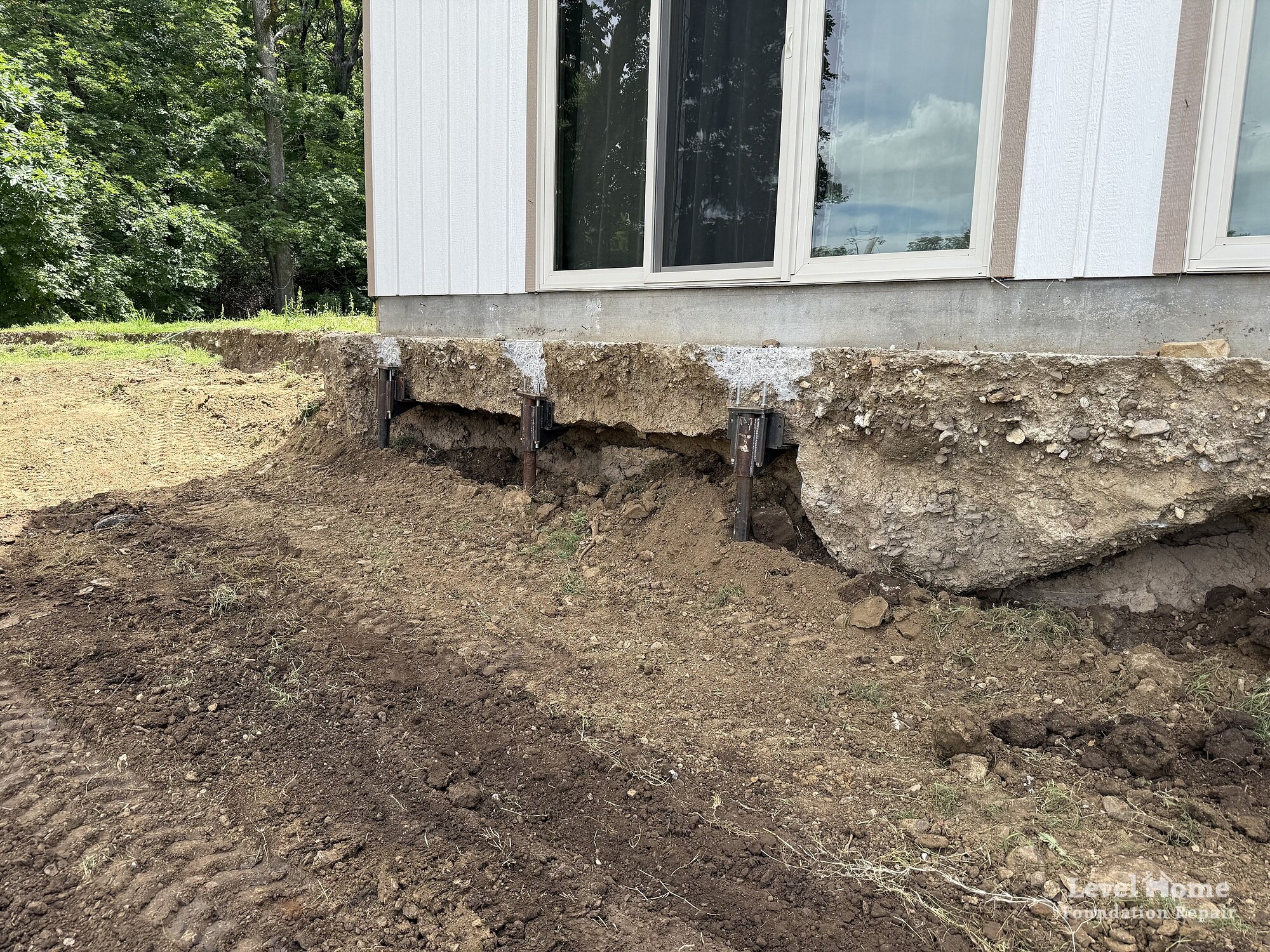
If structural issues are present, the foundation must be stabilized first — through methods like steel pier installation, wall anchors, or carbon fiber reinforcement — before waterproofing can be effective. Companies that skip this step are setting you up for an expensive redo.
At Level Home Foundation Repair, we assess both structural and waterproofing needs together. We’ve seen too many Tulsa homeowners spend thousands on waterproofing only to have it fail because the real problem was a shifting foundation. Our approach: fix the cause, then manage the water.
DIY vs Professional Basement Waterproofing: What Actually Works
Let’s be honest about what you can and can’t handle yourself:
DIY-Friendly (Do These First)
- Extend downspouts at least 6 feet from the foundation — this alone solves 30-40% of basement moisture problems
- Correct grading so soil slopes away from your home (6 inches of fall in the first 10 feet)
- Clean gutters at least twice a year — clogged gutters dump water directly at your foundation
- Seal minor surface cracks with hydraulic cement (cosmetic fix only — doesn’t stop hydrostatic pressure)
- Run a dehumidifier in the basement to manage humidity while you plan a permanent fix
Requires a Professional
- Interior French drain and sump pump installation
- Exterior waterproofing membrane application
- Structural crack repair (especially horizontal or stair-step cracks)
- Wall stabilization (bowing, tilting, or shifting walls)
- Any repair involving excavation in Oklahoma clay soil
The DIY improvements are worth doing regardless — they reduce the load on any professional system and can sometimes resolve mild moisture issues entirely.
Choosing a Basement Waterproofing Company in Tulsa
Not all waterproofing companies operate the same way. Here’s what to look for — and what to watch out for:
Green flags:
- Free inspection with no high-pressure sales tactics
- Evaluates both waterproofing AND structural condition
- Offers multiple solutions (not just one expensive method)
- Provides written warranty (terms vary by service)
- Licensed, insured, and established in Oklahoma
- Willing to explain why they’re recommending a specific method
Red flags:
- “Today only” pricing or high-pressure urgency tactics
- Only offers one method regardless of your situation
- Won’t provide references from Tulsa-area jobs
- Quotes exterior waterproofing without checking interior options first
- Doesn’t check for structural issues before quoting waterproofing
Frequently Asked Questions About Basement Waterproofing in Tulsa
How long does basement waterproofing take?
Interior waterproofing (French drain + sump pump) typically takes 1-3 days for most Tulsa homes. Exterior waterproofing can take 3-7 days depending on the home’s footprint and soil conditions. Crack injection is usually completed in a few hours.
Does homeowners insurance cover basement waterproofing in Oklahoma?
Generally no. Most Oklahoma homeowners insurance policies cover sudden and accidental water damage (like a burst pipe) but exclude gradual seepage, groundwater intrusion, and waterproofing. Some policies may cover damage from a failed sump pump if you have a sewer/water backup endorsement. Check your policy or read our guide to insurance and foundation repair in Oklahoma.
Will waterproofing my basement increase my home’s value?
Yes. A dry, waterproofed basement is a significant selling point in Tulsa’s real estate market. Buyers and inspectors look for water damage, and a professionally waterproofed basement with documentation can increase buyer confidence and home value by 5-15% of the basement’s finished value. More importantly, it prevents the loss of value that active water problems cause.
Can I waterproof my basement from the inside only?
In most Tulsa situations, yes. Interior waterproofing systems effectively manage water that enters through walls and floor joints. The exception is when bulk water is entering through failed exterior membranes or severe wall cracks — in those cases, exterior repair may be needed in combination with interior management.
How often should I replace my sump pump?
Most quality sump pumps last 7-10 years with regular maintenance. In Tulsa, where pumps can run heavily during spring storm season, we recommend testing your pump every 3 months and replacing it proactively at the 7-year mark rather than waiting for failure during a storm.
Protect Your Tulsa Basement — Get a Free Inspection
Basement water problems don’t fix themselves — they get worse. Every storm cycle pushes more water against your foundation, every wet-dry cycle weakens the soil, and every month of moisture exposure increases the risk of mold and structural damage.
Level Home Foundation Repair offers free, no-obligation basement and foundation inspections for homeowners across the Tulsa metro area. We’ll honestly assess what’s happening, explain your options, and only recommend what your home actually needs. With 15+ years of experience and over 3,000 Oklahoma homes restored, we know what works on our clay soil — and what doesn’t.
Ready to fix your wet basement for good?
- 📞 Call us: (918) 361-7787
- 🌐 Visit: levelhomefoundationrepair.com
- 📍 Serving Tulsa, Broken Arrow, Owasso, Bixby, Jenks, Sand Springs, and surrounding Oklahoma communities
Don’t let another storm season catch you off guard. Schedule your free inspection today and get the honest answers you deserve.