
Why Foundation Drainage Is One of the Most Important — and Most Overlooked — Issues for Tulsa Homeowners
You notice water pooling near your home’s foundation after every spring storm. The flower beds along the front of your house stay soggy for days. Maybe you’ve spotted a hairline crack in your slab that wasn’t there last year, or your crawl space smells musty and damp. If any of this sounds familiar, you’re not alone — and the root cause is almost always poor foundation drainage.
Here in Tulsa, Oklahoma, our unique combination of heavy clay soil, seasonal downpours, and long summer droughts creates a punishing cycle for residential foundations. Water that doesn’t drain properly away from your home saturates the expansive clay beneath it, causing the soil to swell and press against your slab or pier-and-beam system. When the drought returns, that same clay shrinks and pulls away — leaving voids under your foundation that lead to settling, cracking, and structural damage.
If you need foundation repair in Tulsa, the fix often starts with solving the drainage problem first. In this comprehensive guide, we’ll walk you through every foundation drainage solution available to Tulsa homeowners — from French drains to surface drainage systems to yard grading — so you can make an informed decision and protect your home’s structural integrity for decades to come.
How Poor Drainage Damages Tulsa Foundations — The Oklahoma Clay Soil Factor
To understand why drainage matters so much in our area, you need to understand what’s happening beneath your yard. Tulsa and the surrounding communities — Broken Arrow, Owasso, Bixby, Jenks, Sand Springs, and Sapulpa — sit on a geological layer dominated by montmorillonite clay, one of the most expansive clay types in the United States.
What Makes Oklahoma Clay So Destructive
- Expansion: When saturated with water, montmorillonite clay can expand up to 15% in volume. That’s enormous pressure pushing against your foundation walls and slab.
- Contraction: During Tulsa’s hot, dry summers (we regularly see 95°F+ from June through September), that same clay shrinks dramatically, creating gaps and voids beneath your foundation.
- The cycle repeats: Each expansion-contraction cycle stresses your foundation a little more. Over 10–20 years, the cumulative damage shows up as cracks, uneven floors, sticking doors, and gaps around windows.
The bottom line: If water sits near your foundation instead of draining away, it accelerates this destructive cycle significantly. Proper drainage is your first — and most cost-effective — line of defense.
Warning Signs of Drainage Problems Around Your Tulsa Home
Before we get into solutions, here are the warning signs that your home has a foundation drainage issue:
- Standing water near the foundation — Water pools within 3 feet of your home’s perimeter after rain
- Soil erosion along the foundation — You can see the concrete footing or slab edge being exposed
- Downspouts dumping water at the foundation — Gutters discharge right at the base of the house with no extensions or underground routing
- Musty crawl space or basement odor — Indicates chronic moisture infiltration below your home
- Efflorescence (white mineral deposits) — Chalky white stains on foundation walls or crawl space piers, showing water has been wicking through the concrete
- Soggy or perpetually muddy yard areas — Especially on one side of the house, indicating grading issues
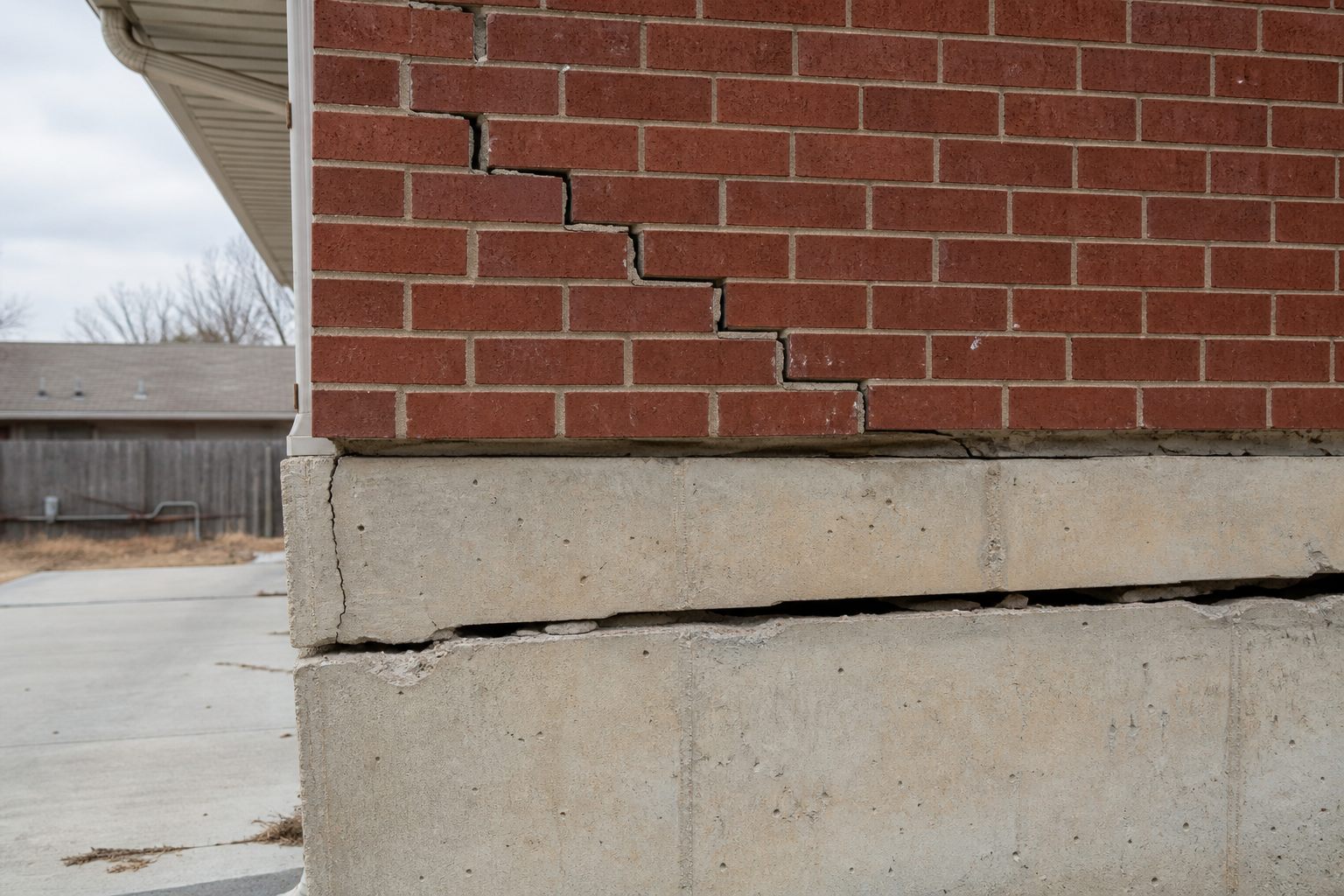
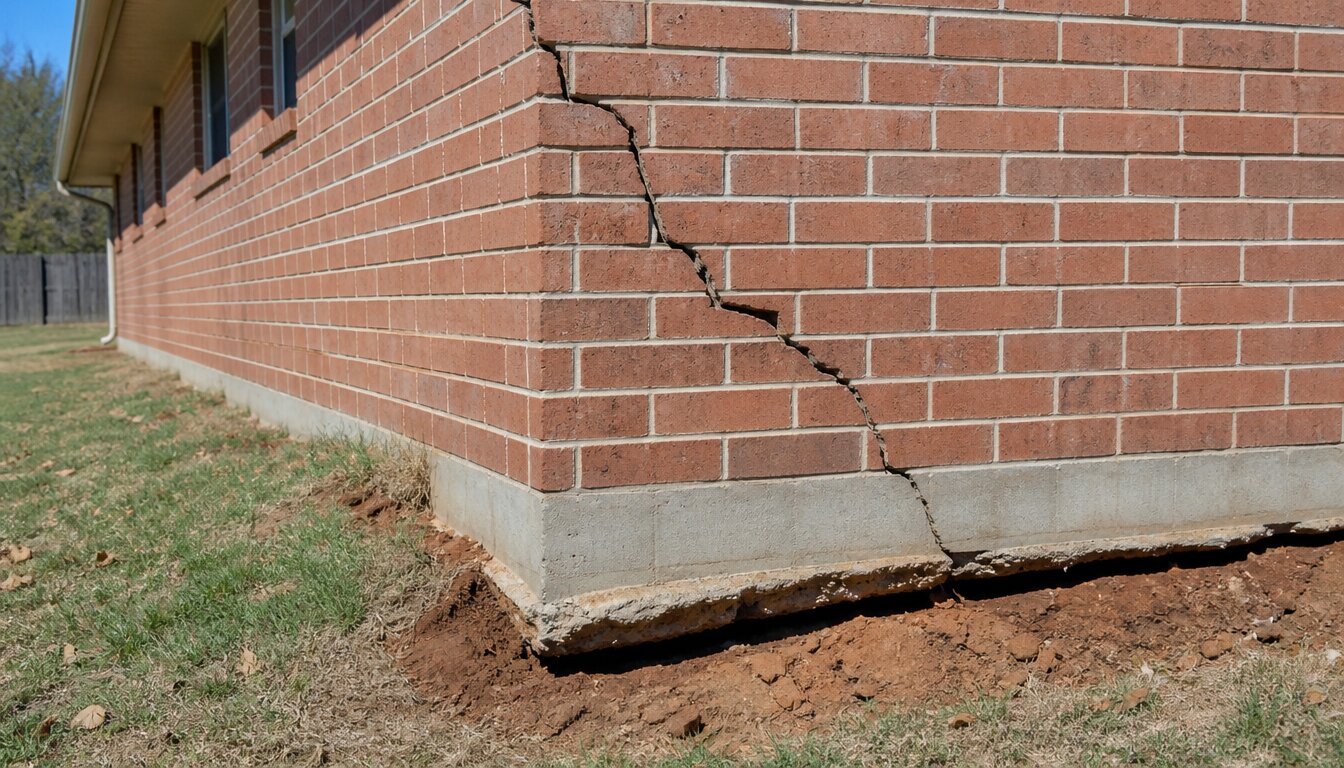
- New or expanding foundation cracks — Particularly stair-step cracks in brick veneer or horizontal cracks in the foundation wall
If you’re seeing two or more of these signs, you likely have a drainage issue that’s actively affecting your foundation. The good news? Most drainage problems are fixable — and the cost of drainage repair is a fraction of what you’d spend on foundation repair if the problem goes untreated.
Foundation Drainage Solutions for Tulsa Homes: Every Option Explained
Not every drainage problem requires the same fix. Below, we cover the full range of solutions used by foundation repair Tulsa professionals — from simple grading adjustments to complete subsurface drainage systems.
1. Yard Grading and Regrading
What it is: Adjusting the slope of the soil around your home so that water flows away from the foundation — ideally at a minimum slope of 6 inches over the first 10 feet from the foundation wall.
When it’s needed: When the ground around your home is flat or slopes toward the foundation. This is extremely common in Tulsa neighborhoods built in the 1960s–1980s, where decades of soil settling have reversed the original grading.
Estimated cost in Tulsa: $500–$3,000 depending on yard size and accessibility.
Pros: Least expensive option; addresses the root cause of surface water problems; no ongoing maintenance.
Cons: Only solves surface water flow — doesn’t address subsurface water. May require relandscaping.
2. French Drains (Subsurface Drainage)
What it is: A trench (typically 18–36 inches deep) filled with gravel and a perforated PVC pipe that collects and redirects groundwater away from your foundation. The pipe is wrapped in filter fabric to prevent clay soil from clogging the system.
When it’s needed: When water is accumulating below the surface near your foundation — common in Tulsa’s clay-heavy soil, which doesn’t drain well naturally. French drains are especially important for homes in low-lying areas of Midtown Tulsa, West Tulsa, and neighborhoods near creeks.
Estimated cost in Tulsa: $2,000–$8,000 depending on the length of the run and depth required. A typical 50-foot exterior French drain runs $3,000–$5,000.
Pros: Addresses subsurface water that grading alone can’t fix; protects foundation from hydrostatic pressure; long-lasting when properly installed.
Cons: Requires excavation; needs proper slope to function (minimum 1% grade); filter fabric and gravel quality matter enormously — a poorly installed French drain will fail within 3–5 years.
Tulsa-specific tip: Because our clay soil is so fine, using a high-quality non-woven geotextile fabric is critical. Cheap woven fabric clogs quickly in Oklahoma red clay. Ask your contractor specifically what fabric they use.
3. Surface Drains (Catch Basins and Channel Drains)
What it is: A system of grated catch basins, channel drains (also called trench drains), or pop-up emitters connected by solid PVC pipe that captures standing surface water and routes it to a discharge point away from the home.
When it’s needed: When you have specific areas of your yard where water pools after rain — next to the patio, at the bottom of a slope, or where gutter downspouts discharge. Very common on flat Tulsa lots in Broken Arrow, South Tulsa, and Bixby.
Estimated cost in Tulsa: $1,500–$5,000 for a typical residential system with 3–5 catch basins.
Pros: Targets specific problem areas; works with existing grading; relatively straightforward installation.
Cons: Only handles surface water, not subsurface; catch basins need periodic cleaning (leaves, debris).
4. Gutter Downspout Extensions and Underground Routing
What it is: Connecting your gutter downspouts to underground solid PVC pipes that discharge water at least 10–15 feet from the foundation, or routing them to a pop-up emitter in the yard.
When it’s needed: Almost every Tulsa home benefits from this. The single most common drainage mistake we see is downspouts dumping thousands of gallons of water per storm directly at the foundation. A 1,500-square-foot roof produces roughly 935 gallons of water per inch of rainfall — and Tulsa averages 41 inches per year.
Estimated cost in Tulsa: $200–$500 per downspout for underground routing; $1,000–$3,000 for a whole-house system.
Pros: Extremely high impact for relatively low cost; addresses one of the biggest contributors to foundation water damage.
Cons: Requires trenching for underground routing; needs proper slope to discharge point.
5. Swales (Graded Drainage Channels)
What it is: A shallow, V-shaped channel graded into your yard that directs surface water flow away from the foundation. Often sodded or lined with rock for erosion control.
When it’s needed: When your property has slope but water still collects in certain areas. Swales work well to redirect water from neighboring properties or to channel it toward a designated discharge area. Used frequently in newer Tulsa subdivisions in South Tulsa and Jenks.
Estimated cost in Tulsa: $1,000–$4,000 depending on length and whether sod/rock is included.
Pros: Natural-looking; low maintenance; effective on sloped lots.
Cons: Requires sufficient slope; takes up yard space; may need regrading over time as Oklahoma clay shifts.
6. Sump Pump Systems
What it is: An electrically powered pump installed in a sump pit (usually in a crawl space or at the low point of an interior or exterior French drain system) that actively pumps collected water away from the foundation.
When it’s needed: When gravity drainage alone isn’t sufficient — typically in homes with high water tables or in flood-prone areas. Also used when there’s no feasible gravity outlet for a French drain system.
Estimated cost in Tulsa: $1,000–$3,000 for installation including the pit, pump, and discharge line.
Pros: Solves water problems when gravity alone won’t work; essential for crawl spaces with chronic moisture.
Cons: Requires electricity; needs battery backup for storm power outages (common in Oklahoma tornado season); pump replacement every 7–10 years.
What Does Foundation Drainage Cost in Tulsa? Real Price Ranges for 2026
One thing we believe at Level Home Foundation Repair is that Tulsa homeowners deserve transparent pricing. Here’s what you can realistically expect to pay for drainage solutions in our area:
| Drainage Solution | Typical Cost Range (Tulsa) | Best For |
|---|---|---|
| Yard regrading | $500–$3,000 | Surface water flowing toward foundation |
| French drain (exterior) | $2,000–$8,000 | Subsurface water / hydrostatic pressure |
| Surface drain system | $1,500–$5,000 | Specific pooling areas in yard |
| Downspout routing (whole house) | $1,000–$3,000 | Gutter water dumping at foundation |
| Swale installation | $1,000–$4,000 | Redirecting surface water on sloped lots |
| Sump pump system | $1,000–$3,000 | High water table or no gravity outlet |
| Complete drainage overhaul | $5,000–$15,000 | Multiple issues combined |
Note: These are typical 2026 ranges for the Tulsa metro area. Your actual cost depends on property size, soil conditions, accessibility, and which combination of solutions your home needs. A professional assessment is the only way to get an accurate quote.
How to Choose the Right Foundation Drainage Solution for Your Tulsa Home
Most homes don’t need just one drainage fix — they need a combination. Here’s how a professional assessment typically works:
- Exterior inspection: Walking the perimeter of your home, checking grade, downspout discharge points, and signs of water intrusion
- Crawl space or slab evaluation: Checking for moisture damage, standing water, or evidence of past flooding underneath the home
- Soil assessment: Understanding the clay composition and drainage characteristics of your specific lot (soil conditions vary significantly even within Tulsa — Midtown clay is different from South Tulsa alluvial deposits)
- Custom recommendation: A drainage plan tailored to your home’s specific issues, topography, and budget
At Level Home Foundation Repair, we never recommend work you don’t need. Sometimes the fix is as simple as extending your downspouts and regrading a section of your yard. Other times, a more comprehensive French drain system is warranted. Our honest assessment ensures you spend your money where it matters most.
DIY vs. Professional Foundation Drainage Installation — When to Call a Pro
Some drainage improvements are reasonable DIY projects. Others require professional installation to avoid making the problem worse.
You Can DIY:
- Adding splash blocks or above-ground downspout extensions
- Building up soil grade near the foundation with clean fill dirt (ensure it slopes away)
- Cleaning gutters and downspouts (do this twice a year minimum in Oklahoma)
- Installing a simple pop-up emitter on a single downspout
Call a Professional For:
- French drain installation (improper installation in clay soil is the #1 reason French drains fail)
- Any excavation within 3 feet of the foundation (risk of undermining the footing)
- Sump pump installation and discharge routing
- Underground downspout routing (must be sloped correctly and use solid, not perforated, pipe)
- Any drainage work combined with existing foundation drainage system repairs
Foundation Drainage FAQ — Questions Tulsa Homeowners Ask Most
How do I know if my foundation drainage is bad enough to cause damage?
If water pools within 3 feet of your foundation, stays for more than 24 hours after rain, or you’re seeing new cracks in your foundation or walls, your drainage is likely contributing to structural damage. A free inspection from a foundation repair Tulsa professional can confirm the extent of the issue.
Can bad drainage really cause foundation cracks?
Yes. In Tulsa’s clay soil, poor drainage is one of the top three causes of foundation damage. Water saturates the clay, causing it to swell and push against the foundation. When it dries out, the clay contracts and creates voids. This cycle causes differential settlement — meaning one part of your foundation moves while the rest doesn’t — leading to cracks.
How long does a French drain last in Oklahoma clay soil?
A properly installed French drain with quality filter fabric and clean washed gravel should last 20–30 years in Oklahoma. A poorly installed drain using cheap fabric or the wrong gravel type may clog within 3–5 years. Always ask your contractor about materials.
Should I fix drainage before or after foundation repair?
If you need both, the foundation repair should be done first to stabilize the structure, but drainage should be addressed immediately after — ideally as part of the same project. Repairing the foundation without fixing the drainage that caused the damage is like patching a tire without removing the nail.
Does homeowner’s insurance cover foundation drainage problems?
In most cases, no. Standard homeowner’s insurance in Oklahoma does not cover drainage issues or gradual water damage to foundations. However, if a sudden event (like a burst pipe) caused water damage, that may be covered. Drainage improvement is considered maintenance — but it’s far cheaper than the foundation repair you’ll need if you don’t address it.
Protect Your Tulsa Home’s Foundation — Schedule a Free Drainage Inspection
If you’ve been putting off addressing standing water, soggy soil, or poor drainage around your home, don’t wait until it becomes a foundation problem. The cost of drainage correction is a fraction of what structural foundation repair costs — and it protects your biggest investment.
Level Home Foundation Repair offers free foundation and drainage inspections for homeowners throughout the Tulsa metro area. We’ll give you an honest assessment of your home’s drainage situation and recommend only the solutions that make sense for your property and budget.
Our warranty covers all drainage work — terms vary by service type. We’re locally owned, and our reputation in the Tulsa community is built on doing right by our neighbors.
📞 Call or text today: (918) 361-7787
🌐 Visit: levelhomefoundationrepair.com
📍 Serving: Tulsa, Broken Arrow, Owasso, Bixby, Jenks, Sand Springs, Sapulpa, Claremore, and surrounding areas
As featured on PRLog — Building a foundation of trust in our community through honesty, integrity, and innovation.