If you own a home in the Tulsa metroplex, your foundation is not something to ignore. Small cracks, sticking doors, sloping floors, moisture under the house, or sagging crawl spaces may seem manageable at first, but those symptoms often point to larger structural movement below the surface.
In Tulsa and throughout northeastern Oklahoma, homes are commonly affected by clay-heavy soils and changing moisture levels. Expansive soils swell when they get wet and shrink when they dry out, and that repeated cycle can place stress on slabs, pier-and-beam homes, crawl spaces, and load-bearing areas over time.
The good news is that foundation problems are not all the same, and neither are the solutions. Some homes need deep support from steel piers. Others need crawl space reinforcement, supplemental beams, support piers, drainage correction, or a combination of structural repairs. The key is understanding the problem clearly and matching the repair to the structure.
At Level Home Foundation Repair, the focus is on permanent structural stabilization, crawl space repair, and honest solutions built for Oklahoma conditions. The company’s Tulsa-area service pages emphasize steel piers, crawl space repair, transparent recommendations, and long-term stability rather than one-size-fits-all fixes.
Why foundation problems are so common in Tulsa
Tulsa-area homes deal with a difficult mix of conditions. Clay-rich soils can hold moisture for long periods, then shrink dramatically in dry weather. When that happens repeatedly, the soil beneath a home can expand, contract, soften, or lose support unevenly. That movement can cause cracking, settlement, floor slope, wall separation, and changes in door and window alignment.
Poor drainage makes the problem worse. Water collecting around the perimeter of a home, overflowing gutters, short downspouts, negative grading, plumbing leaks, and seasonal rain can all change soil moisture patterns. Even when the visible symptom is a crack in drywall or brick, the root issue is often movement in the soil below the structure.
That is why foundation repair in Tulsa should never be treated as a cosmetic problem. Caulking cracks and repainting walls may hide the symptoms for a while, but they do not stabilize the structure.
Common signs your Tulsa home may need foundation or crawl space repair
Homeowners often wait too long because the early warning signs seem minor. Some of the most common indicators include:
- Cracks in brick, drywall, or ceilings
- Doors or windows that stick or won’t latch correctly
- Uneven, sloping, or bouncy floors
- Gaps between walls, trim, or cabinets
- Separation around exterior openings
- Moisture, musty odors, or visible standing water in the crawl space
- Sagging floor framing or weakened support areas under the home
These are all symptoms homeowners regularly describe in foundation and crawl space discussions online, especially when trying to decide whether the issue is cosmetic, structural, or related to moisture.
When steel piers make sense
Steel piers are one of the strongest and most reliable solutions for homes experiencing settlement. They are designed to transfer the structural load of the home deeper into more stable bearing material below the active surface soils. In simple terms, they bypass the weaker soils near the surface that are most affected by moisture swings.
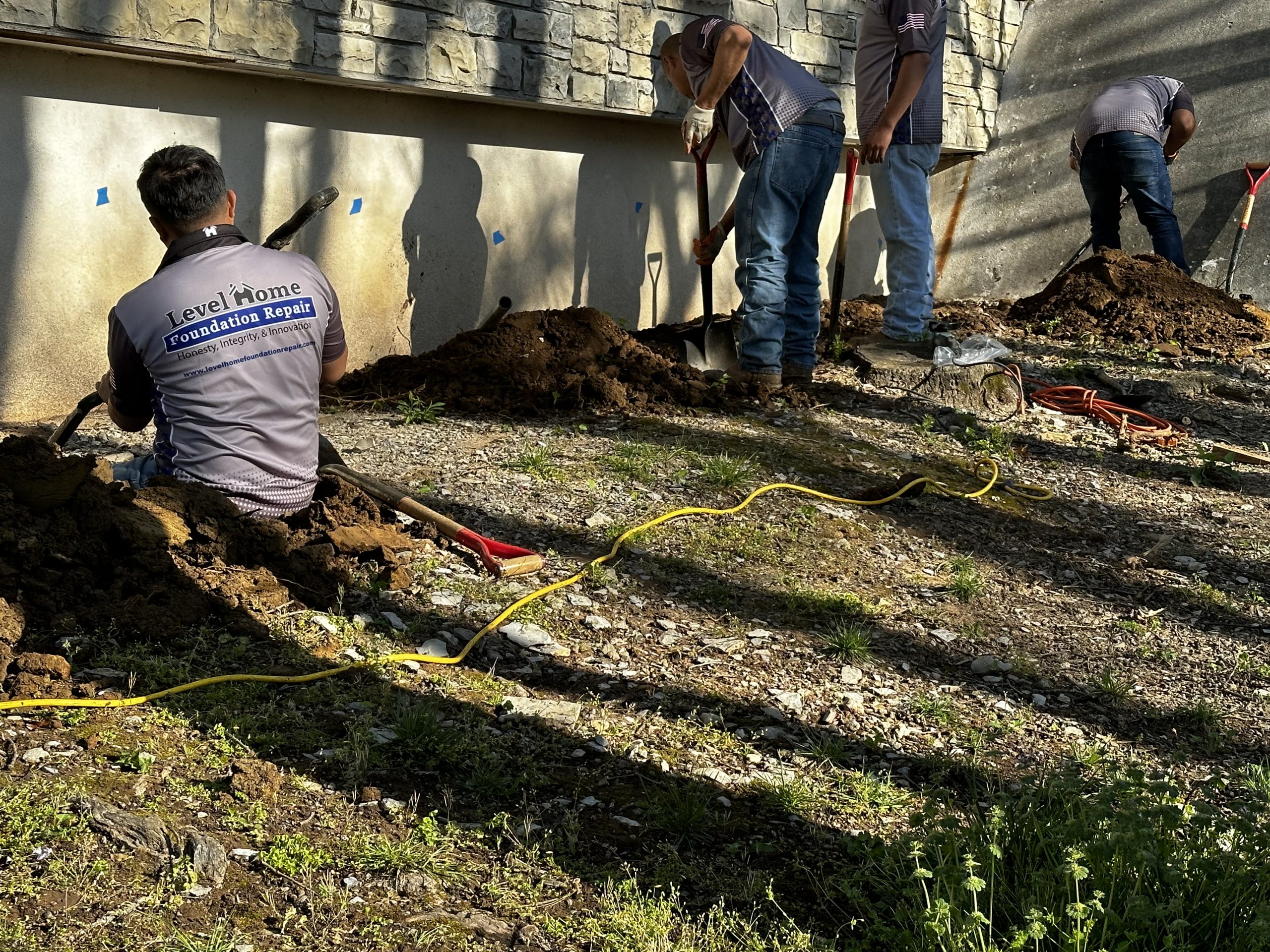
For Tulsa homeowners, steel piers are often used when part of a slab foundation or load-bearing wall is settling and needs deeper support. According to your site, Level Home installs both interior and exterior steel piers to support sagging floors, stabilize perimeter foundations, and address settlement in a range of configurations.
One of the most common homeowner questions online is: Can piers actually lift the house back up?
The honest answer is: often, yes — but stabilization comes first. Your site explains that steel piers can often lift a foundation and improve cracks and alignment, but results depend on the structure, soil conditions, and how the home has responded to movement over time. That is the right way to explain it. A good repair is not judged only by how much visible lift occurs. The real goal is long-term structural support and reduced future movement.
This is important because many homeowners get too focused on whether every crack disappears. In reality, the success of the repair is based on stability. Cosmetic symptoms can often be addressed afterward, but the structural issue has to come first.
Crawl space repairs are about more than “just the floor”
Crawl space homes create a different set of challenges. Instead of a slab bearing directly on soil, the structure is relying on beams, joists, piers, posts, and supports beneath the floor system. If moisture gets into that area, or if supports shift, weaken, or compress over time, the floor above can begin to sag, bounce, or slope.
That is why crawl space repair is not just about making the floor feel firmer. It is about restoring structural integrity under the home.
Level Home’s crawl space service page highlights four major benefits of crawl space repair: moisture control, structural reinforcement, healthier air, and long-term protection. That matches what homeowners actually need. A crawl space problem may involve one or more of the following:
- Supplemental support piers
- Added beams for better load distribution
- Joist reinforcement
- Moisture management
- Vapor barrier improvements
- Correction of weak or deteriorated support points
On Reddit and homeowner forums, sagging floor questions show up constantly. People ask whether they can just add a jack post, whether they need a beam, whether sistering joists is enough, or whether the bounce means the entire structure is failing. The consistent theme is uncertainty about root cause. Some cases involve an undersized or over-spanned floor system. Some involve aging wood, moisture damage, weak bearing points, or settlement under existing crawl space supports.
That is exactly why professional inspection matters. The right solution is not always “add more support everywhere.” The right solution is identifying where the load path is failing and repairing that system correctly.
Added support: when a beam, pier, or reinforcement is the right call
Some Tulsa homes do not need a full perimeter pier system. They need targeted structural support in the crawl space or under specific interior load areas.
For example, if a floor has excessive deflection in one area, the right repair may be to add a properly designed beam and support points beneath the joists. If a center support line has weakened or shifted, new piers or posts may be needed. If there is bounce but not major settlement, reinforcement may be enough to improve stiffness and restore performance.
This is where experience matters. A repair plan should account for the home’s age, framing type, span lengths, accessibility, moisture history, and how much movement has already occurred. There is a difference between temporary shimming and real structural correction.
Homeowners often go looking online for the cheapest quick fix. But under-structural problems have a way of returning when the repair does not address the real cause. Added support works best when it is part of an actual structural plan, not just a patch.
Common homeowner questions from Reddit — answered for Tulsa homeowners
1. Should I hire a structural engineer before doing foundation repair?
This is one of the most common questions online, and it is a fair one. Many homeowners want an independent opinion before approving major repairs. In forums, people frequently recommend getting an engineer when the issue is significant, when bids vary widely, or when the homeowner wants a neutral assessment without a product being sold.
The practical answer: for some homes, yes, an engineer is a smart step. Especially if you are buying or selling a home, evaluating major structural movement, or comparing very different repair proposals. For many Tulsa homeowners, though, the first step is still a qualified foundation inspection. A good contractor should be able to explain the symptoms, the likely cause, and why the proposed repair matches the structure. If the situation is unusually complex, an engineer can add another layer of confidence.
2. Is foundation repair always a red flag when buying a house?
Not automatically. In real estate discussions, many buyers worry that previous foundation repair means a home should be avoided. In reality, a documented repair can be better than an unresolved issue that was never addressed. What matters is whether the repair was appropriate, documented, and professionally installed, and whether the current condition of the home supports that story.
A repaired home is not necessarily a bad home. A home with active movement and no plan is usually the bigger concern.
3. Can crawl space sagging floors be fixed without tearing up the house?
Often, yes. Many crawl space floor issues can be addressed from below by reinforcing beams, adding support piers, correcting weak framing, or improving bearing points. The exact method depends on access, the framing layout, and whether the issue is settlement, span deflection, wood deterioration, or moisture-related damage.
4. Will a warranty solve everything?
A warranty is valuable, but it should never replace understanding the repair itself. Online discussions show that homeowners often misunderstand whether a foundation warranty transfers, what it covers, and whether it applies to future symptoms outside the repaired area.
The better question is not just “Is there a warranty?” It is: “What exactly was repaired, why was that method chosen, and what condition is the structure in now?”
5. Should I wait if the cracks are small?
Usually, waiting does not make diagnosis easier. Structural movement tends to become more expensive to correct the longer it continues unchecked. Small signs are worth evaluating early, especially in Tulsa where soil movement and moisture cycles can accelerate changes from season to season.
The best foundation repair plan is specific to the house
Foundation repair should never be sold like a generic package. A slab home with perimeter settlement is different from a crawl space home with interior floor deflection. A home with drainage problems is different from one with failing support points. A house that needs steel piers may also need crawl space reinforcement or moisture control. Good repair planning starts with the structure, not with a canned sales pitch.
That is why informative content matters. Homeowners deserve to understand what is happening beneath their home, what repair options exist, and how to make a confident decision.
For Tulsa homeowners, that usually means focusing on four things:
- Cause — What is actually creating the movement?
- Location — Is the problem perimeter, interior, crawl space, or moisture-related?
- Correction — Does the repair stabilize, support, and protect the right areas?
- Longevity — Is this a lasting structural solution or a temporary patch?
Final thoughts for Tulsa homeowners
If your home is showing signs of settlement, sagging floors, crawl space weakness, or structural movement, the smartest move is not to panic. It is to get clear answers.
Foundation repair in Tulsa is not just about cracks. It is about how Oklahoma soils, moisture, and load-bearing systems interact over time. Some homes need deep steel piers. Some need crawl space repairs and added support. Some need both. The right answer depends on the structure, the cause, and the quality of the repair plan.
Homeowners are right to ask tough questions. The best foundation companies do not avoid those questions — they answer them clearly.
If you are seeing sloping floors, sticking doors, crawl space movement, or signs of settlement in the Tulsa metroplex, getting an informed inspection is the first step toward protecting your home and avoiding larger repairs later.
📚 Related Resources
→ Related: Learn more about our foundation repair services
→ Related: Learn more about our steel pier installation