Here’s something most homeowners never find out until it’s too late — the foundation problem they’re dealing with today may have started in the afternoon when the concrete was poured, years or even decades ago. Not because of bad soil. Not because of poor drainage. Because someone at the site decided the mix looked “good enough” and skipped the test.
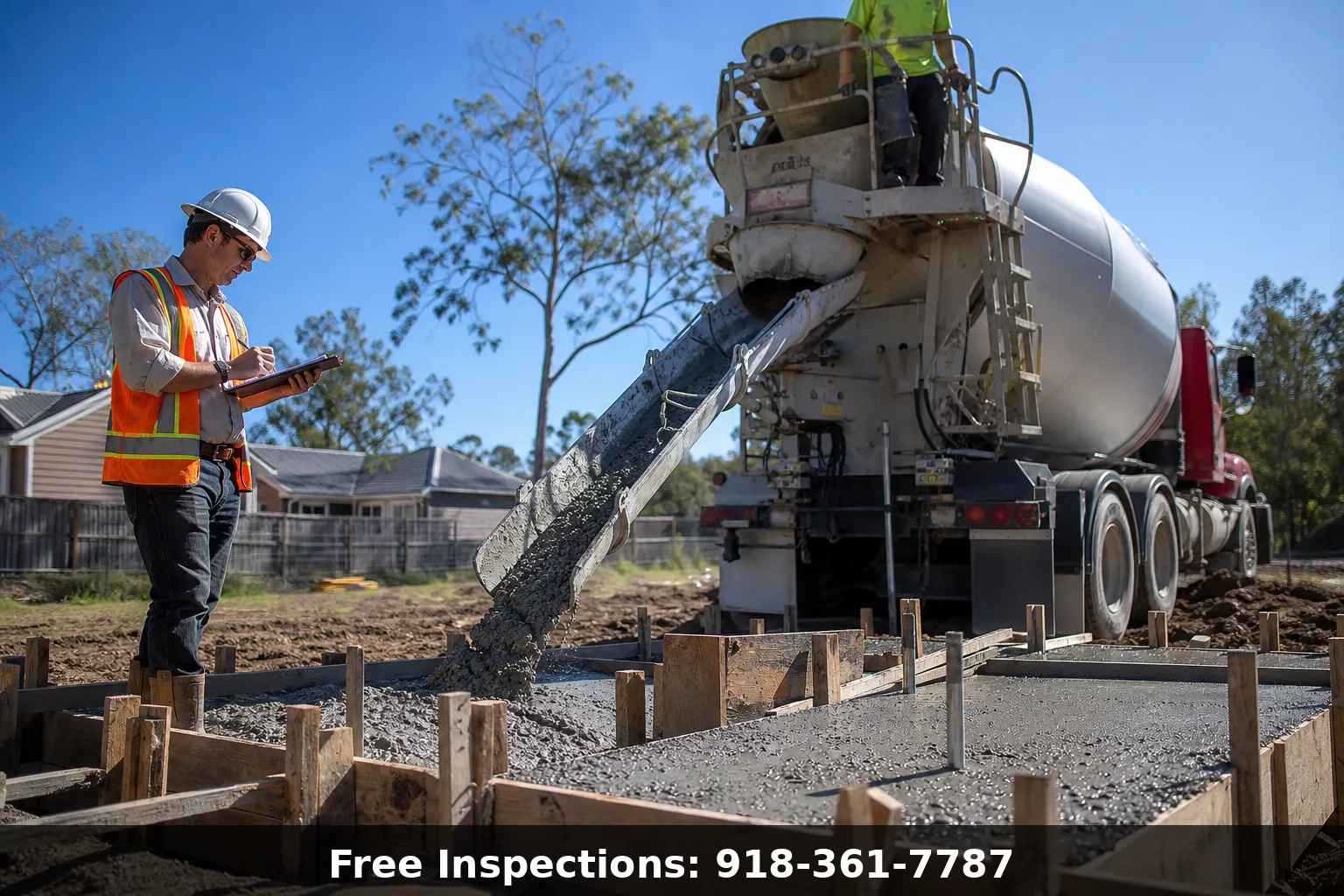
I’ve spoken with enough people in the construction and repair trades to know this isn’t rare. It’s remarkably common. The slump test, which takes maybe four minutes to run, gets waved off on job sites every single day. The reasons are always the same: the driver wants to move on, the crew is behind schedule, the foreman figures it probably meets spec. And nine times out of ten, nothing visibly bad happens that day. The slab sets. It looks fine. Work continues.
The problem shows up later. Sometimes five years later. Sometimes twelve. And by then, nobody is connecting the dots back to that afternoon at the pour.
Why the Slump Test Gets No Respect — And Why That’s a Problem
Part of the issue is that the slump test looks almost comically simple. You fill a cone with fresh concrete in three layers, rod each layer twenty-five times, lift the cone, and measure how far the concrete drops. That’s it. The whole thing looks like something you’d do in a high school science class.
But that drop measurement tells you something genuinely important: how much water is in the mix relative to the cement, and whether the two are proportioned the way the design called for. Too high a slump means excess water. Too low means the mix is stiff and may not consolidate properly around rebar. Both are problems — just different kinds of problems that play out differently over time.
Excess water in a mix is probably the more common culprit in residential pours. Drivers sometimes add water at the site to make the concrete easier to work with and finish. It’s understandable — stiffer mixes are harder to spread. But that added water reduces compressive strength and leaves behind a lattice of microscopic channels inside the hardened concrete when the water eventually evaporates. Those channels are where moisture intrusion starts. They’re where freeze-thaw damage begins. They’re the reason a slab that looks solid eventually starts behaving like it isn’t.
Running a proper concrete slump test before the pour starts isn’t bureaucratic box-ticking. It’s the only real-time quality check you have on a material that cannot be unmixed once it’s in the ground.
The Slow Failure Nobody Sees Coming
What makes this particularly frustrating is how gradual the deterioration is. Concrete with a compromised water-cement ratio doesn’t fail dramatically. It doesn’t crack on day one or show obvious distress in year two. It simply underperforms its rated strength — quietly, invisibly — while the structure above it goes through years of load cycles, temperature swings, and soil movement beneath it.
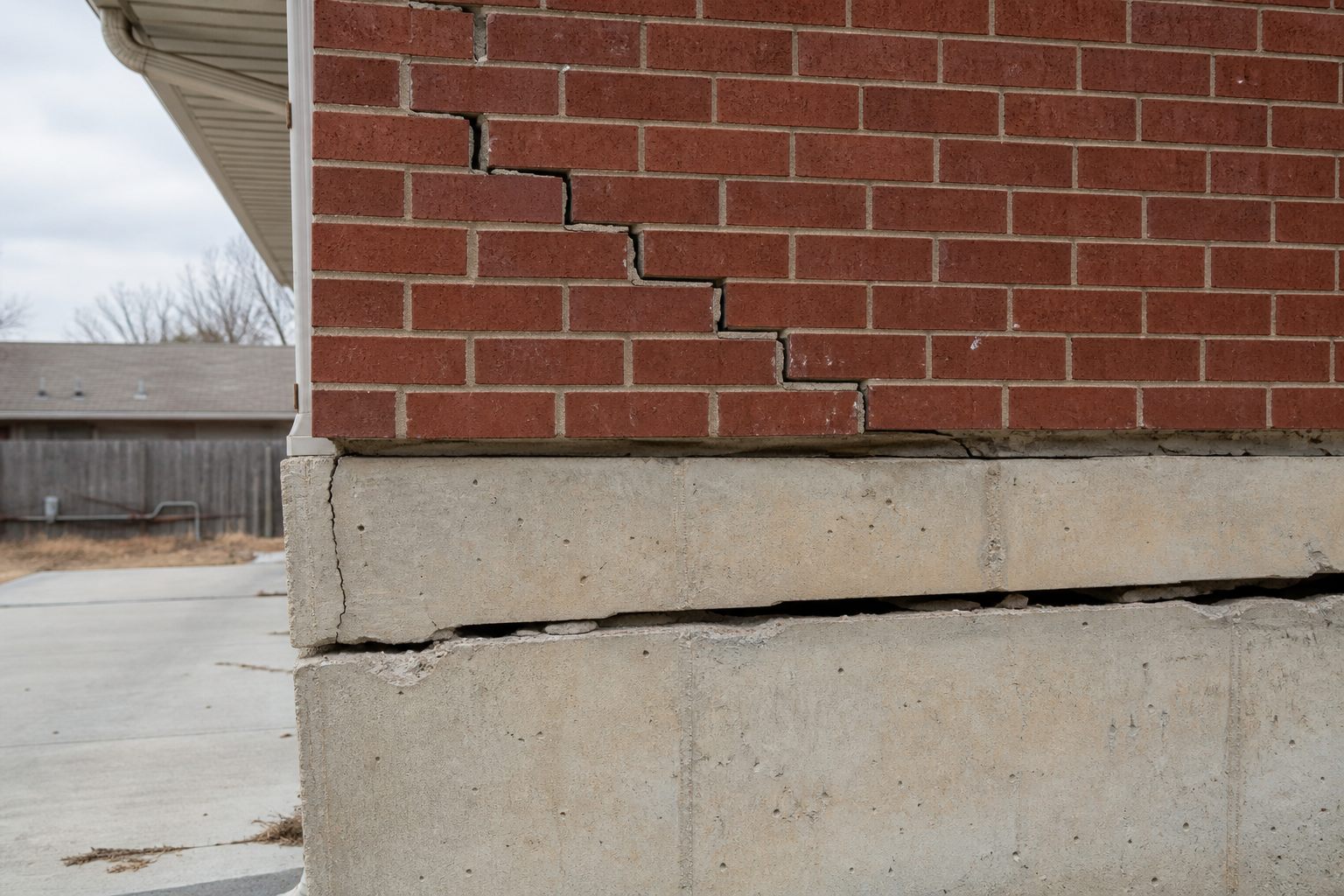
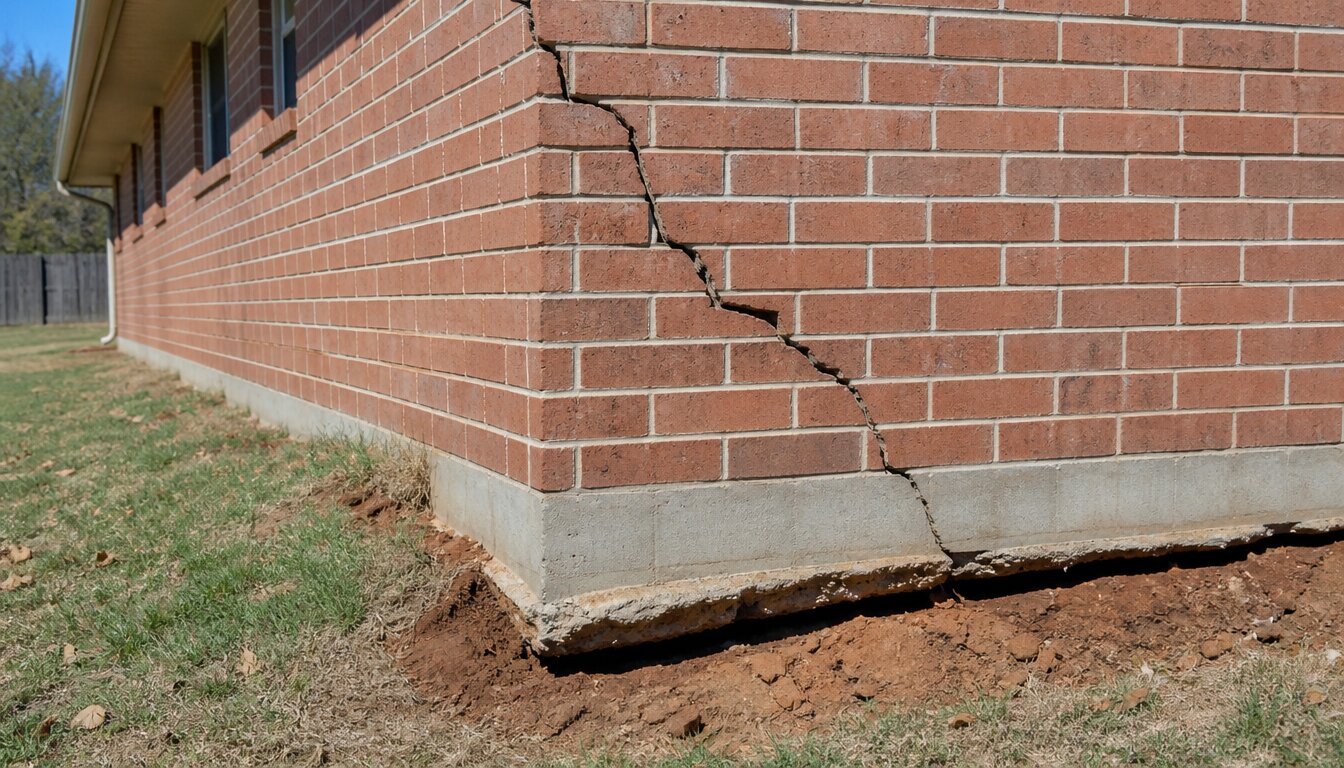
In areas with expansive clay soils — which covers a huge swath of the south-central United States, including much of Oklahoma and Texas — that underperformance starts to show up as differential settlement. The soil swells in wet seasons and shrinks in dry ones. A foundation with full design strength handles that movement within its engineered tolerances. One that came out of the pour weaker than intended starts to yield sooner than it should. The gaps open. The wall cracks follow mortar joints. Doors start catching on their frames. Floors develop a subtle slope that guests notice before the homeowner does.
At that point, a foundation repair specialist comes in, assesses the movement, and puts together a plan — usually involving steel piers driven to bedrock, foam injection to fill voids, or some combination of the two. It works. The structure gets stabilized. But the underlying reason — that the concrete was compromised from the start — is almost never part of the conversation, because there’s no way to prove it at that stage without expensive core sampling.
Test Cylinders: The Evidence That Almost Never Gets Preserved
Alongside the slump test, the other quality measure that gets consistently shortchanged on residential and light commercial pours is the test cylinder program. The idea is straightforward: you pull samples of fresh concrete into cylindrical molds at the time of pour, cure them under controlled conditions, and then break them in a compression machine at 7 and 28 days to verify that the mix actually achieved its design strength.
On paper, this gives you a documented record of what the concrete was capable of when it left the truck. In practice, on a lot of smaller pours, the cylinders get made, get tossed in the back of a pickup truck, sit in the sun for two days, and then arrive at a testing lab in a condition that tells you almost nothing useful about the actual pour. The curing conditions in the field have to match what the mix design assumed, or the results are meaningless.
Properly handled concrete test cylinders — filled correctly, sealed, protected from temperature extremes in the first 24 hours, and transported without rough handling — give you something you can actually rely on. A break result that comes back below design strength is valuable information, even if it’s uncomfortable. It tells you something happened. A cylinder that was mishandled just gives you a number to argue about.
Most residential homeowners have never seen a test cylinder. Many never knew they were supposed to exist for their pour. That knowledge gap is part of why the accountability chain breaks down.
What the Repair Side of the Industry Sees
Foundation repair contractors have an interesting vantage point. They see the end results of construction decisions made years earlier, across hundreds of different structures and pour conditions. Over time, experienced crews develop a sense for when a foundation’s distress seems disproportionate to the soil and environmental conditions around it.
When a slab in a relatively stable soil environment is showing the kind of movement you’d expect from highly reactive clay, or when exposed concrete sections look chalky, porous, or are delaminating in ways that suggest they never fully cured properly — those are flags. They don’t always mean the original concrete was substandard, but they raise the question.
Some engineering firms doing comprehensive foundation assessments have started including concrete core sampling as a standard part of the evaluation, particularly on structures showing unexplained distress. It adds to the project cost, but it changes the nature of the repair conversation. Instead of just stabilizing what’s there, you’re understanding why it got there — and sometimes that changes what the right fix actually is.
That forensic mindset is slowly making its way into how the industry thinks about foundation problems. The more people understand that failure often has a construction-phase cause, the more pressure there is to get the construction-phase quality control right.
Closing the Gap Before It Opens
None of this requires exotic technology or expensive processes. The testing equipment involved is accessible, the procedures are standardized, and the time required at the pour site is genuinely minimal relative to what’s at stake. The barrier is mostly cultural — the field habit of treating quality testing as something that slows you down rather than something that protects you.
For contractors, getting this right is partly about liability and reputation. A structure that fails ten years after completion reflects on the people who built it, even if the precise cause is hard to establish. For property owners commissioning new construction, it’s worth asking how the concrete quality will be verified before the pour starts — and what documentation will exist afterward.
For the foundation repair side of the industry, the value is in understanding that not every settlement problem is purely a soil problem. Sometimes the soil did exactly what it was going to do, and the foundation just wasn’t strong enough to handle it the way it was designed to be.
The window to catch a mix problem is narrow. It’s the forty-five minutes or so between when the truck arrives and when the concrete starts going in. After that, the decisions are locked in place — literally. Every investment in quality control has to happen before that window closes, because nothing that comes after can open it again.