
You finally closed on your Oklahoma home. The seller assured you the foundation had been repaired. The disclosure form confirmed it. But three months later, you notice new cracks spreading across the walls, doors that won’t close properly, and floors that feel uneven. Sound familiar? You’re not alone — and you have more options than you might think.
When foundation repair in Tulsa or anywhere in Oklahoma is done correctly, it should last for decades. But when previous repairs fail — whether from shoddy workmanship, improper methods, or outright deception — the new homeowner is left holding the bill. This guide walks you through exactly what to do, what Oklahoma law says about your rights, and how to protect yourself from day one.
Understanding Oklahoma’s Residential Property Condition Disclosure Act
Oklahoma’s Residential Property Condition Disclosure Act (Title 60, Section 831-839) requires sellers to disclose known material defects, including foundation problems and any previous repairs. This isn’t optional — it’s the law. The seller must complete a disclosure form that specifically asks about:
- Structural damage or settling — past or present
- Previous foundation repairs — what was done, when, and by whom
- Drainage problems — standing water, grading issues, flooding history
- Cracks in walls, ceilings, or floors — even cosmetically repaired ones
Here’s the critical detail: the seller must disclose what they know. If the previous owner had foundation work done, they are legally required to tell you. If they fail to disclose — or worse, actively conceal foundation issues — you may have legal recourse under Oklahoma law, including potentially recovering repair costs.
What “Failure to Disclose” Looks Like in Practice
We’ve seen cases across Tulsa, Broken Arrow, and Owasso where sellers:
- Painted over foundation cracks without disclosing them
- Listed “foundation repair completed” without mentioning the company went out of business and the work was never warrantied
- Failed to mention that only some of the recommended piers were actually installed
- Concealed water intrusion problems in crawl spaces that were directly related to foundation settlement
If you suspect your seller failed to disclose known foundation issues, your first step should be contacting a real estate attorney licensed in Oklahoma. Many offer free initial consultations for disclosure disputes.
Red Flags That a Previous Foundation Repair Has Failed
Not every crack means the old repair failed. But there are specific warning signs that suggest the previous work was inadequate, incomplete, or improperly done. During your foundation inspection in Tulsa, look for these indicators:
1. Fresh Patches Over Old Cracks
This is the most common cover-up. Someone applied fresh drywall compound, caulk, or paint over existing foundation cracks to make them invisible during showings. Within weeks or months, the cracks return — often worse than before. Look for slightly mismatched paint colors, bumpy wall textures near corners and door frames, and hairline cracks through fresh-looking paint.
2. Improperly Installed Piers
Foundation piers should be driven to bedrock or load-bearing strata. In Oklahoma’s clay soil, that typically means 15–30 feet deep depending on location. Signs of improper pier installation include:
- Piers that are visible and appear too shallow
- Pier brackets pulling away from the foundation beam
- Continued settlement in areas where piers were supposedly installed
- Fewer piers than the engineering report recommended
3. Ongoing Water Intrusion
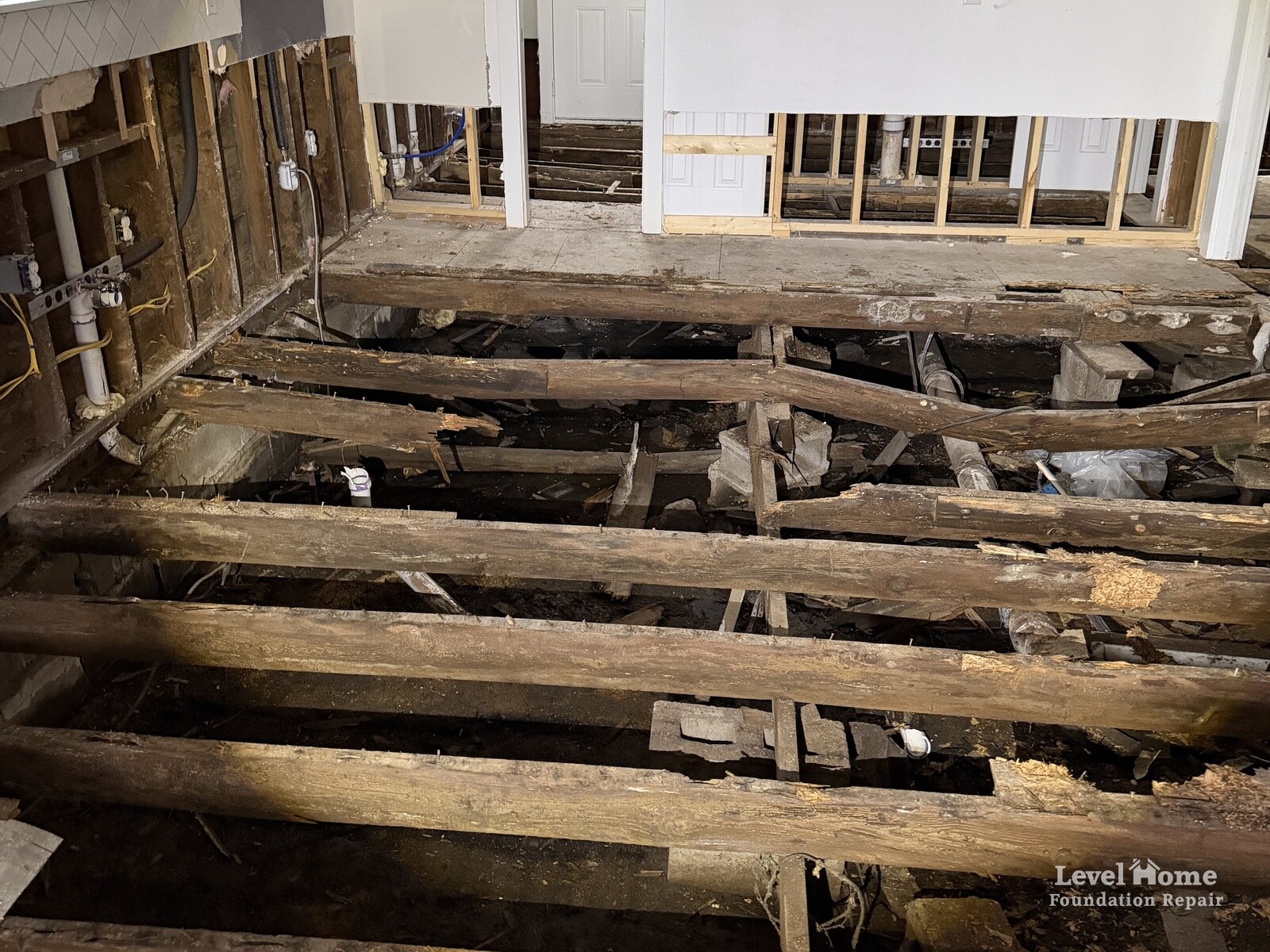
If the original foundation problem was caused by poor drainage — extremely common in Tulsa’s clay-heavy soil — and the previous repair didn’t address water management, the problem will absolutely return. Look for moisture stains in the crawl space, efflorescence (white mineral deposits) on basement walls, and standing water near the foundation after rain.
4. Doors and Windows That Still Won’t Close
After proper foundation repair and leveling, doors and windows should operate smoothly. If multiple doors in the home stick, don’t latch, or have visible gaps between the frame and the wall, the previous repair may not have fully corrected the settlement.
5. New Cracks Appearing Near “Repaired” Areas
Sometimes a partial repair creates new stress points. If piers were installed on one side of the home but not another, the differential movement can actually create new cracks. This is a sign that the original repair scope was inadequate — not enough piers, or piers in the wrong locations.
How to Verify Previous Foundation Repair Work in Oklahoma
Before you buy — or immediately after you discover issues — here’s a step-by-step process to investigate previous foundation work:
Step 1: Request Documentation
Ask the seller (or their agent) for:
- The original engineering report or inspection findings
- Repair company name, contract, and invoice
- Warranty documentation and transferability terms
- Before-and-after photos of the repair work
- Permit records (if applicable — some Oklahoma municipalities require permits for structural work)
Step 2: Get an Independent Foundation Inspection
This is the most important step. Do not rely on the seller’s inspector or the original repair company’s assessment. Hire an independent foundation specialist to evaluate the current condition. At Level Home Foundation Repair, we provide honest, no-pressure inspections — and we’ll tell you straight if the previous work was done correctly. We believe in honest assessments, and we’ll never recommend unnecessary repairs.
Step 3: Check the Repair Company’s Track Record
Look up the company that performed the original repair:
- Are they still in business? (Many fly-by-night companies aren’t.)
- Check their Oklahoma Better Business Bureau rating
- Search for complaints with the Oklahoma Attorney General’s Consumer Protection Division
- Look for reviews on Google, Yelp, and the BBB website
Step 4: Understand the Warranty (If One Exists)
Many foundation repair warranties are transferable to new homeowners — but not all. Key questions to ask:
- Is the warranty still active and transferable?
- What does it actually cover? (Some only cover the specific piers installed, not the entire foundation.)
- Is the company that issued the warranty still operational?
- Are there conditions that void the warranty? (Improper drainage maintenance is a common exclusion.)
What Foundation Repair in Tulsa Should Look Like When Done Right
Understanding what proper foundation repair in Tulsa looks like helps you identify when previous work falls short. A quality repair in Oklahoma’s challenging soil conditions should include:
- A thorough initial inspection with elevation measurements across the entire structure
- An engineering-informed pier plan that accounts for Oklahoma’s expansive clay soil and seasonal moisture cycles
- Steel piers driven to proper depth — not concrete push piers that stop at the first resistance point
- Addressing the root cause — including drainage improvements if water is contributing to settlement
- Documentation — before/after elevation readings, pier locations, depth records, and warranty terms (warranty terms vary by service)
When any of these elements are missing from the previous repair, failure is just a matter of time — especially in central Oklahoma where our clay soil expands and contracts dramatically with seasonal moisture changes.
Your Legal Options When a Seller Conceals Foundation Problems
If you’ve bought a home in Oklahoma and discovered undisclosed or improperly repaired foundation issues, you may have several avenues:
- Disclosure violation claim — If the seller knew about foundation problems and failed to disclose them, you may be able to recover repair costs under the Residential Property Condition Disclosure Act.
- Fraud or misrepresentation — If the seller or their agent actively concealed damage (e.g., painting over cracks before showings), this could constitute fraud.
- Home inspector liability — If a licensed home inspector missed obvious signs of foundation failure, they may share responsibility. Oklahoma home inspectors carry errors & omissions insurance for this reason.
- Warranty claim — If the previous repair company’s warranty is transferable and still active, contact them directly to request a re-inspection and warranty service.
Important: Oklahoma has a statute of limitations on these claims. Consult a real estate attorney promptly — don’t wait until the damage gets worse.
Frequently Asked Questions
How long should foundation repair last in Oklahoma?
When done properly with steel piers driven to stable strata, foundation repair should last the life of the home. If repairs are failing within a few years, the original work was likely inadequate — either too few piers, insufficient depth, or failure to address underlying drainage issues.
Can I sue a seller for not disclosing foundation problems in Oklahoma?
Yes, potentially. Under Oklahoma’s Residential Property Condition Disclosure Act, sellers must disclose known material defects including foundation issues. If they knew about problems and failed to disclose them, you may have a valid legal claim. Consult an Oklahoma real estate attorney for case-specific advice.
How much does it cost to fix a failed foundation repair?
Re-repairing a foundation that was improperly fixed typically costs $5,000 to $25,000+ in the Tulsa metro area, depending on the extent of damage and how many piers or other corrections are needed. The cost is often higher than the original repair because the previous work must be evaluated and potentially removed before proper repairs can begin.
Should I get a foundation inspection before buying a home in Tulsa?
Absolutely — especially if the disclosure form mentions any previous foundation work. A standard home inspection often misses subtle foundation issues. A specialized foundation inspection in Tulsa examines elevation differences, pier conditions, drainage patterns, and structural integrity far more thoroughly.
Are foundation repair warranties transferable to new owners?
Many are, but not all. Always ask to see the original warranty documentation before closing on a home with previous foundation work. Verify the company is still in business and confirm the transfer process in writing.
Protect Your Investment — Get the Truth Before It’s Too Late
Whether you’re about to buy a home with previous foundation work, or you’ve already discovered that the seller’s “repairs” aren’t holding up, the most important thing you can do right now is get an independent, honest assessment.
At Level Home Foundation Repair, we’ve spent over 15 years helping Tulsa homeowners understand exactly what’s happening with their foundations — no scare tactics, no unnecessary repairs, just straight answers. If the previous work is solid, we’ll tell you. If it needs correction, we’ll explain exactly what’s needed and why.
Contact Level Home Foundation Repair today for a FREE foundation inspection:
- 📞 Call: (918) 361-7787
- 🌐 Visit: levelhomefoundationrepair.com
- 📍 Serving Tulsa, Broken Arrow, Owasso, Bixby, Jenks, and all surrounding Oklahoma communities
Don’t let someone else’s shortcuts become your financial burden. Get the facts — and get them from a team that puts honesty first.