When a “Quick Fix” Turns Into a Nightmare
You noticed a crack in the wall. The floors felt a little uneven. So you did what any resourceful homeowner would do — you Googled it, watched a few YouTube videos, and decided to handle it yourself. Maybe you mixed up some concrete patch, shimmed a few floor joists, or even tried to pour your own piers in the crawl space.
A few months later, the problem is ten times worse. The floors are more uneven than before. New cracks have appeared. And when a professional finally looks at it, you hear the words no homeowner wants to hear: “This repair made the damage worse.”
This isn’t a hypothetical scenario. It’s a story we hear regularly from Tulsa homeowners — and one that plays out in online forums across the country. In one devastating case shared on Reddit, a first-time homebuyer purchased a home where the previous owner had attempted DIY foundation work. The amateur repairs were so catastrophic that the only option was demolition. The buyer was underwater before their first mortgage payment.
If you’re a homeowner in Tulsa or surrounding areas considering a DIY approach to foundation issues, this article could save you tens of thousands of dollars — and your home. Foundation repair in Tulsa requires professional expertise, especially given Oklahoma’s challenging clay soil conditions.
Why Foundation Repair Isn’t a DIY Project
Oklahoma’s Clay Soil Makes Everything Harder
Tulsa sits on some of the most expansive clay soil in the country. This soil swells dramatically when wet and shrinks when dry — sometimes shifting several inches in a single season. That constant movement is the root cause of most foundation problems in our area.
DIY foundation “repairs” almost always address the symptom (a crack, a sag, a lean) without understanding the cause (soil movement, drainage issues, hydrostatic pressure). It’s like putting a bandage on a broken bone. The visible damage might look better for a few weeks, but the underlying problem keeps getting worse.
The Engineering Factor
Professional foundation repair involves structural engineering principles. Technicians must understand load distribution, soil bearing capacity, and how forces transfer through your home’s structure. A pier placed in the wrong location doesn’t just fail — it can redirect loads and cause new damage in areas that were previously fine.
5 Common DIY Foundation Repair Mistakes That Make Things Worse
-
Filling Cracks With Concrete Patch or Caulk
This is the most common DIY attempt. While it may look better temporarily, patching a structural crack without addressing the underlying movement means the crack will return — often bigger. Worse, the patch hides the crack from future inspectors, masking an ongoing problem. On Oklahoma clay soil, cracks are symptoms of soil movement, not standalone issues. -
Shimming Floor Joists Without Proper Support
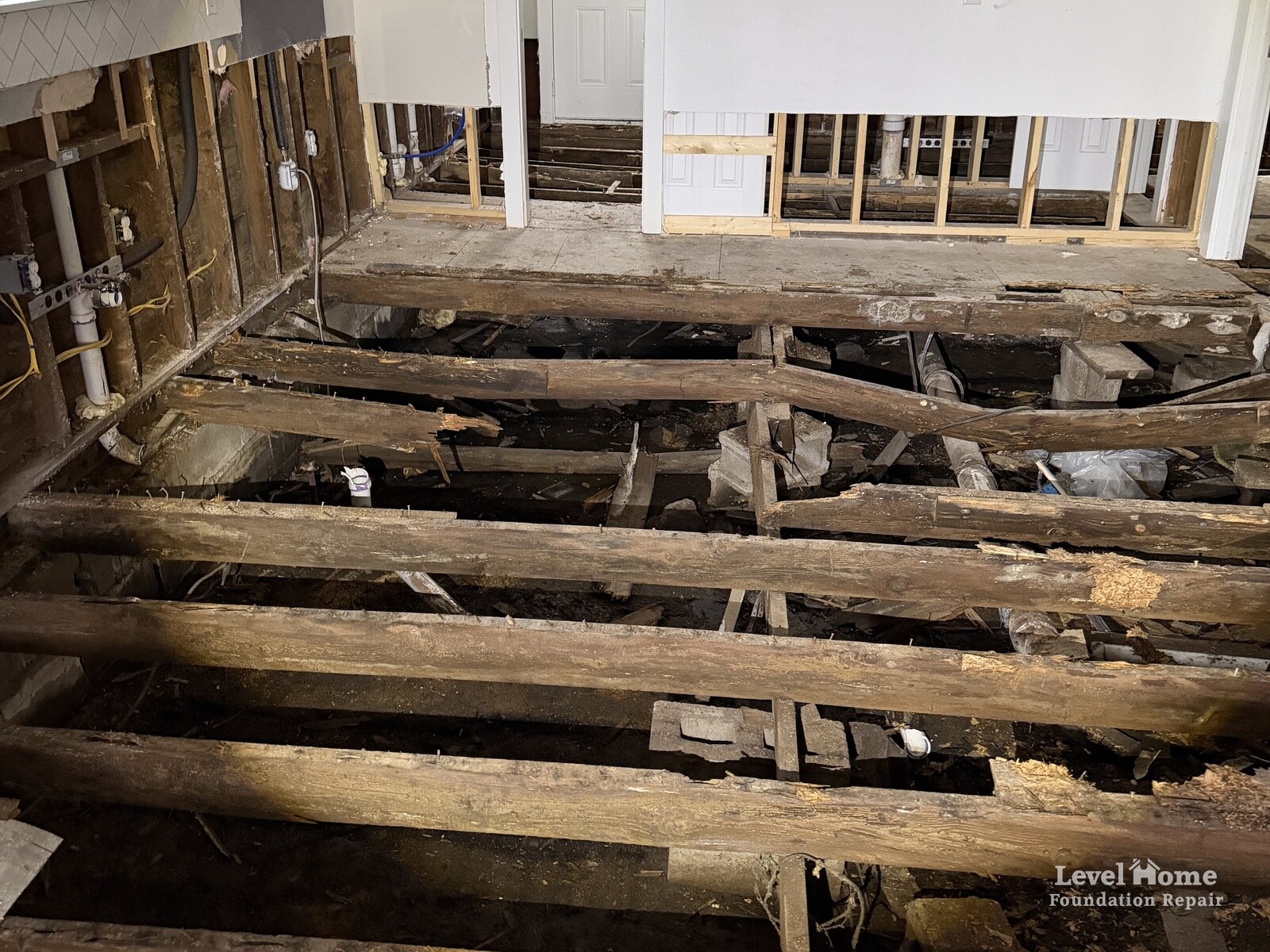
Homeowners sometimes shim sagging floor joists in the crawl space with wood or stacked concrete blocks. Without proper footing, these shims can sink into the soil, punch through moisture barriers, or create point loads that damage the joists themselves. We’ve seen crawl spaces in Tulsa where DIY shimming caused joists to split. -
Pouring Concrete “Piers” Without Engineering
Some homeowners attempt to pour their own concrete piers or footings. Without reaching stable soil below the active clay layer (often 8–15 feet deep in the Tulsa area), these shallow piers sit in the same unstable soil causing the problem. They’ll heave and settle right along with everything else. -
Ignoring Drainage and Only Fixing Visible Damage
Water management is critical in Oklahoma. If your foundation problem is caused by poor drainage — water pooling near the foundation, downspouts dumping right at the foundation wall, or negative grading — no amount of crack-filling will help. Professional companies like Level Home evaluate drainage as part of every inspection. -
Using Expanding Foam Products Incorrectly
Spray foam products marketed for foundation repair require precise injection pressures and volumes. Too much foam can actually lift the slab beyond level, cracking it in new places. Too little does nothing. Professional poly foam leveling uses calibrated equipment and real-time laser monitoring — something no hardware-store foam can replicate.
Real Consequences: What Happens After Failed DIY Foundation Repair in Tulsa
The consequences of DIY foundation work go far beyond wasted time and materials:
- Dramatically higher professional repair costs. Undoing amateur work before performing proper repairs can add $3,000–$10,000+ to the final bill. In some cases, what would have been a $5,000 repair becomes a $25,000 project.
- Voided insurance claims. If you’ve modified your foundation structure without permits or professional oversight, your homeowner’s insurance may deny related claims.
- Failed home inspections. When you eventually sell, home inspectors will flag amateur foundation work. Buyers — and their lenders — will require professional remediation before closing.
- Hidden damage that compounds. DIY repairs often mask problems that continue to worsen invisibly. By the time the damage resurfaces, the scope of repair has grown significantly.
- Safety hazards. Improperly supported structures can shift suddenly. Crawl space work without proper shoring is genuinely dangerous.
In the Reddit case we mentioned earlier, the DIY foundation work was so poorly executed that structural engineers determined the home couldn’t be saved. The new buyer — who had no idea about the amateur work — was left with a mortgage on a home that needed to be torn down. This is an extreme case, but it illustrates just how high the stakes are.
What You CAN Do Yourself (and What Requires a Professional)
Safe DIY Tasks
- Monitor cracks. Use a pencil to mark the ends of cracks and note the date. Measure the width monthly. This data is valuable when you call a professional.
- Improve drainage. Extend downspouts at least 4–6 feet from the foundation. Grade soil so it slopes away from the house. Keep gutters clean.
- Maintain consistent moisture. During Oklahoma’s dry summers, use a soaker hose around the foundation perimeter to prevent extreme soil shrinkage. Keep it 12–18 inches from the foundation wall.
- Document everything. Take photos, keep notes. If you’re buying a home, ask for documentation of any foundation work performed.
Always Call a Professional For
- Any structural crack wider than 1/4 inch
- Doors or windows that suddenly won’t close properly
- Visible floor slope or bounce
- Stair-step cracking in brick exterior
- Crawl space structural issues (bowing walls, leaning piers, damaged beams)
- Any slab lifting or leveling work
- Pier installation of any kind
How Level Home Foundation Repair Handles It Differently
At Level Home Foundation Repair, we see the aftermath of DIY work more often than we’d like. Here’s what sets a professional approach apart:
- Honest assessment first. We won’t recommend repairs you don’t need. Sometimes the answer is “monitor it” or “fix your drainage first.” We believe in building trust, not selling unnecessary work.
- Engineered solutions. Our steel pier systems are driven to stable soil or bedrock — not just a few feet into shifting clay.
- Warranty protection. Professional repairs come with warranty coverage (terms vary by service) — something DIY work can never offer.
- Documentation for resale. Every repair includes proper documentation that satisfies home inspectors, lenders, and future buyers.
As a locally owned Tulsa company, we understand Oklahoma’s unique soil and weather challenges. With over 15 years of experience and more than 3,000 homes restored, we’ve seen what works — and what doesn’t — on Tulsa clay soil.
Frequently Asked Questions
Can I fix a foundation crack myself?
You can cosmetically fill a non-structural hairline crack (less than 1/8 inch) with flexible sealant for appearance. However, any crack wider than 1/4 inch, any crack that’s growing, or any crack accompanied by other symptoms (sticking doors, uneven floors) requires professional evaluation. In Tulsa’s clay soil, cracks almost always indicate ongoing soil movement that patching won’t solve.
How much does it cost to fix DIY foundation repair mistakes?
Remediating failed DIY work typically costs $3,000–$10,000 on top of the proper repair cost. In severe cases, costs can exceed $25,000. Getting it right the first time with a professional is always more affordable in the long run.
Will a home inspector catch previous DIY foundation work?
Experienced inspectors often can, yes. Signs include mismatched materials, amateur concrete work, improperly placed supports, and lack of professional documentation. This is a major red flag during home sales in the Tulsa market.
Is foundation repair in Tulsa expensive?
Foundation repair costs in Tulsa typically range from $2,500 to $15,000+ depending on the scope. Many issues caught early cost under $5,000 to fix properly. A free inspection from Level Home can give you an honest assessment and transparent pricing with no obligation.
What if the previous homeowner did DIY foundation work on a house I’m buying?
Get a professional foundation inspection before closing. If amateur work is discovered, you can negotiate repair costs into the sale price, request the seller hire a licensed contractor, or walk away. Don’t inherit someone else’s DIY disaster.
Don’t Risk Your Biggest Investment — Get Professional Help
Your home is likely the most valuable thing you own. Foundation problems are serious, but they’re almost always fixable — when handled by professionals. DIY attempts don’t just fail to fix the problem; they actively make it worse and dramatically increase the cost of proper repair.
If you’ve noticed cracks, uneven floors, sticking doors, or any other signs of foundation trouble in your Tulsa-area home, contact Level Home Foundation Repair for a FREE inspection. We’ll give you an honest assessment — and if your home doesn’t need repair, we’ll tell you that too.
📞 Call us today: (918) 361-7787
🌐 Visit: levelhomefoundationrepair.com
📍 Serving Tulsa, Broken Arrow, Owasso, Bixby, Jenks, Sand Springs, Sapulpa, and all surrounding areas