Water is one of the biggest threats to your home’s foundation. Poor drainage can cause water to accumulate, which can lead to basement leaks, mold, soil erosion, and even structural damage over time. Installing reliable foundation drainage systems helps collect water and move it safely away from your home before it can weaken the structure or lead to expensive fixes.
At Level Home Foundation Repair, we help homeowners protect their properties with practical drainage solutions precisely designed for Oklahoma’s soil and weather. Our team focuses on long-term protection, not quick fixes, keeping your home stable, dry, and secure all year round.
Most drainage issues actually come from simple design or maintenance problems.
Many homes were built with minimal drainage planning, meaning heavy rain has nowhere to go once it reaches the foundation, and things like landscaping changes or clogged gutters can make the problem worse.
The most common causes include:
Even small changes around the home — like adding a patio or garden bed — can change how water flows. Understanding these causes helps homeowners take preventative steps before damage occurs.
Water problems around a foundation rarely start as major issues. Often, they begin with something small, but over time, water collecting near the base of your home can create pressure against the foundation walls.
Often called hydrostatic pressure, this pushes moisture into tiny fissures in the concrete. As the soil expands and contracts with moisture or seasonal changes, the foundation can shift, settle, or crack — and that can lead to bigger problems.
Signs you should schedule an inspection:
While they may not look like much at first, ignoring these signs can lead to expensive structural repairs later, which is why addressing drainage early is one of the most effective ways to protect your home’s stability (and your property value).
Sometimes the solution is as simple as improving grading or extending downspouts. In other, more serious cases, installing a full foundation drainage solution is necessary to protect the structure.
A foundation drainage system is a combination of pipes, drains, and water-control solutions installed around or beneath a home to move water away from the foundation and prevent it from collecting in the soil surrounding the structure. A well-designed system captures this water before it creates problems and directs it to a safe discharge point away from your home.
Homeowners often ask, “What is a foundation drainage system really protecting?” The answer is simple: it protects your entire structure. By keeping soil moisture balanced and preventing water buildup, the system doesn’t just prevent damage — it helps maintain stable ground conditions and reduces long-term structural stress that could lead to serious issues in the future.
A drainage system is designed with a simple goal: Collect water before it reaches your foundation and redirect it safely away from the house.
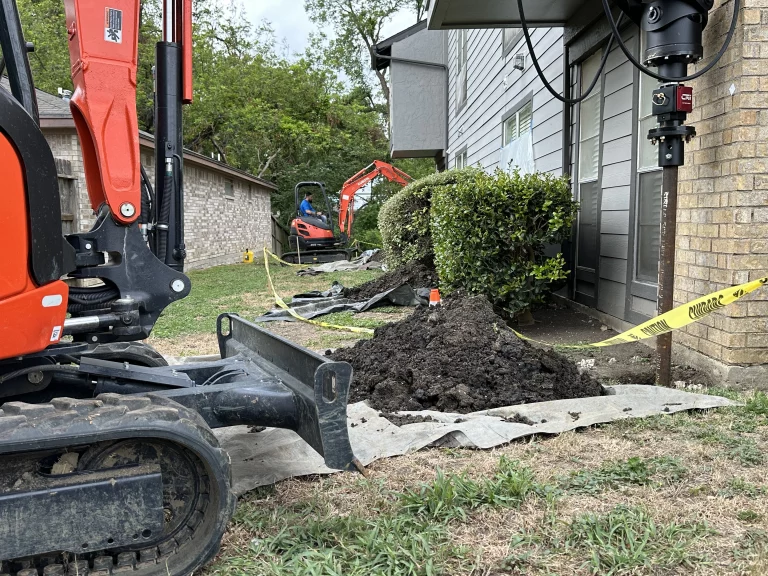
At Level Home Foundation Repair, we install bespoke drainage solutions tailored to your exact property. Every home has different soil conditions, grading, and water flow patterns, so every system must be designed specifically for the site.
Depending on your property’s needs, our experts will use one (or several) systems to ensure maximum safety and stability for years to come.
These underground drains capture groundwater and move it through perforated pipes surrounded by gravel. They are one of the most effective solutions for preventing water buildup around foundations.
Surface drains collect rainwater runoff from patios, driveways, and landscaping. They’re especially effective at preventing water from pooling near the house after storms or rainfall.
Believe it or not, roof runoff can dump hundreds of gallons of water near the foundation during heavy rain or wet seasons. Downspout extensions redirect that water farther away from the home, preventing it from doing damage to your home.
Groundwater buildup isn’t always visible, so when it builds up under a basement or crawlspace, consider sump pumps. They remove the water automatically, adding another layer of protection to keep interior spaces dry, maintain air quality, and help to prevent mold and mildew.
Together, these systems relieve water pressure, protect the soil around the home, and keep moisture from entering the structure. For many homes in Tulsa and throughout Oklahoma, combining multiple drainage solutions often provides the best protection.
A properly installed system does far more than keep water away from your house.
First, it protects the structural integrity of the foundation. When soil remains consistently dry and stable, the foundation is far less likely to shift or crack.
Second, it keeps basements and crawlspaces dry. Moisture trapped in these spaces can lead to mold growth and poor indoor air quality.
Third, it helps preserve landscaping and prevent soil erosion. When rainwater flows safely away from the home, it won’t wash away flower beds, soil, or lawn areas, further protecting any investments you’ve made in your home.
Additional benefits include:
Many homeowners only think about drainage after they see water damage — but problems can often start sooner. Installing a system early can prevent thousands of dollars in repairs later.
Water damage is one of the most common causes of foundation problems, but it’s also one of the most preventable. It starts with managing how water moves around your property. Regular maintenance plays a major role in protecting your foundation, and luckily, there are a few practical steps homeowners can take to prevent problems before they start.
Clogged gutters cause rainwater to spill directly next to the foundation, instead of being safely led away from your structure.
If your downspouts are too short or aimed next to your home, this could cause serious foundation issues down the line. Remember: water should be directed at least several feet away from the house.
The ground should slope slightly away from your home so rainwater naturally flows outward instead of pooling near the structure.
If you notice cracks, damp areas, or standing water near your home, having a professional inspection early can prevent larger structural problems later.