Two drainage systems, two different problems
When water is collecting around your Tulsa home and you start researching drainage solutions, you will run into two options: French drains and surface drains. Contractors sometimes use the terms interchangeably, which does not help. They are different systems that solve different problems, and installing the wrong one wastes money without fixing the issue.
Here is the distinction, how each one works in Oklahoma soil, and how to figure out which one your home actually needs.
What a surface drain does
A surface drain collects water that is already pooling on the ground. You have seen these — they are the grated catch basins set into low spots in a yard, along a driveway edge, or at the bottom of a slope. A PVC pipe runs from the catch basin to a discharge point downhill or to the street.
Surface drains work by gravity. Water flows across the ground, falls into the basin, and travels through the pipe to somewhere else. They are effective when the problem is standing water on the surface — puddles that form after rain, water sheeting off a patio or driveway, or runoff from a neighbor’s property that pools against your foundation.
In the Tulsa metro, surface drains are the right call when:
- Water pools in a specific area of the yard after every rain
- Downspout discharge is saturating the soil right next to the foundation
- Your lot is flat or has negative grading that directs water toward the house
- A neighbor’s lot drains onto your property
Surface drains are relatively simple to install. The main requirement is having somewhere to discharge the water — either a lower area of the yard, a storm drain, or the street.
What a French drain does
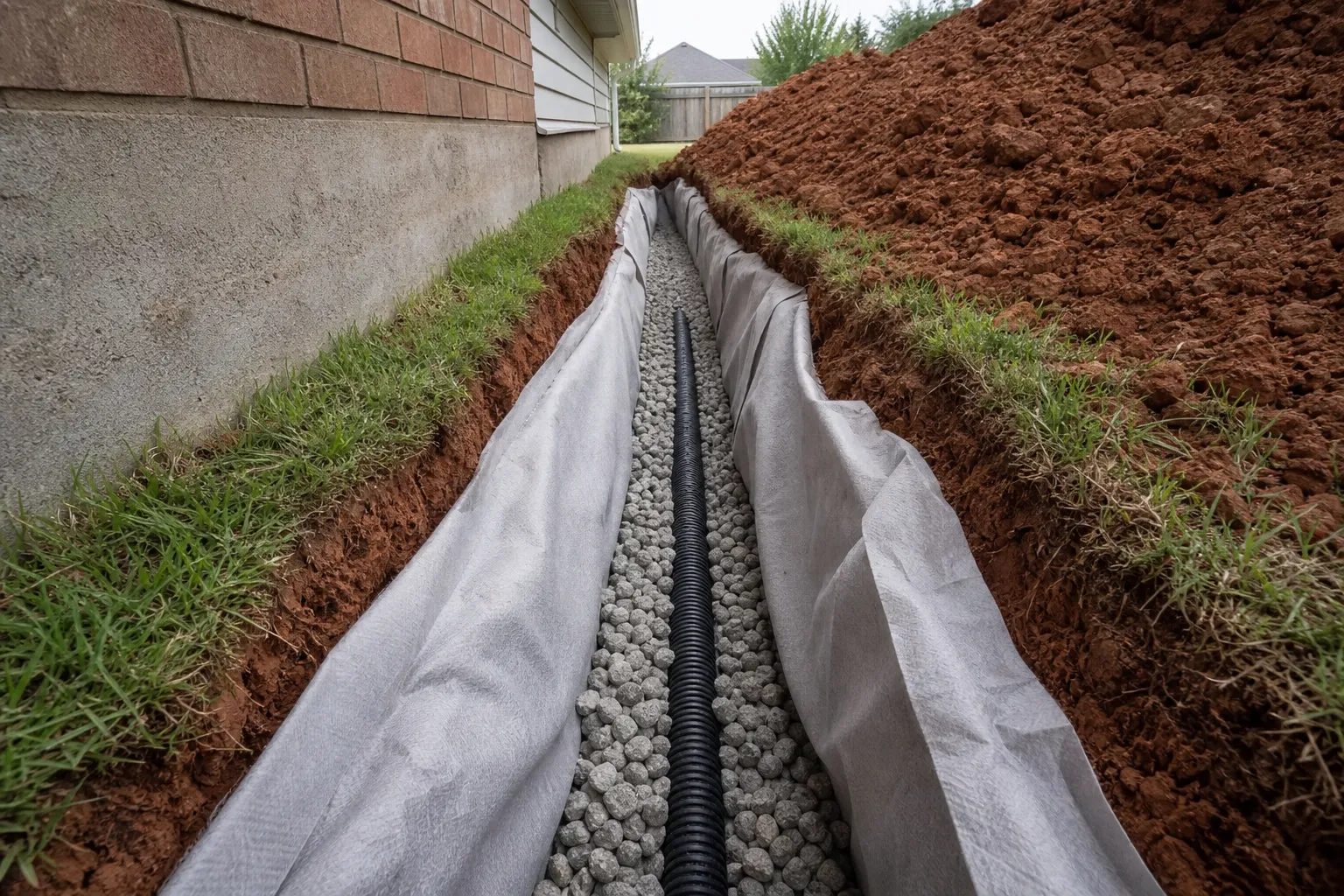
A French drain collects water that is moving through the soil below the surface. It is a trench — typically 12 to 18 inches deep — filled with gravel and a perforated pipe wrapped in filter fabric. Water that is migrating through the ground enters the gravel bed, flows into the perforated pipe, and is carried to a discharge point.
The key difference: a French drain intercepts groundwater before it reaches your foundation. It does not wait for water to pool on the surface. It catches water that is traveling laterally through the soil, often from a higher elevation or a saturated area nearby.
In Oklahoma, French drains matter because of the clay soil. When clay absorbs water, it expands. When it dries, it contracts. This shrink-swell cycle is the primary driver of foundation movement across the state. A French drain reduces the amount of water reaching the clay soil around your foundation, which reduces the severity of the expansion cycle.
French drains are the right solution when:
- The soil around your foundation stays saturated long after rain stops
- You see water seeping into a crawl space or basement
- A hillside or slope channels subsurface water toward your home
- Your foundation is showing signs of upheaval from waterlogged clay
- The area between the foundation and a retaining wall stays perpetually damp
Why Oklahoma soil makes this decision more important
In states with sandy or loamy soil, drainage issues are mostly a nuisance — water pools, it looks bad, you deal with mosquitoes. In Oklahoma, drainage problems directly damage your foundation.
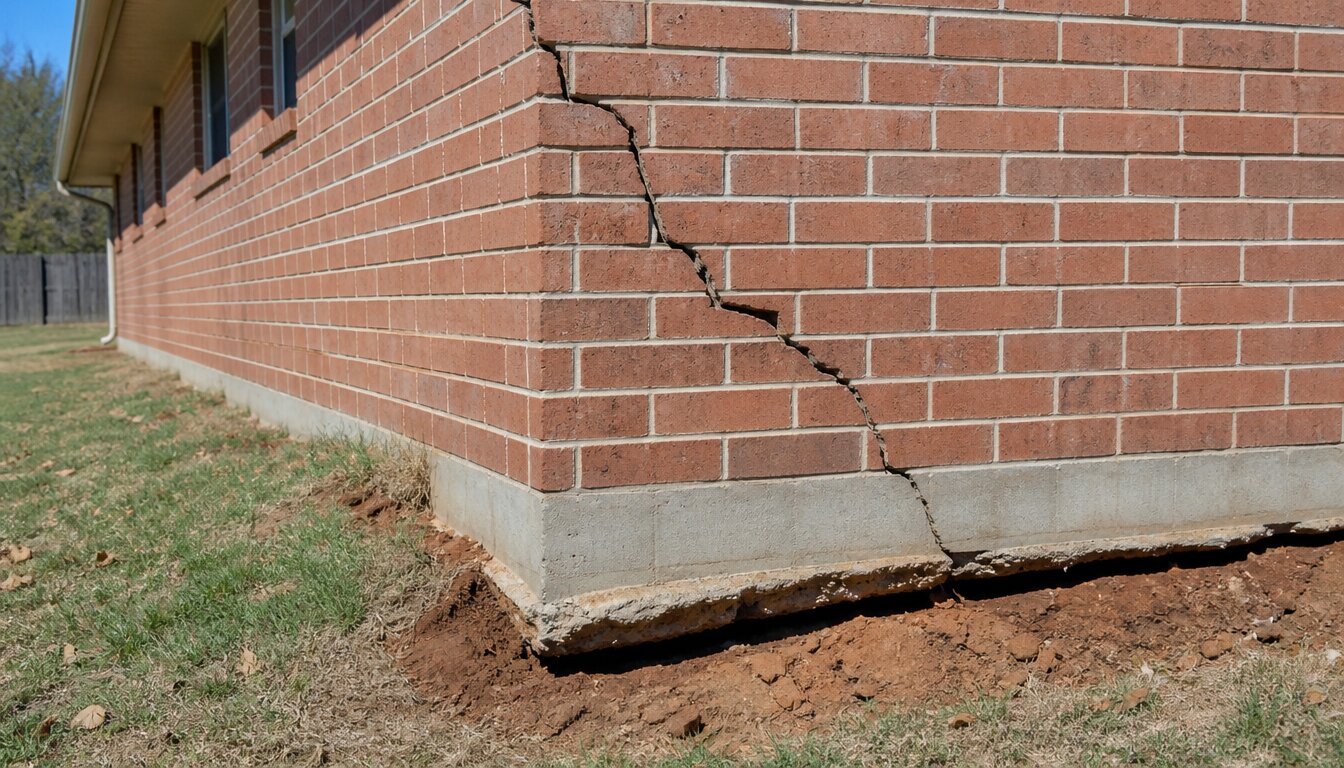
Tulsa’s clay soil can exert lateral pressure exceeding 2,000 pounds per square foot when fully saturated and expanding. That force pushes against foundation walls, bows crawl space block walls, and lifts slab edges in a process called upheaval. On the other side of the cycle, when the clay dries out and contracts during July and August, it pulls away from the foundation and removes the bearing support that keeps the structure level.
Installing the wrong drain — or no drain at all — means the soil moisture around your foundation swings wildly between saturated and desiccated with every weather cycle. That is what causes the cracks, the sticking doors, and the sloping floors.
How to tell which one you need
The simplest diagnostic is timing.
If water appears on the surface within minutes of a heavy rain and disappears within a few hours after the rain stops, the problem is surface runoff. A surface drain system with catch basins and discharge piping will handle it.
If the soil around your foundation stays wet for days after rain, or if you notice moisture in a crawl space or along basement walls even during dry spells, the problem is subsurface water. A French drain installed along the foundation perimeter or uphill of the house will intercept it.
In many Tulsa homes, especially those on relatively flat lots with clay soil, the answer is both. Surface drains handle the immediate runoff from downspouts and paved surfaces. French drains manage the slower groundwater migration that keeps the clay soil around the foundation chronically wet.
Installation considerations in Oklahoma clay
Both systems have specific requirements when installed in Oklahoma’s expansive clay:
French drain specifics
- Depth: The trench needs to reach below the base of the foundation footing, typically 18 to 24 inches in Tulsa residential construction.
- Filter fabric is mandatory: Oklahoma clay will migrate into the gravel bed and clog the system within a few years if the trench is not lined with non-woven geotextile fabric.
- Gravel selection: Washed 3/4-inch river rock or crushed stone. Pea gravel compacts too easily. Limestone fines will cement together.
- Pipe: 4-inch corrugated perforated pipe with a sock filter, holes facing down, laid at a minimum 1% slope toward the discharge point.
- Backfill: The top 4 to 6 inches can be backfilled with topsoil and sod, but the gravel column below must remain unobstructed.
Surface drain specifics
- Basin placement: Set basins at the lowest points where water collects. In Oklahoma, this is often at the back corners of homes where downspouts discharge and the lot has minimal slope.
- Pipe size: 4-inch solid PVC is standard for residential surface drains. Larger basins may require 6-inch pipe.
- Discharge: Must terminate at least 10 feet from any foundation. Discharging next to a neighbor’s foundation creates the same problem you are trying to solve.
- Clean-outs: Install at every change in direction so the line can be flushed if it clogs with debris.
What a drainage evaluation looks like
When we evaluate drainage around a Tulsa home, we are looking at the whole water picture, not just the spot where you see the puddle. That includes:
- The slope and grading of the lot relative to the foundation
- Downspout locations and where they currently discharge
- Soil saturation readings along the foundation perimeter
- Evidence of foundation movement that may be linked to water intrusion
- Crawl space moisture levels and any standing water
- Neighboring lot drainage patterns
Sometimes the fix is regrading a section of the yard and extending a downspout — a half-day job. Other times, a full perimeter French drain with surface basin tie-ins is needed. We scope the system to match the actual problem, not a standard template.
Protecting your Oklahoma foundation starts with water management
Foundation repair is more expensive than drainage. The average drainage system installation in Tulsa costs a fraction of what it takes to stabilize a foundation that has been damaged by years of unmanaged water. Getting the drainage right is the most cost-effective thing you can do to protect your home’s structural integrity.
If you are seeing standing water, soggy soil near your foundation, or early signs of foundation movement, call (918) 361-7787 for a free drainage and foundation evaluation. We will tell you what type of drain your home needs, what it will cost, and how it fits into the bigger picture of keeping your foundation stable.